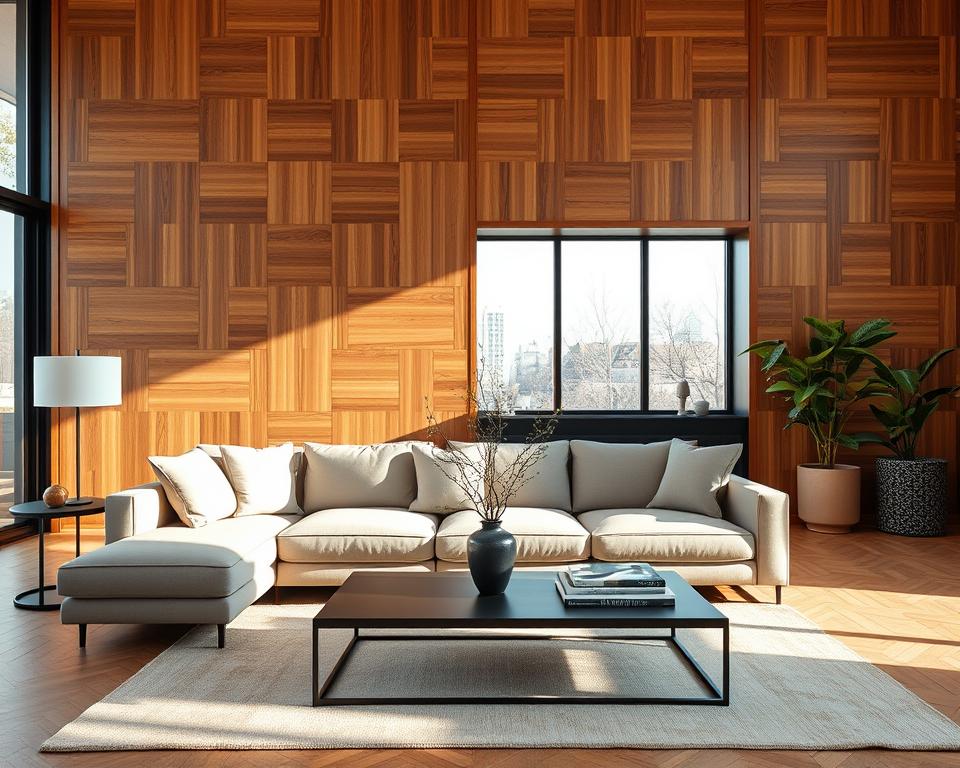
Did you know homes with statement wall paneling could see up to a 10% value increase? This stat shows how modern wall panels are becoming popular in interior design. Statement wall paneling is a significant trend in modern decor. It lets people show off their unique style and makes rooms look and feel better. This cool wall covering changes plain walls into eye-catching centerpieces. It creates a welcoming vibe that’s both pretty and useful. With more DIY options available, it’s easy for anyone to boost their home’s interior design.
Key Takeaways
- Statement wall paneling can enhance property value significantly.
- Modern wall panels add visual interest and personalization to spaces.
- DIY options make trendy wall covering accessible to more homeowners.
- Transforms simplistic walls into dynamic focal points.
- Combines contemporary aesthetics with practical benefits.
What is Statement Wall Paneling?
Statement wall paneling turns simple walls into eye-catching points of interest. It uses different materials and styles to stand out. By adding texture, color, and patterns, it makes rooms look more inviting and unique. This makes it perfect for those wanting to improve their home’s look.
Definition and Concept
Statement wall paneling uses special wall panels to grab attention. It lets homeowners customize their spaces in unique ways. You can choose from sleek designs or detailed patterns to match your style.
Types of Statement Wall Paneling
There are many styles of statement wall paneling, each with its own look and advantages. Some popular types are:
- Wood Paneling: Offers warmth and sophistication.
- MDF and Plywood: Budget-friendly choices that can be tailored for a fancy look.
- Metal Panels: Give spaces a modern, industrial feel.
- Shiplap: Creates a casual, rustic atmosphere with its horizontal lines.
- Board and Batten: Adds texture through a mix of vertical boards and horizontal battens.
- Geometric Patterns: Provides a striking feature for modern rooms.
Benefits of Using Statement Wall Paneling
Statement wall paneling does more than look good; it brings a bunch of perks to any room. It can make a space look better while adding cool features that change how a room feels. Homeowners can check out cool paneling ideas that look great and are useful too. The top three perks of statement wall paneling are its looks, texture and depth, and sound improvement.
Enhances Aesthetics
One big plus of statement wall paneling is making a place look better. Decorative wood panels add warmth and character, making any spot feel welcoming. You can choose from modern or rustic looks, and these panels become an eye-catching spot while making the room’s design better.
Adds Texture and Depth
Paneling gives plain walls texture and depth, making things more interesting to look at. This lets you get creative with different finishes and patterns. Adding cool paneling ideas can play with light and shadows, making rooms feel alive and more engaging.
Improves Acoustics
Wall paneling isn’t just about looks; it can also make a room sound better. This is super helpful in big, open spaces or noisy city places. Decorative wood panels can soak up sound, making your home quieter and more peaceful.
Popular Materials for Wall Paneling
Choosing the right materials for wall paneling can really change how a room feels. There are many options out there, each with its own look and benefits. Let’s look at some favorite materials for making walls stand out.
Wood Paneling
Wood paneling is always a classic choice that brings warmth and personality to a room. It fits in with many styles, from cozy rustic to sleek modern. You can choose from different kinds of wood, like reclaimed wood or smooth, wide slats, to create interest.
People love that you can pick different finishes for wood paneling. This means you can have a whole range of colors and textures. Wood is also great because it lasts a long time and looks even better as it ages.
MDF and Plywood
MDF (medium-density fiberboard) and plywood are great if you’re watching your budget. These options are strong, light, and come in lots of styles. They’re easy to put up, making them perfect for DIY projects.
Both MDF and plywood can be painted or stained however you like. This makes them flexible choices for changing up your walls without spending a lot. Many people choose these materials for a cost-effective and versatile update.
Metal Panels
If you’re going for a modern and industrial vibe, metal panels are the way to go. Choices like zinc or aluminum give a room sleek style and shine. They’re great for an entire wall or just a decorative touch.
Metal panels aren’t just stylish. They’re also durable and easy to keep looking good. They make for striking wall art and give any home a modern edge.
Choosing the Right Design for Your Space
Choosing the perfect design for statement wall paneling can change any room’s mood. It’s important to think about the latest trends and timeless looks. You might want a modern or a classic style. Each choice changes the feel and appearance of your walls.
Contemporary vs. Traditional Styles
Contemporary styles like simple lines, bright colors, and new textures. They fit modern life and those who like a fresh, upbeat look. Traditional styles, however, show off detailed woodwork, soft colors, and time-honored shapes. They suit those who love a cozy and stylish feel. Mixing these styles can make your space look amazing, especially with the right paneling that matches your decor.
Color and Finish Options
Picking the right color and finish is key to making your space look unified. Dark colors make bold statements, while light colors offer a sense of openness. Shiny finishes can give a contemporary twist, but matte finishes are more understated. Matching these choices with the atmosphere you want can make your interior design look better and feel more cohesive.
Installation Considerations
Deciding between DIY or professional help for a statement wall paneling project can be tough. Each path offers benefits tailored to different needs and skills. The choice you make will greatly affect the outcome of your project.
DIY vs. Hiring Professionals
If DIY projects excite you, wall installation can be a fun challenge, especially with the right tips. It’s key to understand your wall’s surface and frame for success. On the other hand, professionals ensure precise measurements and polished results. This is ideal for big spaces or complex designs.
Tools and Materials Needed
Before beginning, know the essential tools and materials. You will need:
- A level for ensuring straight alignment
- A saw for cutting panels to size
- Adhesive or nails based on your chosen material
- Measuring tape for accurate dimensions
- A caulk gun for finishing touches
With the right tools and materials, the installation process becomes easier. Proper preparation is key to the success and durability of your wall paneling project.
Maintenance Tips for Statement Wall Panels
To keep statement wall panels looking their best, just follow some easy care tips. No matter if they’re wood, metal, or something else, knowing how to look after them makes a big difference in how long they last. By taking care of them regularly, they will keep looking great and working well for many years.
Cleaning and Care
Keeping your wall panels clean is key to their look. Regular dusting stops buildup that might ruin their finish. For wood panels, a soft cloth and mild cleaners work best to avoid damage. Metal panels will stay shiny with gentle detergents. Setting up a cleaning schedule helps them last longer.
Long-term Durability
For a longer life for your wall panels, think about using protective finishes. Oils help wooden panels resist moisture better. Making sure there’s good air flow around metal panels helps stop mildew and rust. Knowing how to care for your panels keeps them looking great and adds value to your home’s decor.

Budgeting for Your Project
Starting a statement wall paneling project means you need to budget wisely. It’s important to know how much everything costs. This includes materials and paying for any professionals you might hire.
Cost of Materials
The cost of materials depends on what kind of paneling you pick. Wood is beautiful and lasts a long time but costs more. MDF and plywood are cheaper. But, they don’t look as fancy as real wood. Keep this in mind when planning your expenses:
| Material Type | Average Cost per Square Foot | Durability |
|---|---|---|
| Wood Paneling | $10 – $25 | High |
| MDF | $5 – $15 | Medium |
| Plywood | $3 – $12 | Medium |
| Metal Panels | $8 – $20 | Very High |
Professional Installation Expenses
Doing it yourself can save money, but professionals reduce mistakes. Labor costs for professional installation change based on how complicated the work is and where you live. Keep these budgeting tips in mind:
- Get multiple quotes from contractors.
- Factor in any additional costs such as adhesives and finishing materials.
- Assess the overall time investment versus hiring expertise for efficiency.
Pairing Wall Paneling with Decor
Interior wall design shines when you match wall paneling with the right decor. It’s crucial to find a balance between cool paneling ideas and decor choices. This creates a home feeling cohesive. Complementary colors help the room feel harmonious, making both paneling and decor stand out.
Complementary Color Schemes
Choosing the right colors is key for blending wall paneling with your decor. Pick colors that go well with your furniture and art. Aim for a palette that merges smoothly for a unified look. Combining soft neutrals with deep jewel tones can make a striking contrast. This highlights the statement wall paneling beautifully.
Furniture and Accessories Tips
Furniture and accessories that echo the paneling’s tones or textures boost the room’s design. Items like cushions, rugs, and artwork add layers, emphasizing your paneling’s charm. When planning the room’s layout, strive for a variety of styles and colors. This strategy creates a welcoming space while keeping your interior design modern and cozy.
Statement Wall Paneling in Different Rooms
Statement wall paneling can really change how a room looks and feels. It brings a special vibe to each room, depending on its use. From the living room to the bedroom, let’s see how wall paneling can give a fresh look to our spaces. This includes our office and study areas too.
Living Room Ideas
In the living room, eye-catching panel designs are key. Think about using bold panels above a fireplace or behind a TV. These areas catch the eye. Using rich colors and textures like deep woods or sleek metals can make the living area both stylish and welcoming.
Bedroom Enhancements
The bedroom calls for softer panel finishes and soothing colors. Using textured materials such as fabric or light wood can create a calm setting. This turns the bedroom into a cozy escape, just for you.
Office and Study Spaces
Wall paneling in a home office or study helps in two ways. Choosing panels that absorb sound can keep things quiet. This setup makes it easier to focus and adds a professional look to the space.
Trends in Statement Wall Paneling
Homeowners are now turning towards more inventive choices for their homes. The buzz around the latest wall paneling trends focuses on being green and creative. People are choosing eco-friendly materials to blend responsibility with fashion. Meanwhile, 3D wall panels have become a hit for their eye-catching depth and texture.
Eco-Friendly Materials
The move towards greener living is reshaping wall decor. Bamboo, reclaimed wood, and recycled composites are in style. They look amazing and help protect the planet. Using these materials shows a deep care for the environment, matching the need for eco-friendly options.
3D Wall Panels
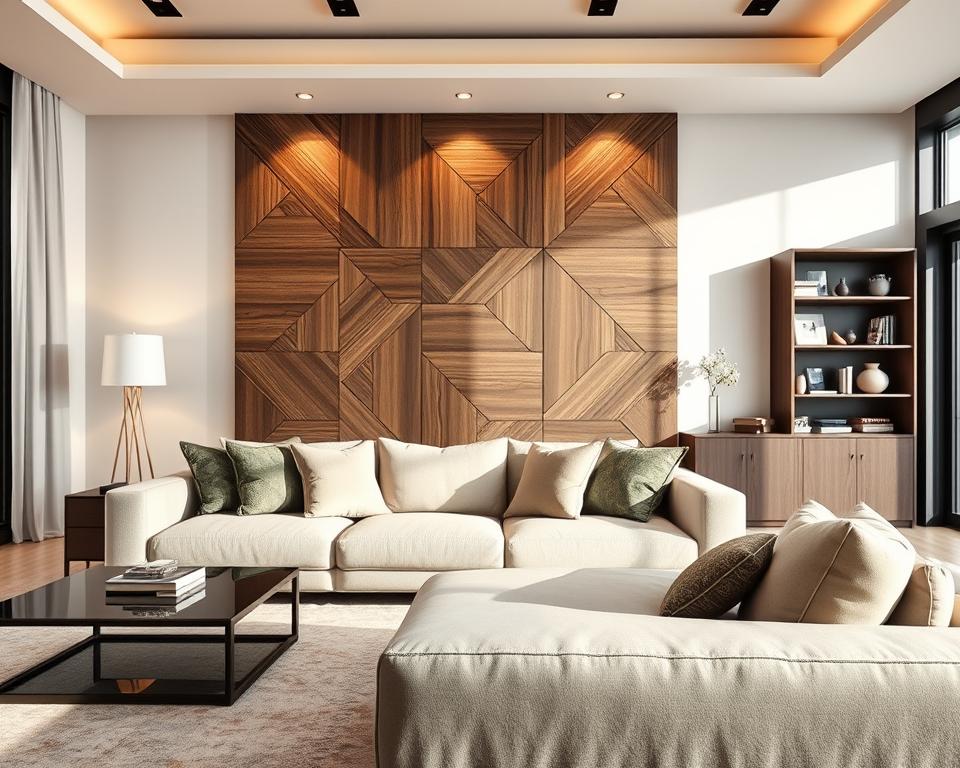
3D wall panels are changing the game in home decor. They make any room pop with their visual depth. With lots of designs to pick from, everyone can find something that fits their taste. Whether it’s a modern edge or classic beauty, these panels promise a space that stands out.
Real-Life Examples of Statement Wall Paneling
Looking at real-life examples of statement wall paneling can give great ideas for improving living spaces. By studying different examples, we see how paneling choices can totally change a home’s feel. Seeing before-and-after pictures shows the big impact design elements have on looks and use.
Case Studies of Modern Homes
Many modern homes have added statement wall paneling, showing many styles for different tastes. A cool loft used reclaimed wood panels to keep it warm but still stylish and industrial. Also, a family home added white shiplap to their entryway, making it brighter and more welcoming.
Before-and-After Transformations
Before-and-after pictures really show what wall paneling can do. A once dark and tight living room got lively with bold, geometric panels. The change in color and texture changed the whole feel of the room. Another project turned a dull office into a creative spot with deep navy paneling, boosting productivity and creativity.
Where to Find Inspiration
If you’re keen on exploring statement wall paneling, there’s plenty of inspiration out there. Online, you can dive into sites that show off creative wall panel designs. Pinterest and Instagram, for example, are full of images of both modern and traditional wall panels. A quick search could reveal amazing designs that spark your creativity and influence your design decisions.
Online Resources and Platforms
Looking deeper into online sources, home decor websites have lots of galleries and articles. They offer tips and insights on wall paneling. Blogs by interior design fans can give you a personal look at their projects. This can help you see what might work in your own home. Using these online tools, you can find ideas that fit your style and budget perfectly.
Design Magazines and Shows
Design magazines and TV shows are also great for finding inspiration. Architectural Digest and Elle Decor often feature the newest interior design trends, including wall panels. HGTV’s Home Town, for example, shows viewers how to transform spaces with detailed methods. By looking at both magazines and TV, you’ll gain a lot of knowledge to help create an impressive statement wall.