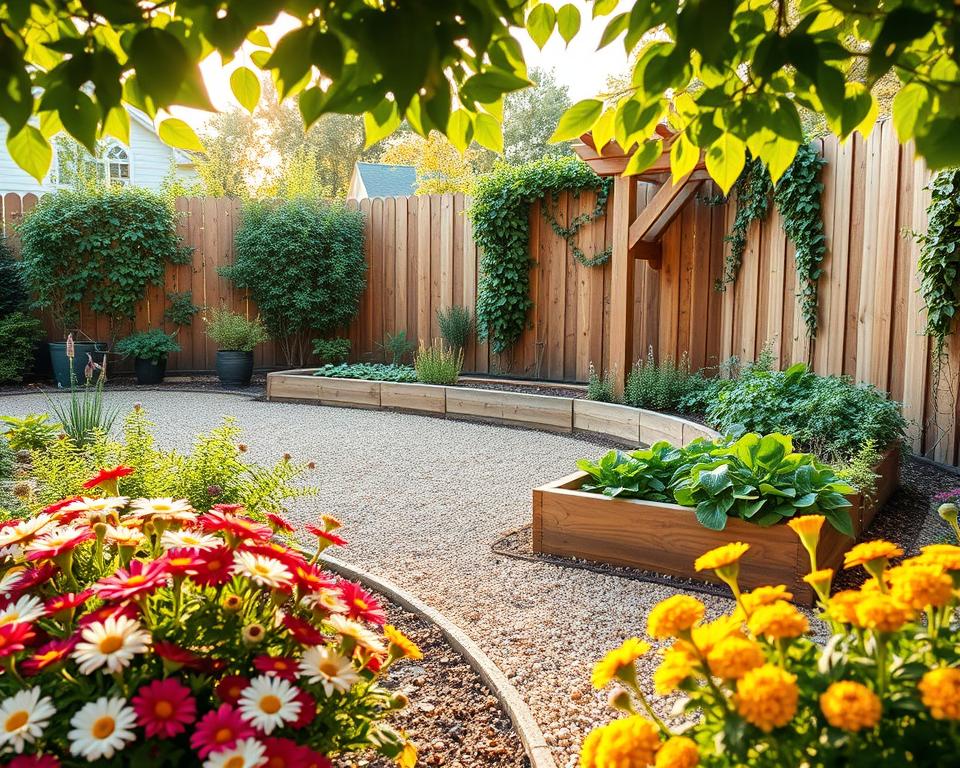
Did you know over 80% of American homes have a backyard? Yet, many don’t know how to make the most of these areas. Turning your small backyard into a beautiful garden is not only doable but also quite fulfilling. This article will give you creative ideas for small backyard layouts that fit your style and needs. Whether your home is in a busy city or you just have a tiny yard, you’ll learn to use your space wisely. You’ll get smart landscaping tips and advice on designing for small areas. Let’s discover how to make your outdoor space amazing!
Key Takeaways
- Small backyard gardens can be beautiful and functional.
- Understanding your space is crucial for effective designs.
- Choosing the right garden style can enhance your outdoor experience.
- Incorporating pathways and focal points makes the space inviting.
- Maximizing vertical space increases plant capacity in limited areas.
- Sustainable practices contribute to a healthier garden environment.
- Seasonal gardening strategies can keep your garden thriving year-round.
Understanding Your Space for a Garden Layout
Before diving into backyard landscaping ideas, take the time to thoroughly understand your space. Knowing the dimensions and features of your backyard can help shape your outdoor garden layout. Start by measuring your area accurately, which allows you to visualize potential planting zones and paths.
Measuring Your Backyard
Begin by sketching a to-scale representation of your backyard. Take precise measurements of the length and width, noting existing structures or trees. This will help you decide where to place flower beds, pathways, or seating areas. A well-measured garden plan lays the foundation for organized spacing.
Assessing Sunlight and Shade
Identify different areas in your backyard based on sunlight exposure. Some plants need full sun, while others grow best in partial shade. Observe how light shifts across your space during the day. This knowledge will help you plan a garden that fits both sun-loving and shade-tolerant plants.
Considering Drainage and Soil Quality
Good drainage and soil quality are crucial for your garden. Check how well your soil drains to avoid waterlogging that can harm plants. Do a simple soil test to learn about its pH and nutrient content. This information helps in selecting the right soil amendments or if raised beds are needed.
| Factors | Description | Importance |
|---|---|---|
| Measurements | Accurate dimensions of your backyard space | Helps in planning layouts and paths |
| Sunlight Exposure | Identifying sunny and shady areas | Guides plant selection and positioning |
| Drainage | Assessing soil’s drainage ability | Prevents water accumulation and plant diseases |
| Soil Quality | Testing soil nutrients and pH levels | Determines need for amendments or raised beds |
Choosing the Right Garden Style
Finding the right garden style is very important. It makes your outdoor space look good and work well. A smart layout for a small backyard can turn it into a peaceful place. There are many types of gardens to fit what you like and how you live. Here are three popular garden styles for city backyards that can create a small oasis.
Cottage Garden Aesthetics
Cottage gardens are lively and casual, full of flowers, herbs, and vegetables. They mix colorful plants to make a welcoming space. This type lets you be creative and is great for those who love gardening but also want it to be useful.
Modern Minimalist Designs
If you like things simple, modern minimalist gardens are for you. They use clean lines and carefully chosen plants to avoid clutter. This is perfect for small yards. Using a few special plants and materials like stone or wood, you can make a stylish outdoor space.
Vegetable and Herb Gardens
Adding a vegetable or herb garden is pretty and practical. It lets you grow your own food, which is healthy and eco-friendly. You can use traditional rows or try vertical gardening to fit your city garden space. Edible plants make your garden look good and use the space well.
Essential Elements for Small Gardens
Key features can really boost your small garden’s look. They make your garden more useful and beautiful. By using pathways, focal points, and vertical gardening well, you make the most of limited space. This also makes your garden welcoming.
Pathways and Walkways
Pathways are crucial for any garden. They make it easy to get around without hurting the soil. Picking pathway materials that fit your garden’s vibe is important. For instance, gravel gives a country feel, while pavers make it look modern. A smartly laid path leads people through your garden, making their visit better.
Focal Points and Garden Art
In small gardens, catching the eye matters a lot. Things like sculptures, fancy pots, or special plants grab attention. Where you place them can make your garden look deeper. Even a simple piece can turn a bland spot into something everyone looks at.
Vertical Gardening Options
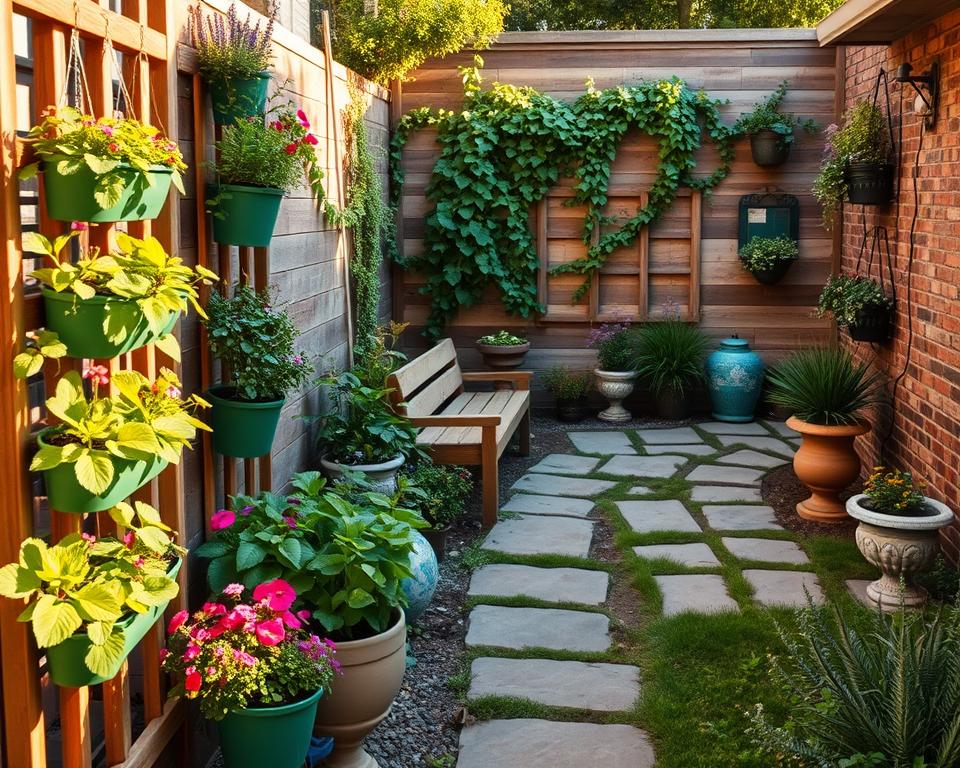
Limited space means thinking up, not out. Using trellises, wall pots, or hanging pots helps you plant more. This trick lifts your garden’s look and makes use of every inch.
| Element | Benefits | Materials Suggested |
|---|---|---|
| Pathways | Enhance accessibility and define areas | Gravel, pavers, stone |
| Focal Points | Draw attention and create visual interest | Sculptures, unique plants, decorative planters |
| Vertical Gardening | Maximize limited space and add height | Trellises, wall planters, hanging baskets |
Plant Selection for Limited Space
When you have a tiny backyard, choosing the right plants is key. This ensures your garden thrives and uses every bit of space. Pick compact plant varieties to get more yield and color without crowding your area.
Best Plants for Small Gardens
When picking plants for a small area, think about:
- Dwarf fruit trees for delicious homegrown produce
- Small annual flowers like marigolds and zinnias that brighten the space
- Herbs such as basil and thyme that spice up your meals and don’t need much room
- Vegetables like radishes and lettuce, fast growers that provide fresh food
Companion Planting Techniques
Companion planting can make your garden more productive. Some plants do better together. Here are combos that work well:
- Tomatoes with basil to boost taste and keep pests away
- Carrots with onions to get more out of your garden
- Peppers with herbs to flavor your food and fight off bugs
Seasonal Considerations
Seasons are crucial for a productive garden. Use succession planting to stagger crops over the year. This way, you’ll always have something growing. Pay attention to your climate and pick plants that do well in your area for a garden that blooms year-round.
Designing Your Garden Layout
Creating a vibrant oasis from a small space is all about the layout. Starting with a sketch helps a lot. It shows where to put plants, paths, and places to sit. It also lets you play around with ideas before making them real.
Sketching Your Garden Plan
Use graph paper or a digital tool to start your plan. Mark where things like sheds or trees already are. Then decide where new things should go. Think about how big plants will grow and how much sun they need. A good sketch helps your garden ideas come to life.
Incorporating Different Zones
Divide your garden into zones for different uses. You could have a dining area, a cozy spot to relax, and a place for planting. Each area has its own job but works together with the rest. This makes sure every part of your garden is useful and looks good.
Balancing Open Space and Plant Density
It’s important to balance open areas with plant-filled spots. Your layout should let people move around easily and enjoy the space. Too many plants can make it hard to take care of them all. Space for paths or seats among the plants makes your garden both beautiful and practical.
Maximizing Vertical Space
Using vertical space wisely is key in small garden designs. With certain tricks, you can make your garden look better and use space well. Vertical gardens not only look good but also help make the air cleaner, especially in cities.
Trellises and Arches
Trellises and arches are great for plants that climb. They catch the eye and add a special touch. They create private spots and help certain plants grow well.
Adding them to your garden brings more beauty and lets you plant more.
Wall Planters and Hanging Baskets
Wall planters and hanging baskets let you be creative with plants. They make it possible to grow different plants up high, giving your garden a full look. A good wall planter turns a bare wall into something full of life and color, smartly using space.
Utilizing Fences for Plant Support
Fences give you a great way to grow plants up. Adding climbing plants to fences boosts how much you can grow. They also make your garden more private and secure.
Creating a Cozy Outdoor Seating Area
Turning your small backyard into a cozy retreat means picking the right furniture. Choose items that fit your space and style. A bistro table or folding chairs add comfort and flexibility to your garden.
Choosing the Right Furniture
Selecting furniture is key for a small garden retreat. Go for lightweight and easy-to-move pieces. Choose weather-resistant materials and add cushions for comfort.
Integrating Shade Options
Shade is vital for enjoying your outdoor area in the sun. Add a stylish umbrella or a canopy for protection. A pergola with plants provides shade and beauty, making it perfect for relaxation.
Enhancing Ambiance with Lighting
Ambiance makes your outdoor area special at night. Use string lights or LEDs to create a cozy atmosphere. Lights along paths or around seating areas add charm. Candles or lanterns give a warm glow, making your space inviting.
Sustainable Practices in Small Gardens
Embracing eco-friendly gardening can greatly improve a small garden. These techniques help the environment and your garden’s health. Just a few smart moves can make a big difference, even in limited areas.
Composting in a Compact Space
Composting helps you cut down kitchen waste and boosts your soil. Use a small compost bin that fits well in tiny gardens. These bins vary in size and can be tucked into corners or stored under counters. This converts food scraps into rich compost, encouraging strong plant growth with little effort.
Rainwater Harvesting Solutions
Rainwater harvesting can cut costs and conserve water for eco-friendly gardening. Setting up rain barrels captures water from your roof. The collected water can then water your garden, reducing the need for tap water. This method helps plants during dry times and saves water.
Native Plant Selection
Choosing native plants is key for a thriving small garden. These plants need less water and upkeep, being perfect for local conditions. A garden filled with native species boosts local wildlife and plant health. It leads to a stronger, more vibrant garden with minimal effort.
Seasonal Gardening Tips for Small Spaces
A garden that’s alive all year long is possible with the right seasonal gardening. Using seasonal strategies helps keep your small garden both vibrant and fruitful. It’s key to know what to plant, when to get your garden ready, and how to care for it to make it both beautiful and useful.
Planting for Spring & Summer
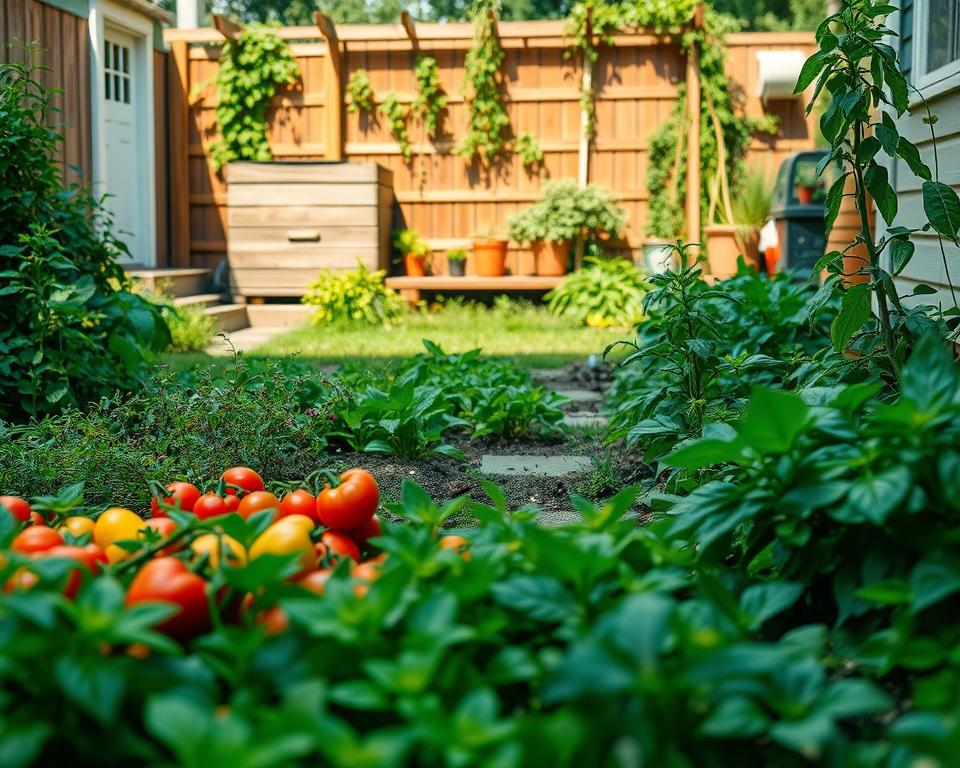
Spring and summer are perfect for planting. You can add plants that make your garden look pretty and give you tasty food. Try heat-loving flowers and veggies like tomatoes, peppers, and cucumbers. These love the warm weather and can give you a great harvest for your meals.
Preparing for Fall & Winter
When it gets cooler, it’s time to get your garden ready for fall and winter. Start with cleaning up, like removing dead leaves and old plants, to avoid pests and diseases. Use mulch or row covers to protect plants that don’t like the cold. This can really help them through the winter.
Year-Round Maintenance Strategies
Keeping up a small garden is more than just planting things. You need a plan to care for your garden all year. Doing regular work like cutting back plants, watering, and fighting pests helps everything grow well. With a plan for taking care of your garden through the seasons, it can really thrive.
Inspiration and Resources for Small Garden Layouts
Creating a lovely small backyard garden might seem hard. But there’s a lot of help out there to boost your creativity and make things easier. Whether you want a cozy spot to relax or a place to grow veggies, the right tools can turn a simple garden into a special place. By looking at different ideas and useful tools, you can create your dream garden.
Online Design Tools and Software
Online design tools and software are great for planning your garden. With platforms like SketchUp or Garden Planner, you can try out layouts and decide where to put plants before making changes for real. These tools let you see your ideas come to life. They make sure your garden plan suits your outdoor space well.
Books and Blogs for Small Gardening Ideas
Books and blogs are full of small garden ideas. Check out “The Backyard Homestead” or “All New Square Foot Gardening” for helpful advice and inspiration. You can also find blogs by garden lovers and experts. They share what works for them. This mix of resources can show you new things to try in your garden.
Visiting Local Botanical Gardens for Ideas
Going to local botanical gardens gives you real-life inspiration. You get to walk around beautiful places and see what might work in your own space. Seeing the clever ways professionals use small areas can spark new ideas for you. It might help you imagine what your backyard could look like.