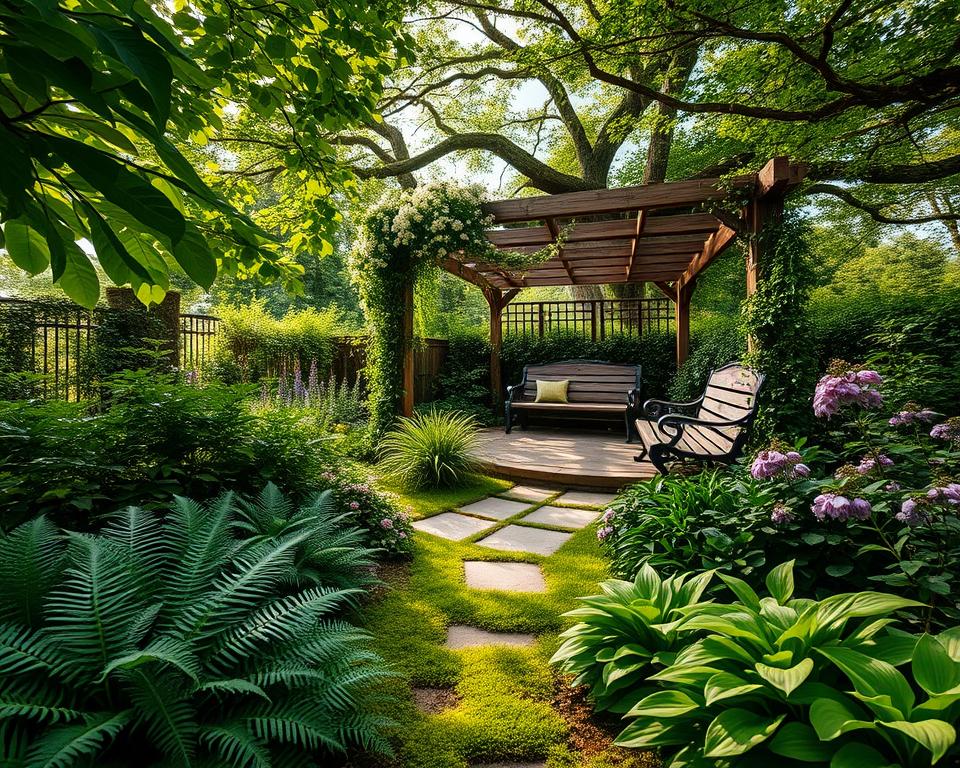
Did you know over half of homes in the U.S. have shaded spots that could become green havens? Even small shaded areas can be transformed into lively shade gardens. These spaces are perfect for relaxing and promoting biodiversity. When you look into cool shade garden layouts, you discover ways to use these hidden gems. This guide aims to spark your creativity for landscaping shaded spots. It’s all about making your yard a lovely place to hang out.
Key Takeaways
- Shade gardens can make dull areas lively and more beautiful.
- Choosing the right plants brings more wildlife into your garden.
- Smart planning can change shaded spots into useful areas.
- Various design ideas can make these spaces great for relaxation and fun.
- Adding paths and places to sit can make your garden even better.
Understanding Shade Gardens
A shade garden is made for spots with not much light. It’s where plants live well even without a lot of sun. These gardens are for spaces that are always shady, somewhat shady, or get light in patches. Knowing what plants work best in these spots is key to making a beautiful garden. Getting to know shade gardens is the first step in any garden journey.
What Is a Shade Garden?
A shade garden uses plants that grow well in less light. These gardens are great for areas that don’t get much sunshine. When it comes to shade gardens, it’s all about choosing the right plants, making sure the soil is good, and keeping the ground moist. With careful planning, even shady spots can be turned into green havens full of life.
Benefits of Having a Shade Garden
Shade gardens are great for more than just their looks. They help save water because less evaporates in the shade. This means you don’t have to water them as much.
They’re also cooler spots during hot weather, making them a nice place to relax. They attract wildlife, like birds and bees, which makes your garden lively and helps nature. With the right plants, a shade garden can be a colorful and delightful spot.
| Benefits | Description |
|---|---|
| Reduced Water Usage | Less evaporation leads to a lower need for watering. |
| Lower Maintenance | Shade plants need less care compared to those that love sun. |
| Cooling Effects | Shaded areas stay cooler, providing a comfy outdoor space. |
| Wildlife Habitat | Shade gardens attract pollinators and support local wildlife. |
| Visual Appeal | They offer unique looks with diverse plant textures and colors. |
Planning Your Shade Garden Layout
Creating a shade garden requires good planning. You need to understand your garden’s light and how big it is. Knowing how much shade you have lets you pick the best plants.
Assessing Your Shade Conditions
Evaluate the light in your garden throughout the day. Shades differ: full, partial, or dappled. This affects what plants you can grow. Different shades mean varying amounts of sunlight for your plants. This changes their growth. Watch these conditions as they change with the seasons.
Determining Your Garden Size
Consider the size of your shade garden next. It’s about more than measuring. Think about what you want in your garden. A small space means choosing plants carefully so they all fit together. In a larger area, you could add pathways or water features. Drawing your garden plan helps you imagine your shade garden better.
| Shade Type | Characteristics | Best Plants |
|---|---|---|
| Full Shade | Less than 3 hours of direct sunlight | Hostas, Ferns, Astilbes |
| Partial Shade | 3-6 hours of sunlight, often filtered | Bleeding Heart, Coral Bells, Japanese Maple |
| Dappled Shade | Light filtering through leaves | Foxglove, Pulmonaria, Tiarella |
Choosing the Right Plants
To make a shade garden bloom, picking the right plants is key. You should look for the finest shade trees, shade-loving perennials, or tough ferns. These choices will help make your garden area look great.
Best Trees for Shade Gardens
Adding trees that like shade is important for a top-notch shade garden. Trees such as Japanese Maple, Redbud, and Serviceberry give lots of shade and beauty all year. They have distinct shapes and leaf colors that make your garden look nice.
Perennials That Thrive in the Shade
For a great under-layer, choose the top shade perennials. Plants like Hostas, Astilbe, and Bleeding Hearts work well. They bring bright colors and textures, making your garden a beautiful, natural spot.
Hardy Ferns for Low-Light Areas
Ferns give a shade garden a special, lush look. Shade ferns, such as Lady Fern and Japanese Painted Fern, do really well in dark places. Their leaves add a calm feel, important for a complete shade garden.
| Plant Type | Example Varieties | Light Requirements |
|---|---|---|
| Shade-Friendly Trees | Japanese Maple, Redbud, Serviceberry | Partial to Full Shade |
| Perennials | Hostas, Astilbe, Bleeding Hearts | Partial Shade |
| Hardy Ferns | Lady Fern, Japanese Painted Fern | Low Light to Partial Shade |
Designing for Aesthetics
Making a shade garden welcoming needs careful planning, especially for depth. Using plants of different heights makes it layered and interesting. Taller plants at the back and shorter ones in front offer beautiful views. This makes the garden more appealing.
Creating Depth with Different Heights
Using different heights of plants adds visual appeal. For small spaces, vertical gardening is a smart choice. You can use trellises or tall planters for climbing plants or ferns. This adds height and makes use of vertical space. For instance, a standout tree with fan palms behind it gives a layered look.
Incorporating Color in Shade
Adding color to shade gardens uses blooming plants and colorful leaves. Pairing plants like bright Caladiums and lush Impatiens adds color. This turns a dark spot into a vibrant area. Choose plants with different textures and colors for year-round interest.
Follow these tips to make a shade garden that’s full of color and depth. It’ll ensure each visit is enjoyable.
Paths and Walkways in Your Shade Garden
Paths and walkways are very important in shade gardens. They help with the design and how the garden works. Choosing the right path materials makes sure they fit right in with the plants. Using natural elements in your paths invites people in, making it easier and nicer to walk around.
Different Materials to Use
There are a few top choices for garden paths based on their looks and how they work:
- Flagstone: Flagstone is both pretty and practical, offering a strong surface with a natural charm.
- Gravel: Gravel is less expensive and drains well, which is perfect for wet areas.
- Mulch: Mulch is easy to use. It makes a soft path that looks good with the greenery.
Designing Functional Pathways
Creating pathways that work well in shade gardens means thinking about how people will move through the space. Here are some tips:
- Use curved paths to lead visitors around the garden smoothly.
- Make sure there are clear ways to get to different parts of the garden.
- Ensure paths are wide enough for people to walk comfortably.
Adding these features makes garden paths more than just walkways. They become a key part of enjoying your garden. Using the right materials and designs makes your shade garden not just beautiful, but a great place for a walk.
| Material | Pros | Cons |
|---|---|---|
| Flagstone | Natural appearance, durable | Higher cost, can be uneven |
| Gravel | Drainage, cost-effective | May require regular replenishing |
| Mulch | Soft, blends with plants | Needs frequent topping off, can wash away |
Shade Garden Features
Adding certain features can make your shade garden a peaceful retreat. Things like water features and places to sit not only make it look better but also invite you to relax and connect with nature. Think about how these additions can make your space more calming.
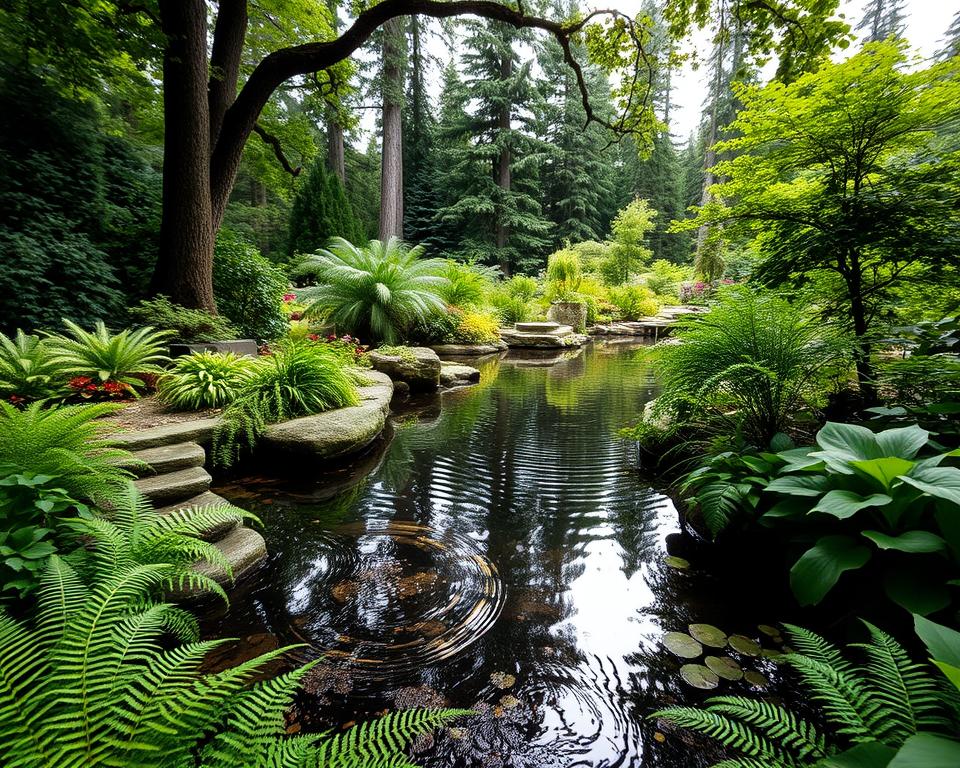
Adding Water Features
Adding water features like ponds, fountains, or birdbaths can make a shade garden feel calm. The gentle sound of water is relaxing and draws birds and wildlife. Water brings a cool feeling that stands out against the green plants in shady spots.
Incorporating Benches and Seating
Having places to sit in your shade garden is key for enjoying quiet moments. Benches offer a spot to stop and enjoy the view. Whether you choose wooden or metal benches, they should match the garden’s look. A cozy seating area makes people want to stay and enjoy the peaceful setting of your shade garden.
Seasonal Interest in Shade Gardens
Making a shade garden that looks great all year takes careful planning. A mix of plants that do well in different seasons is key. This way, your garden will always have color and texture, making it a nice place to spend time any season.
Choosing Plants for Year-Round Appeal
Look for plants that add color in the shade throughout the year. Plants like hostas, astilbes, and ferns do well in low light and brighten up your garden in spring and fall. By mixing perennials with annuals, your garden stays lively. Add evergreens to keep it looking good in winter, too.
Designing for Spring, Summer, and Fall
Planning a garden means thinking about what each season brings. Spring has brief blooms like bloodroot and trillium. Summer fills the garden with astilbes and lungwort. Then, fall’s rich leaves keep the garden bright. Choose plants carefully to make your garden change and grow beautifully all year.
Maintenance Tips for Shade Gardens
Maintaining a shade garden means knowing what those plants need. Watering shade gardens and keeping the soil health in shade gardens strong are key. By using the right watering and feeding methods, your garden can grow well, even in less sunny spots.
Watering Requirements
Shady gardens don’t dry out as fast as sunny ones. So, plants there don’t need water as often. But, it’s important to check the soil’s wetness often. This is because plants under big trees might have to fight for water. Remember these points for irrigation for shaded areas:
- Check soil moisture levels before watering to avoid over-saturation.
- Utilize drip irrigation systems for targeted watering.
- Water early in the morning to minimize evaporation.
- Adjust watering frequency seasonally, considering rainfall and temperature changes.
Fertilizing and Soil Health
For soil health in shade gardens, it’s crucial to ensure plants get needed nutrients. Adding organic matter to your soil can up nutrient content and help roots grow strong. Here are some tips for fertilizing shade-loving plants:
Regularly add compost or aged manure to enrich the soil.
| Soil Amendments | Benefits |
|---|---|
| Compost | Adds nutrients and improves soil structure. |
| Aged Manure | Increases microbial activity and nutrient retention. |
| Pine Needles | Acidifies soil, beneficial for certain shade plants. |
To have a beautiful shade garden, focusing on watering and soil health is crucial. If you give these areas regular attention, your plants will grow well and look great.
Wildlife and Shade Gardens
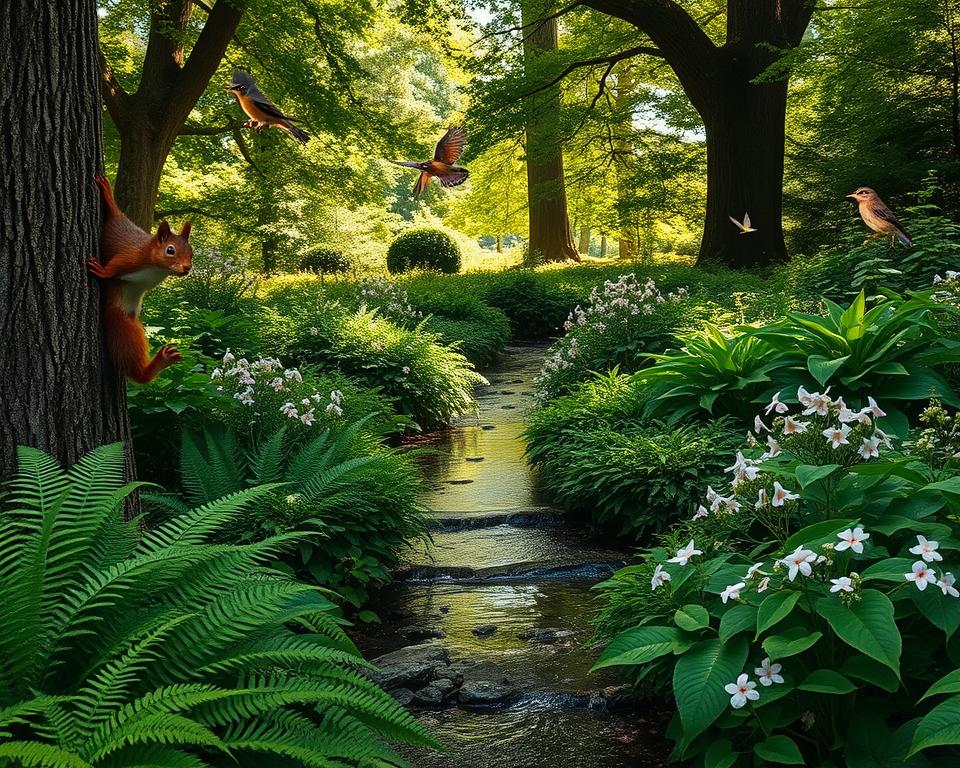
Creating a shade garden beautifies your space and invites wildlife. It provides food, shelter, and breeding spots for different species. Adding wildlife-friendly elements makes your garden a sanctuary.
Attracting Birds and Pollinators
To draw birds and pollinators, plant native flowers that thrive in shade. These plants offer beauty and food. Add plants with:
- Plants with nectar-rich flowers to entice butterflies and bees.
- Seed-producing plants that provide sustenance for birds.
Varying plant layers supports pollinators and birds, creating a lively ecosystem. Bird feeders and baths will attract more visitors to your garden.
Creating Habitats in Your Garden
Adding natural elements to your garden helps wildlife. For good habitats, include:
- Log piles and brush piles offer shelter and nesting sites.
- Birdhouses provide safe spaces for various bird species.
- Water features create hydration stations for all types of wildlife.
Designing with these features boosts biodiversity and livens up the garden. Wildlife-rich shade gardens enhance your experience and the environment.
Common Mistakes to Avoid
Making a shade garden has unique challenges. If done right, it can turn into a peaceful spot. It’s key to know what mistakes can stop your garden from thriving.
Overcrowding Your Plants
Plant overcrowding is a common problem. This limit on growth can cause plants to fight over water and nutrients. Each plant will grow to a certain size, so spacing is important.
Enough space means air and light can move better. This is key for plants to stay healthy.
Ignoring Soil Quality
The soil’s quality is super important for shade gardens. If you ignore it, plants might not grow well or at all. You should always check and make your soil better.
Adding organic stuff can help your soil. This makes it richer and your garden more beautiful. Good soil lets plants in shaded spots grow well.
Shade Garden Layout Inspirations
Looking at famous shade gardens can spark new ideas for your garden. These famous places show how to build beautiful shade areas, focusing on the right plants and layout. They give a guide for adding special touches to your garden space.
Examples from Famous Gardens
Many famous shade gardens teach us about design and matching plants. The Brooklyn Botanic Garden mixes native plants with exotic ones that like less light. Learning from these gardens teaches how to use different textures and colors for beauty in shaded areas.
Unique Shade Gardens Around the U.S.
In the U.S., special shade gardens show off local style and adaptability. From the green Pacific Northwest forests to New York City’s lively shade spots, these gardens show many ways to landscape. They use plants typical of the area, making the garden feel connected to its place.
Whether it’s copying a calm Southern woodland or using summer ferns, each garden has its own story.
Final Thoughts on Your Shade Garden
Your shade garden should reflect your unique taste. It should mix plants, colors, and decorations that you love. By using design ideas that match your likes, you can make a garden that shows your personality. Whether you love colorful flowers or prefer greens, your choices will create a calm space.
Shade gardens offer more than beauty. They’re places to enjoy peace and quiet. Think about adding comfy seating, a gentle fountain, or paths. These touches will turn your garden into a perfect spot for family time or relaxing alone.
Building a garden with your favorite things will make it more than pretty. It will be a place of comfort. Remember, your shade garden shows who you are. It should bring happiness and peace into your life.