Did you know about 80% of flowers bought in the US come from other countries? This adds a lot to their carbon footprint. Choosing flowers based on the season can help your garden and the planet. Knowing which flowers bloom in each season will make your garden healthier and more vibrant. This article will give you tips and ideas for making your garden beautiful all year.
Key Takeaways
- Seasonal flower planning promotes sustainability and reduces carbon footprint.
- Choosing flowers based on their growing season improves garden health.
- Incorporating seasonal blooms enhances aesthetic appeal.
- Seasonal flowers can be creatively used in various floral design projects.
- Understanding local climate is crucial for selecting the right flowers.
Understanding Seasonal Flowers
Seasonal flowers add more than beauty to our gardens. They help biodiversity, make our surroundings richer, and welcome pollinators. Using flowers that bloom at certain times of the year makes our gardens more than just pretty. They become vibrant ecosystems.
Why Seasonal Flowers Matter
Choosing seasonal flowers helps us connect with the rhythms of nature. This bond creates a thriving space for local wildlife to flourish. Seasonal blooms grow well in their own seasons. This makes them healthier and their colors more striking. By picking local flowers, we also cut down on the carbon emissions from bringing in flowers from far away. This helps our planet stay healthy.
Benefits of Using Seasonal Flowers
The perks of choosing seasonal flowers go beyond just looking good. They usually need less care and water, making them easier to tend to. Native plants are better suited to our weather and soil, which makes them tough. Plus, growing flowers that are in season can save money since they’re often cheaper than flowers that aren’t. It’s a great way to help local nature and make your garden beautiful.
Key Growing Seasons for Flowers
Different seasons offer chances to make beautiful flower arrangements. By knowing the key growing seasons, gardeners can have blooms all year. They can also use seasonal flowers to make their designs stand out.
Spring Blooms
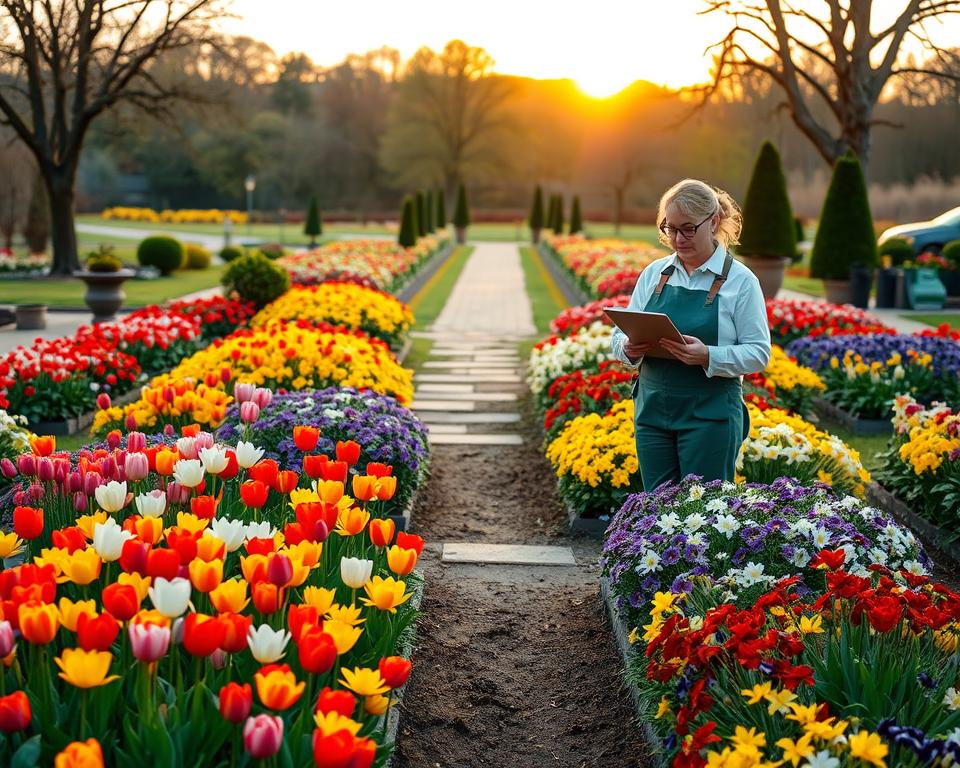
Spring brings color back into nature with flowers like tulips and daffodils. These flowers mean renewal and make perfect arrangements for the spring. With colors from bright yellows to soft pastels, spring gives many options for floral displays.
Summer Favorites
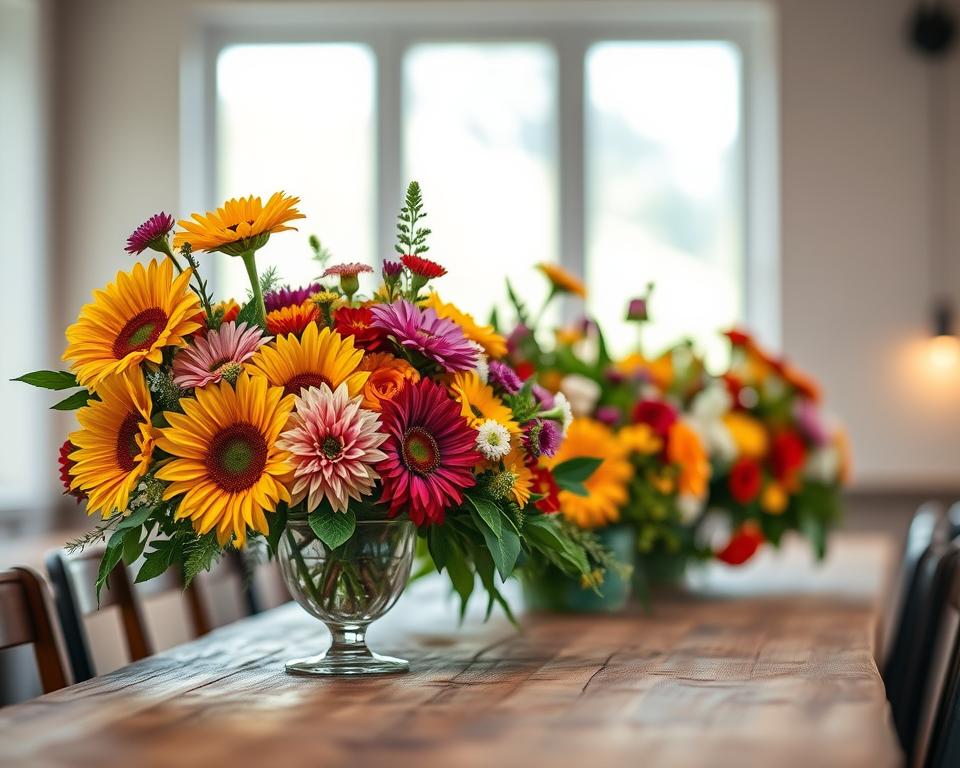
With the heat, summer flowers like sunflowers and dahlias become the stars. They have bold colors and are great for outdoor events or casual meet-ups. Their bright presence adds life to any spot.
Autumn Choices
Autumn brings marigolds, asters, and chrysanthemums. These blooms match the season’s changes and fit fall-themed arrangements well. With colors like deep reds and oranges, they make beautiful displays that feel like autumn.
Winter Wonders
Winter seems empty but has flowers like winter jasmine and hellebores. These blooms add beauty during the cold months. Using these flowers can make winter celebrations warm and colorful, showing nature’s beauty all year.
Choosing the Right Flowers for Your Region
Picking the right flowers for your area is key to a great garden. You need to think about the climate, the kind of soil, and how much sun your garden gets. Knowing these things helps you plan for flowers that will bloom beautifully all year long.
Factors Influencing Flower Choices
When choosing flowers, you should look at:
- Climate: The weather conditions, like temperature and how moist or dry it is, play a big role.
- Soil Type: Flowers have their favorite types of soil, from sandy ones to those that are more like clay.
- Sunlight Exposure: Some flowers love lots of sun, while others do better in cooler, shaded areas.
Researching Local Climate
It’s really important to know your local climate when planning your garden. You can use things like the USDA growing zones to figure out what will grow best where you live. Talking to local nurseries is super helpful, too. They can tell you about plants that are right for your area. They’ll point you to flowers that look great, last well, and won’t break the bank.
Planning Your Flower Garden Layout
Creating a beautiful flower garden requires planning and careful design. By using tips for floral design, gardeners can make their garden stand out all year. It’s important to mix different colors and textures while keeping things harmonious.
Designing with Seasonal Blooms
For a garden that’s always in bloom, choose flowers that do well in your area and bloom at different times. You can pick hybrid or native plants for a beautiful view and to attract friendly bugs.
Maximizing Space and Sunlight
How you arrange your space matters. Think about the height and spread of plants. Put taller plants at the back or center and shorter ones in front. This way, every flower gets enough sun.
Remember to plan paths and borders you can reach easily. This makes your garden practical and pretty.
| Flower Type | Blooming Season | Sunlight Requirements | Height |
|---|---|---|---|
| Daisies | Spring to Summer | Full Sun | 1-3 ft |
| Marigolds | Summer to Frost | Full Sun | 1-2 ft |
| Chrysanthemums | Fall | Full Sun | 1-4 ft |
| Pansies | Spring and Fall | Partial Sun | 6-12 in |
Using these tips and focusing on seasonal flowers will make your garden beautiful and full of life. Be creative with your layout and enjoy making your dream garden.
Tips for Seasonal Flower Care
To keep seasonal flowers looking great, you need to know their needs. Figuring out the right way to water and feed them helps your flowers stay strong. It’s also vital to keep pests away to protect your garden. Here are some top tips for keeping your blooms bright and healthy, taking into account different flower colors.
Watering and Fertilizing
Watering is key to caring for seasonal flowers. Each type of flower might need different amounts of water. Here are some watering tips:
- Water early in the morning to let plants soak it up before it gets hot.
- Put flowers that need the same amount of water together to make things easier.
- Use soil that drains well to avoid root rot from too much water.
Feeding your plants is just as crucial as watering. Keep these points in mind:
- Use a balanced fertilizer that fits the types of flowers you have.
- Test your soil to customize how you fertilize.
- Choose organic options like compost to help your plants grow strong.
Pest Management Techniques
Stopping pests helps your seasonal flowers last longer. Here are some good ways to do that:
- Attract helpful bugs like ladybugs and lacewings to eat the bad ones.
- Try safe, organic options like neem oil to fight off pests.
- Grow certain flowers together because some can keep pests away from others.
Incorporating Seasonal Flowers into Events
Seasonal flowers add a special touch to events. They help create unforgettable spaces at weddings and markets, linking them to nature. Picking the right flowers can enhance the whole experience. DIY floral arrangements make your event feel closer and more personal.
Weddings and Celebrations
Seasonal flowers can turn wedding venues into magical spaces. Using local blooms supports the community and guarantees freshness. DIY arrangements allow couples to express their style, adding to the day’s uniqueness.
Seasonal Pop-Up Markets
Seasonal pop-up markets become more inviting with lush flowers. Bright, beautiful arrangements draw people in, making their visit memorable. DIY flowers let organizers display local varieties, fitting the market’s theme.
Holiday Decor Ideas
Seasonal flowers are perfect for holiday decoration. For Thanksgiving or Christmas, picking the right flowers creates the right atmosphere. DIY arrangements let people customize their decor, adding personal or meaningful touches to their holiday setups.
When to Plant Your Seasonal Flowers
Knowing the right time to plant each flower is key to gardening success. It’s important for the health and beauty of your plants. Each flower type, like annuals and perennials, has its own time for planting. Paying attention to your area’s climate and frost dates is also important.
Ideal Planting Times
To plan your garden well, know the best times to plant. Start tender flower seeds inside 6 to 12 weeks before the last frost is expected. This allows them to grow strong enough to move outside when it’s warm. Hardy flowers can be planted outside earlier, which helps them deal with the cold better.
Seed vs. Transplanting
Choosing between planting seeds or transplanting comes down to cost and timing. Seeds are cheaper and let you grow more types of flowers. But transplanting gives plants a head start, which is great for short growing seasons. The best time to do either depends on your local weather and the flowers you’re growing.
Seasonal Flower Arrangements
Creating beautiful seasonal flower arrangements brings joy into your home. With bright flowers, creativity is key. Learn some techniques to make your DIY arrangements look amazing.
Techniques for Stunning Bouquets
Try these simple but powerful techniques next time:
- Layering: Start with greens, then add flowers layer by layer for depth and texture.
- Varying Heights: Use flowers of different heights for visual appeal. Tall flowers like delphiniums make a statement.
- Color Coordination: Pick colors that go well together. Seasonal flowers offer beautiful shades that match the season perfectly.
Vases and Containers to Consider
Choosing the right vase makes a difference. Here are some vase options:
- Clear Glass Vases: These let your colorful flowers shine, showing off their beauty perfectly.
- Rustic Containers: Wooden boxes or mason jars add a cozy, rustic touch, great for wildflowers.
- Colored Ceramic Vases: Bright vases add a splash of color and become a focal point in your decor.
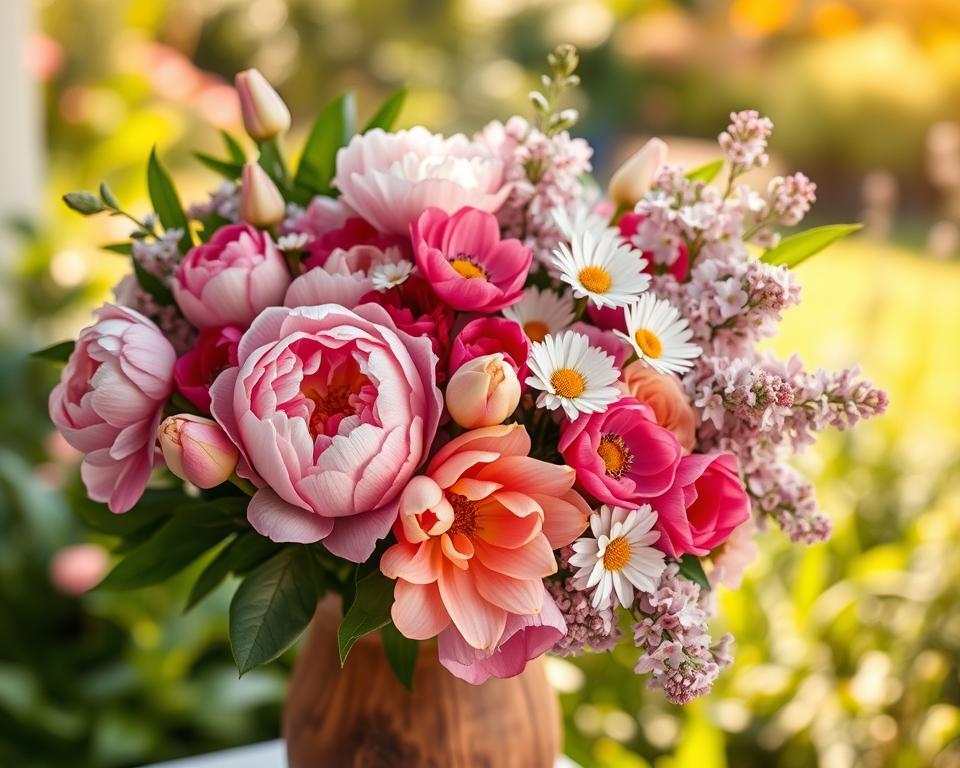
DIY arrangements let you play with these tips, turning simple flowers into something special. Seasonal flowers not only look great but also freshen up your space. This makes your floral designs personal and unique.
Sourcing Your Seasonal Flowers
Getting seasonal flowers can make your garden or event look amazing. You can find them at local nurseries, garden centers, or online shops. Each place offers great choices. It’s vital to pick strong, healthy plants for a bright and long-lasting display.
Local Nurseries and Garden Centers
Going to local nurseries and garden centers means you can get fresh flowers right away. They usually have flowers that grow well in your area’s weather. Shopping local helps local farmers and you get tips from experts on what flowers to choose.
You’ll see lots of pretty native plants that are sure to do well in your garden.
Online Flower Shops
Online shops let you find seasonal flowers that might not be at local stores. You can shop from home, which is really convenient. They offer special varieties from all over.
When buying flowers online, it’s important to pick stores that are known for quality. They should send fresh, strong plants to your door.
Sustainability in Flower Planning
In today’s world, sustainability in flowers is very important. We aim for eco-friendly options and support local growers. This helps our environment and strengthens community bonds.
Choosing Eco-Friendly Options
Choose flowers for your garden or bouquets wisely. Pick options that:
- Organic – They’re grown without harmful stuff.
- Seasonal – They fit well with your local weather.
- Locally sourced – This means less travel and pollution.
- Biodegradable – Go for things that can break down naturally.
Supporting Local Growers
Buying from local growers is a key way to be more sustainable. It boosts the local economy and ensures fresher flowers. Here are some benefits:
- Freshness – Locally grown flowers last longer and look better.
- Reduced carbon footprint – Less travel equals less pollution.
- Community involvement – It helps local farms and strengthens ties.
Troubleshooting Common Issues
Every gardener faces challenges with seasonal flower care. Pests, diseases, and weather can harm your garden. Knowing how to fix flower problems is key for a thriving garden all year.
Dealing with Pests and Diseases
Integrated pest management fights pests like aphids and spider mites. Check your flowers often for bugs. Use natural remedies or organic pesticides to protect them. Early disease detection is crucial too. Healthy plants need good air flow and enough space to lower disease risks.
Coping with Weather Challenges
Weather can unexpectedly affect your flowers. Protect them from extreme heat or frost. Use row covers and mulch to keep your blooms safe and soil moist. Being ready for weather issues protects your flowers. It also means you’re prepared to manage these challenges, ensuring your flowers do well.