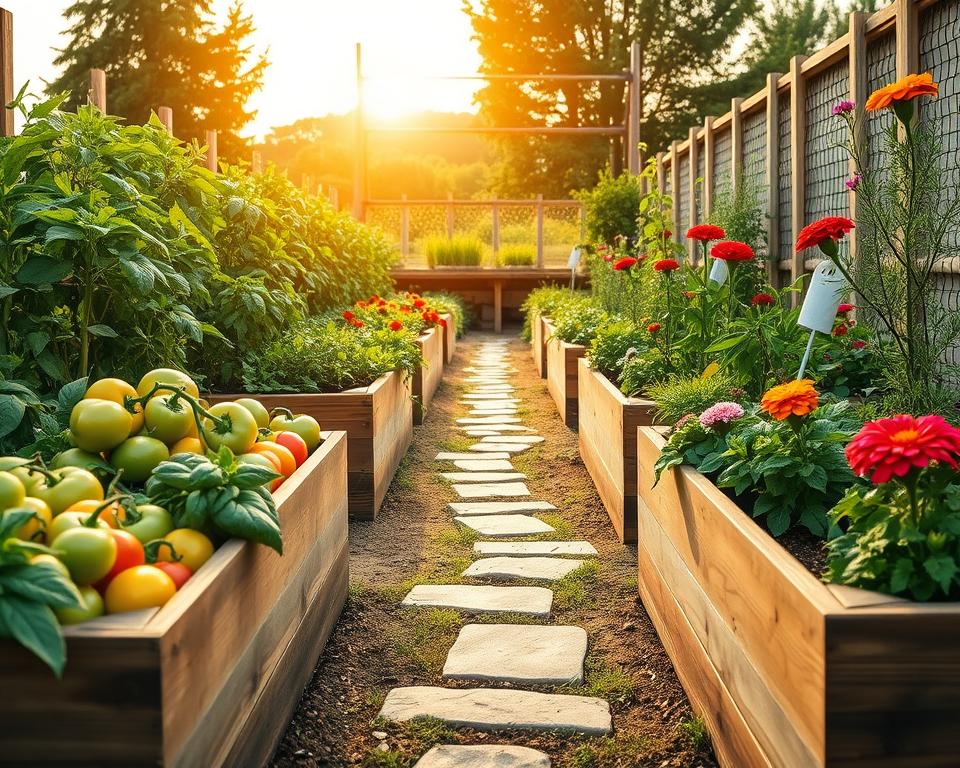
Did you know about 35% of American families grow their own food at home? This trend is growing because of a higher interest in living sustainably. Raised bed garden design is a smart choice for small spaces or tough soil.
By lifting the garden off the ground, it’s easier to take care of and you can control the soil better. Whether you want to grow veggies or flowers, you can make your space look good and produce a lot. Explore the fun of designing a vegetable garden and see how it changes your gardening game.
Key Takeaways
- Raised bed gardening enhances soil control and drainage.
- DIY raised beds can be tailored to fit limited spaces.
- Crops yield better due to improved access and care.
- Raised garden beds suit various types of plants, from veggies to herbs.
- Designing gardens with aesthetics in mind can enhance outdoor spaces.
What is Raised Bed Gardening?
Raised bed gardening is a way to garden with the soil elevated in frames. These frames can be made from wood, stone, or metal. This method offers better control over soil quality and drainage than traditional gardens. It’s becoming more popular because it helps plants stay healthy and is easier to maintain.
Definition and Overview
This gardening style uses contained areas for soil, perfect for plant growth. Raised beds can be made in different heights for every gardener’s needs. Whether you’re a rookie or an expert, raised beds work for everyone.
Benefits of Raised Bed Gardens
Raised gardens offer more than just good looks. Here are the top benefits:
- Improved Drainage: They prevent water from standing too long, which helps the plants’ roots.
- Access and Convenience: Their height makes it easier to care for the plants without bending too much.
- Reduced Soil Compaction: Without the chance of walking on the soil, it stays loose, aiding root growth.
- Easier Pest Management: Being off the ground helps keep some pests away, making it simpler to manage them.
- Enhanced Yields: Many gardeners say they get more produce from raised beds because of these conditions.
With its many benefits, it’s clear why raised bed gardening is loved by garden enthusiasts. It really enhances the gardening experience.
Choosing the Right Location for Your Garden
Finding the best spot for your raised garden is important for your plants to do well. Think about sunlight, how water drains, and how easy it is to get to. Knowing about these can help you have a great time gardening.
Sunlight Considerations
Most plants need 6-8 hours of direct sun every day. Place your raised beds where they’ll get enough sun. This helps plants grow strong and produce lots of fruits or veggies. If plants don’t get enough light, they won’t grow well.
Drainage and Soil Quality
It’s important for the soil to drain well so plant roots are healthy. Put your raised beds where water won’t stand still. Waterlogged soil can harm your plants. Adding organic matter and compost makes the soil better, feeding your plants. This leads to a lush garden.
Accessibility and Convenience
Getting to your raised beds easily is key, especially if bending down is hard. Make sure they’re high enough for easy gardening. They should be near paths for watering, weeding, and picking plants. Having your garden close to a water source also helps make gardening fun.
Selecting Materials for Raised Beds
Choosing the right materials for your raised beds is key. They affect looks and how long they last. There are many choices, from classic wood to composite materials. So, it’s important to pick what’s best for you.
Wood Options: Cedar, Pine, and More
Wood is a top pick for raised beds. Cedar is notable for resisting rot and bugs, lasting years. Pine is less expensive but needs more care. Yet, it’s good for those on a budget. Redwood also resists decay like cedar but costs more.
Composite and Metal Raised Beds
Composite materials are becoming popular due to their strength and easy care. They look like wood but without the issues. Metals, such as corten steel, offer a modern, eye-catching choice. These materials stand up to weather, adding a contemporary feel to your garden.
Eco-Friendly Alternatives
Eco-friendly gardening fans have great options. Using reclaimed wood, natural stones, or bricks helps the planet. It also makes your garden blend with nature. These choices let you design a unique, green space.
Designing Your Raised Bed Layout
Creating a good raised bed garden layout boosts your garden’s yield and looks. The square foot gardening method is smart to try. It divides your raised bed into a grid. This lets you plant varied crops closely, using space well and increasing harvests. Pairing plants that help each other grow, through companion planting, means more health and less pests. A well-organized garden with nice paths makes upkeep easier and creates a peaceful space.
Square Foot Gardening Technique
The square foot gardening way splits the raised bed into small sections for different crops. This helps you get the most out of your space with less effort. Planting many types of plants together means you get a varied diet. When starting square foot gardening, remember these steps:
- Determine the size of your raised bed for an ideal layout.
- Mark off square sections, typically one foot by one foot.
- Choose crops based on their growth habits and compatibility.
- Rotate plants annually to maintain soil health.
Companion Planting Concepts
Using companion planting in your layout makes plants help each other. Some plants can keep pests away, help soil, and boost growth. Try these great pairings:
- Tomatoes paired with Basil: Enhances flavor and wards off pests.
- Carrots with Onions: Repels harmful insects.
- Radishes and Cucumbers: Radishes can help with pest determent.
Aesthetic Considerations
How you arrange your raised beds affects how your garden looks. Design pathways that make walking through your garden fun and easy. Add design touches like:
- Curved or geometric bed shapes for visual interest.
- Strategically spaced paths for easy access during maintenance.
- Height variations to add depth and character.
Preparing the Soil for Your Raised Bed
Getting your soil ready is key for a successful raised bed garden. Good soil helps plants grow strong and healthy all season. Choose the right soil mix, test the soil, and use mulches to make a perfect home for your plants.
Soil Mixtures and Amendments
For the best soil in raised beds, mix these:
- Compost: Adds nutrients and improves soil.
- Topsoil: Provides a strong root base.
- Organic manure: Boosts nutrients and helpful microbes.
This mix gives great drainage and fertility.
Testing Soil pH and Nutrients
Soil tests are vital for your garden’s success. They let you:
- Find nutrient shortages.
- Set the right pH for plant health.
- Customize soil amendments for your crops.
Regular tests make sure your plants get what they need.
Mulching Techniques
Mulching brings many perks to your garden. Use:
- Straw: Keeps moisture while breaking down slowly.
- Wood chips: Stops weeds and improves soil.
- Grass clippings: Adds nitrogen and enriches soil quickly.
Plant Selection for Your Raised Bed
Choosing the right plants is key for year-round gardening success in raised bed gardens. It boosts your harvest’s yield and quality. Knowing how to pick plants for raised beds is the start of a rewarding gardening journey.
Year-Round Planting Calendar
Having a planting schedule helps you use every season fully. Plant cool-season veggies in spring and fall. Warm-season crops do best in summer. This plan keeps your garden productive all year, making your raised beds more efficient.
Best Vegetables for Raised Beds
Top vegetables for raised garden beds are:
- Tomatoes
- Peppers
- Carrots
- Lettuce
These thrive thanks to better drainage and air in the soil, leading to strong growth and more produce.
Herbs and Flowers that Thrive
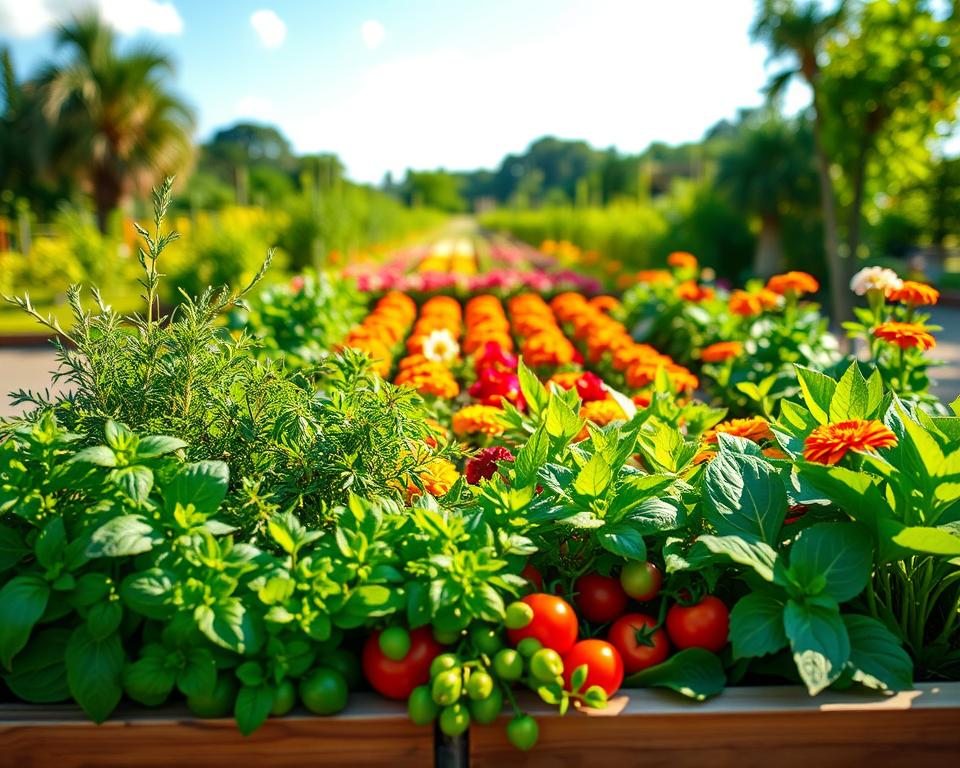
Adding herbs and flowers boosts your garden’s beauty and health. Plants like basil, rosemary, and marigolds make your space look great. They also bring in good bugs and keep pests away. This helps make your raised bed garden healthier.
Maintenance Tips for Raised Bed Gardens
Keeping your raised bed garden in top shape is key to healthy plants. You need to focus on watering right, fighting pests, and caring for your garden through the seasons. We will look into smart ways to water, control pests, and why it’s wise to change up what you grow when.
Watering Strategies
Watering your plants well is crucial. Here are ways to do it:
- Drip Irrigation: Sends water straight to roots, cutting down on waste.
- Soaker Hoses: These hoses gently water the soil, giving it constant moisture.
- Hand Watering: Perfect for small areas. Use a can or hose with a gentle nozzle to keep the soil in place.
Choose the best method for you and keep an eye on soil moisture. Avoiding too much water helps prevent root problems.
Pest Control Methods
Good pest management keeps your garden healthy. Here are some natural ways to fight pests:
- Companion Planting: Some plants, like marigolds, naturally keep pests away.
- Physical Barriers: Cover young plants with row covers to shield them from bugs.
- Natural Predators: Attract friendly bugs like ladybugs to tackle pests like aphids.
Seasonal Care and Rotation
Caring for your garden as the seasons change keeps soil fertile and plants happy. Crop rotation helps avoid diseases and pests. Here’s what you can do throughout the year:
- Spring: Time for cool-weather veggies like lettuce and spinach.
- Summer: Look out for pests and tweak how much you water as it gets hotter.
- Fall: Pick late-growing veggies and prep the soil for winter by adding compost.
Seasonal Gardening in Raised Beds
Gardening seasonally keeps your raised bed garden alive and productive all year. Each season brings its own set of tasks and rewards. This helps in getting the most out of your garden while keeping the soil healthy.
Spring Planting Tips
Spring signals the start of the gardening season. It’s time to prepare your soil with good nutrients and make sure water can drain away. You can plant cool-weather veggies like lettuce, peas, and radishes early. Wait for the soil to warm up for better seed sprouting.
- Test soil temperature for optimal seed germination.
- Choose transplants that thrive in cooler conditions.
- Consider row covers to protect tender seedlings from late frosts.
Summer Care Guidelines
With the summer heat, pay extra attention to watering and keeping pests away. This is crucial for plants like tomatoes and cucumbers that don’t handle heat well. Using shade cloth helps keep them cool, moist, and growing.
- Water deeply and regularly to encourage strong roots.
- Utilize organic pest control methods to safeguard plants.
- Add mulch to retain moisture and suppress weeds.
Fall and Winter Preparations
Getting your garden ready in fall is key for winter survival. Pick your crops when they’re just right, and start planting garlic and shallots for overwintering. Mulching with organic stuff helps protect the soil from erosion and cold, keeping it ready for spring.
- Clear spent plants to avoid pest issues.
- Incorporate compost to enrich soil before dormancy.
- Cover beds with protective layers to shield against frost.
Common Mistakes in Raised Bed Gardening
Raised bed gardening offers many plus points. However, newcomers often face problems that stop their gardens from thriving. Knowing these mistakes is key to a successful garden. It makes gardening more efficient and enjoyable.
Overcrowding Plants
Too many plants in one spot is a big mistake. Gardeners try to use all their space, so they plant too much close together. This makes plants fight for light, water, and food, which stops them from growing well. Make sure to give each plant enough space to grow healthy.
Ignoring Soil Health
Soil health is very important for plants to grow. Not taking care of the soil or adding nutrients means plants won’t do well. Test your soil often and add what it needs, like organic matter or fertilizers. This will help plants grow strong and produce more.
Poor Drainage Solutions
Bad drainage can also cause problems. If water can’t drain well, the soil gets too wet. This can make roots rot and lead to other issues. Make sure your raised bed lets water out and maybe add gravel or sand to help water flow better.
Enhancing Aesthetics in Your Garden Design
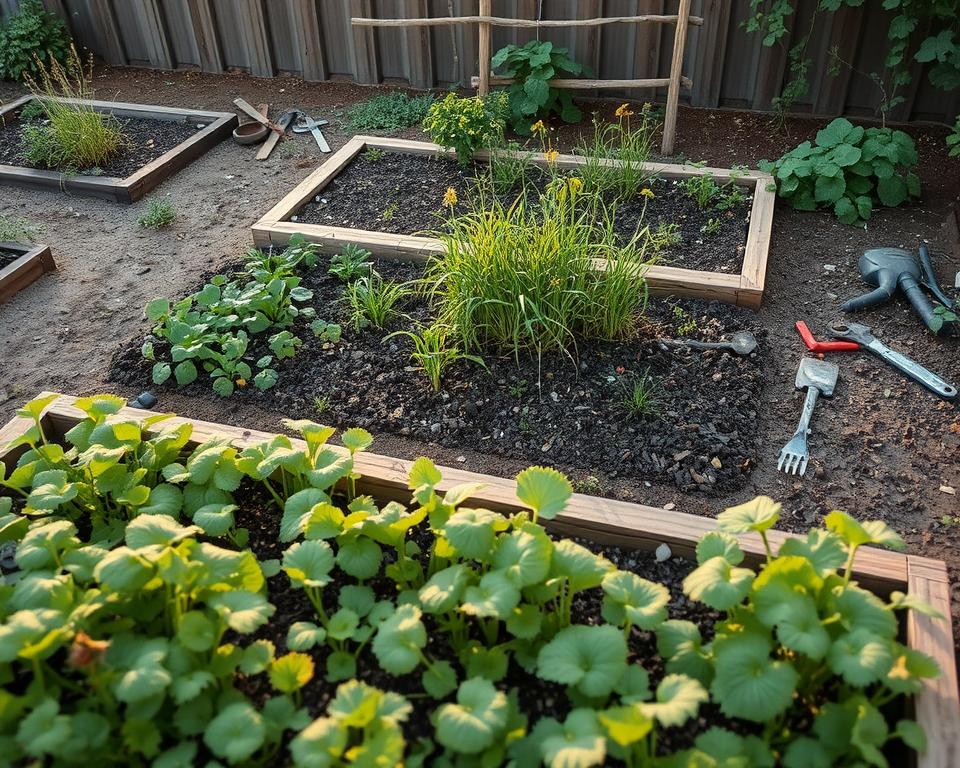
Making your raised bed garden look good improves your gardening joy and the look of your outdoor area. There are many things to think about when making a garden that looks nice and makes you want to look around.
Companion Flowers for Visual Appeal
Choosing the right flowers to go with your veggies can really make your garden look better. Flowers like marigolds and nasturtiums not only look bright and pretty, but they also bring in bees and butterflies. Plus, they help keep away pests, making your garden healthier.
Borders and Pathways
Putting in clear borders around your beds is good for looks and gardening. These borders make it easier to get to your plants and keep the garden neat. Walkways made from gravel, mulch, or stones add charm and make walking through your garden easy.
Decorative Features
Adding fun decorations like trellises from wood or iron can be the main attraction. Garden gnomes or colorful birdhouses add a personal touch. With these decorations, your garden becomes a special place that stands out.
Raised Bed Gardening for Small Spaces
Raised bed gardening is a superb option for growing plants in small areas. It uses smart techniques like vertical and container gardening. This allows city folks to enjoy lush gardens in tiny spaces. These methods make the most of small areas and make them look beautiful.
Vertical Gardening Solutions
For those with little ground space, vertical gardening is perfect. It includes wall planters, trellises, and hanging gardens. You can grow many types of plants this way without using much room. Vertical gardens let you display beautiful climbers, herbs, and flowers. They turn bare walls into stunning green spaces. Plus, they help with air flow and keep pests away.
Utilizing Containers Effectively
Container gardening is ideal for those who have little room. It allows you to use pots and raised planters creatively. You can place containers on balconies, patios, or indoors. This method adds a touch of nature anywhere. It’s flexible, encourages creativity, and makes changing your garden easy. With the right plants, you can create a lovely garden in tiny spaces.
Community and Resources for Gardeners
Being part of a gardening community makes growing plants more rewarding. Local clubs and workshops are great for learning and sharing. They teach about plant diseases and new gardening methods, helping everyone feel connected.
Online forums and blogs are also full of gardening advice. They discuss everything from handling pests to building raised beds. By joining these online communities, you meet gardeners everywhere, making your own experience richer.
It’s smart to read recommended gardening books too. These books teach about organic methods and how to water plants well. Combining tips from local and online sources with what you learn from books helps your garden thrive. It also rounds out your knowledge about gardening.