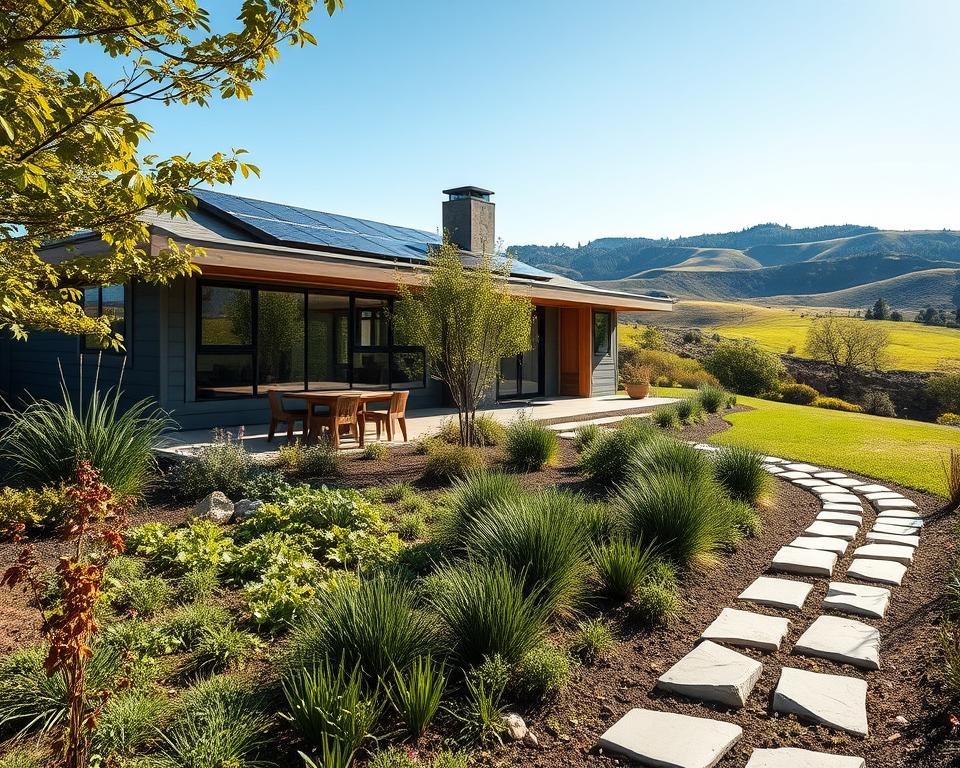
Did you know that passive solar homes can cut energy costs in half? This shows how much energy-efficient design matters. Home builders and buyers now care more about saving money and protecting our planet. Because of this, passive solar home design has become a big deal in green architecture.
These homes work with the natural surroundings to lower heating and cooling costs. They also make living spaces more comfortable. With the right knowledge in energy-efficient house design, owners can enjoy lower bills and a greener lifestyle.
Key Takeaways
- Passive solar homes can reduce energy costs by up to 50%.
- They utilize natural surroundings for optimal energy efficiency.
- Key to sustainability, they enhance the living experience.
- Expertise in design can maximize energy efficiency benefits.
- Comfort in homes rises significantly with passive solar techniques.
What Are Passive Solar Homes?
Passive solar homes are creative buildings that use sunlight for heat and power. They focus on keeping the inside comfortable without extra equipment. These homes show how eco-friendly designs can follow sustainable architecture ideas.
Definition and Overview
Passive solar homes use nature’s energy to cut down on power use and keep things comfy. They have big windows, materials to store heat, and good insulation. This way, they lower energy bills and make less of an environmental impact, showing a strong push for sustainable living.
Key Features of Passive Solar Design
- Window Orientation: South-facing windows get the most sun, heating the space naturally.
- Thermal Mass: Concrete and stone store daytime heat and release it at night, balancing temperatures.
- Insulation: Top-notch insulation keeps heat from escaping, ensuring comfort all year.
- Natural Ventilation: Designed for cross-breezes to cool the home, cutting the need for air conditioning.
How Passive Solar Homes Work
Passive solar homes work in a smart way. They use the sun’s heat and light in their design. This makes them efficient and comfy all year.
The Principles Behind Passive Solar Energy
These homes follow specific rules about their layout, windows, and building materials. They face a certain way to get more sun in the winter but stay cool in the summer. Big windows let in sunlight, warming the space naturally. And materials like concrete hold this heat and slowly release it, keeping the house warm.
Benefits of Harnessing Solar Energy
Using solar energy saves money and reduces reliance on traditional power sources. It also makes homes cozier and regulates temperature better. By going solar, homeowners help the planet and contribute to a greener future.
Benefits of Building a Passive Solar Home
Building a passive solar home brings many great benefits for eco-friendly living. These homes are designed to be energy-efficient. This helps lower how much energy they use. Homeowners get to save money on their energy bills and help the planet too. Using green building methods also reduces the harm to our environment. It shows why choosing eco-friendly building options is key.
Energy Efficiency and Cost Savings
Passive solar homes are known for their energy-saving designs. They use the sun’s energy to keep warm, cutting down on the need for electric heating. This means homeowners can save a lot on their electricity and heating costs. Over time, these savings add up, making for a financially smart choice.
Environmental Impact Reduction
Going green with building techniques boosts energy efficiency and helps the planet. Passive solar homes use resources wisely, leading to less waste and pollution. This thoughtful way of building makes our planet healthier. It’s a smart move for those who care about the environment.
Enhanced Comfort and Lifestyle
A passive solar home offers a more comfortable life. It’s built to make sure those living there enjoy natural light and steady temperatures. Better air quality is another plus. These factors make life better and more sustainable for residents. Choosing sustainability not only helps the environment. It also leads to a happier, healthier way of living.
Designing a Passive Solar Home
Designing a passive solar home takes careful thought and planning. It starts with selecting a site and orienting the home to get the most sunlight. This step is key for an energy-smart design. Then, choosing the right materials is crucial. They improve the home’s green credentials and make it cozy and efficient.
Orientation and Site Selection
For passive solar homes, how the house faces is super important. Pointing the house south catches more sun in winter but less in summer. Picking a spot that’s sheltered from strong winds also adds to the home’s energy-saving features. Thinking about these things early builds a solid base for a green home.
Choosing the Right Materials
Picking materials wisely is key for passive solar homes to be energy-efficient. Good insulation stops heat from leaking out. Materials like concrete or stone keep inside temperatures steady. Going for green choices lowers the impact on our planet and supports smart design. This way, the house is both tougher and more eco-friendly.
Integrating Energy-Efficient Windows
Windows are a big deal in passive solar homes. They let in sunshine but keep the heat from getting out. Coatings on windows, known as low-E, really increase insulation. This cuts down on energy use. Smart placement of awnings stops too much sun in summer, making the house comfortable all year.
Common Design Elements in Passive Solar Homes
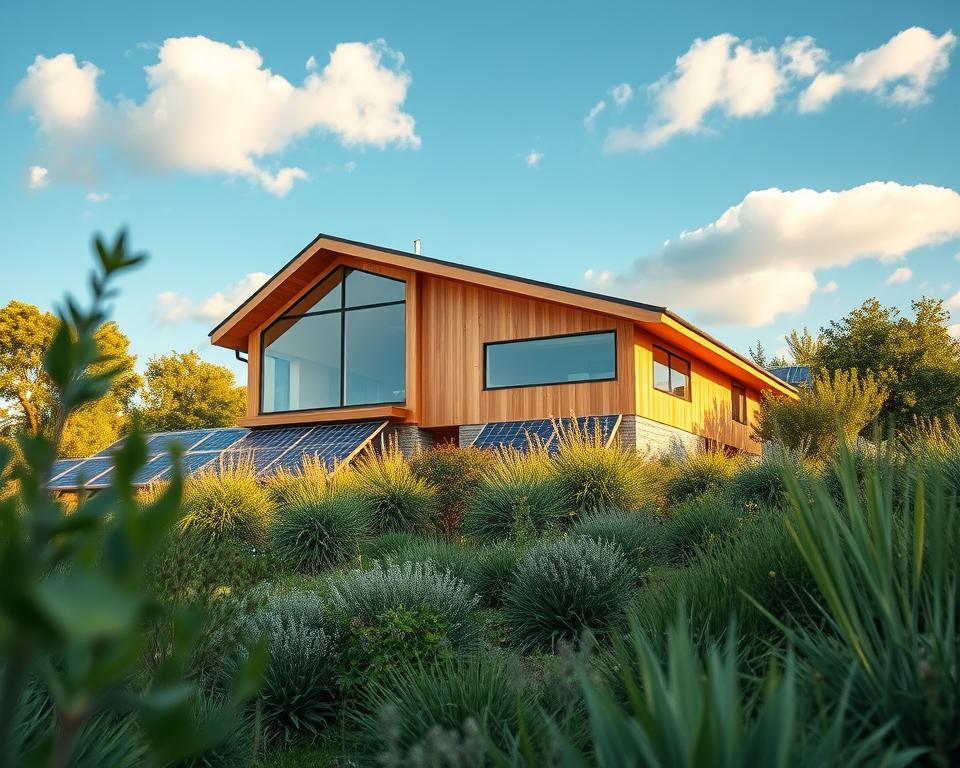
Understanding the key design elements of passive solar homes is a must for effective energy-efficient design. It’s about embracing sustainable architecture. These elements work together to use solar energy well and keep homes comfortable.
Thermal Mass and Insulation
Materials like concrete and stone are key in passive solar homes. They soak up heat during the day and slowly release it at night. This helps control indoor temperatures. When paired with good insulation, these materials keep the home energy-efficient all year.
Appropriate Roof Overhangs
Designing roof overhangs is essential in passive solar architecture. They protect windows from the summer sun while letting winter sunlight in. This smart design lowers the need for cooling in summer and keeps the home warm in winter.
Natural Ventilation Techniques
Natural ventilation is crucial for sustainable living in passive solar homes. Using smart design, like placing windows and vents correctly, helps air move well inside. This improves air quality and comfort. It also cuts down on the need for artificial heating and cooling, saving energy.
Passive Solar Home Case Studies
Across the U.S., many passive solar homes showcase successful design ideas. These case studies show great architectural solutions and how climate impacts design for energy-efficient homes. By looking at these examples, builders and homeowners can learn a lot about eco-friendly building.
Successful Examples Across the U.S.
In various parts of the country, passive solar design is being used well. For example, the Farnsworth House in Illinois uses big glass panels for solar heat but also keeps the home insulated. In California, the Zero Energy House merges passive design with technology like solar panels and low-energy appliances. These homes show how to use passive design in different ways to save energy and stay comfortable.
Lessons Learned from Real Projects
The lessons from these case studies are very valuable. Choosing the right site can make a big difference in energy efficiency. People have found that using natural air flow makes indoor air better and cuts down on the need for AC or heating. These projects prove that the right materials can make a home both more efficient and nicer to look at.
Potential Challenges of Passive Solar Homes
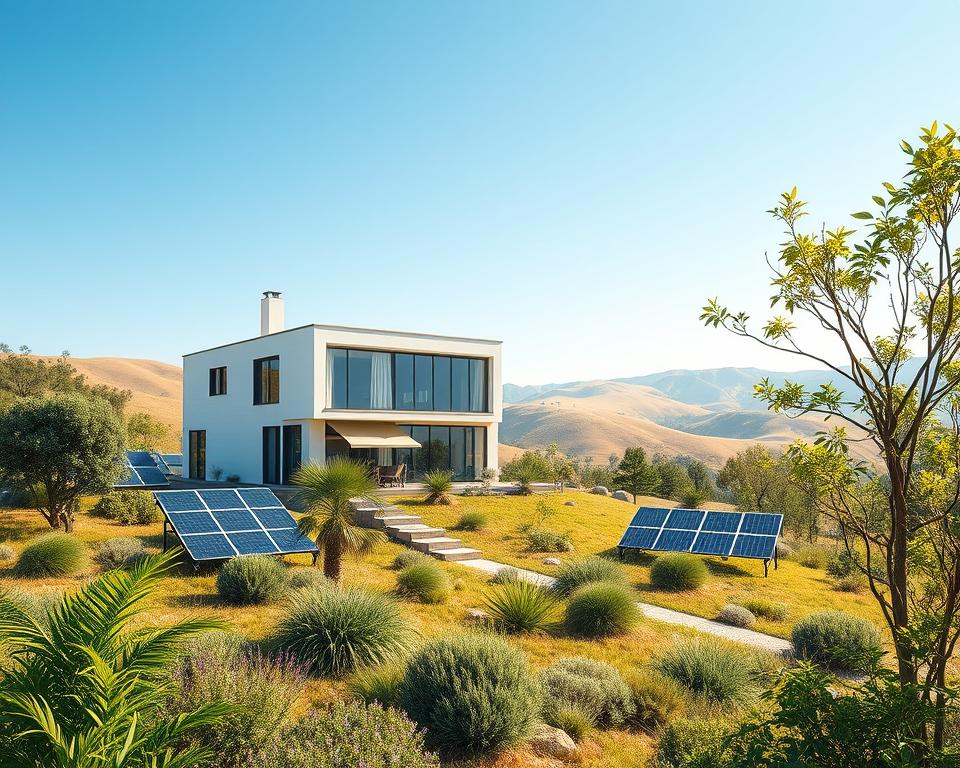
Passive solar homes have a big appeal, but they come with challenges. Building them usually costs more than traditional homes. This is due to special materials and the need for experts. Homeowners should think about their budgets and the savings these homes bring over time.
Initial Costs and Budgeting
Passive solar homes cost more upfront. But, they lower energy bills later and can raise your home’s value. When planning, remember:
- Effective thermal performance needs quality materials.
- Expert sustainable architects’ design fees.
- Long-term benefits like substantial energy savings can make up for the initial costs.
Homeowner Misconceptions
Some homeowners hesitate because of misconceptions. They worry about:
- The effort to maintain energy-efficient systems.
- If their investment will last.
- How well these homes do in various climates.
Educational resources can clear up these doubts. Knowing how efficient passive solar systems are can change minds and spread their use.
| Challenges | Impact | Recommendation |
|---|---|---|
| High Initial Costs | May deter homeowners | Consider long-term savings |
| Misconceptions | Hinders project interest | Provide educational resources |
| designer expertise needed | Potential delays and costs | Invest in skilled professionals |
How to Retrofit Your Home for Passive Solar
Retrofitting your home makes it more energy-efficient and harnesses passive solar benefits. It starts by checking your current energy use. This reveals where you can make the biggest improvements. These changes can make your home comfier and more efficient.
Assessing Your Current Energy Use
An energy audit is step one. It looks at your heating, cooling, insulation, and windows. Knowing your home’s energy use lets you see what needs work. For example, old windows that leak air can be replaced to make your home function better.
Simple Upgrades to Enhance Efficiency
With a clear idea of what to fix, you can start making upgrades. These improvements include:
- Adding things like concrete to store heat and keep indoor temperatures steady.
- Boosting insulation to keep heat in during winter and out in summer.
- Putting in energy-saving windows that cut down on drafts and soak up sunlight.
These easy steps can shift your home to work with passive solar ideas better. Retrofitting increases energy efficiency and makes living there nicer.
Government Incentives for Passive Solar Homes
Building a passive solar home can cost a lot. But, many government incentives ease this financial burden. Homeowners can often find financial help from government programs. These programs make green homes easier to afford and a smart investment.
Tax Credits and Rebates
Homeowners can benefit from tax credits and rebates. These are offered by federal and state governments to encourage energy-saving homes. These incentives can reduce your construction or retrofitting costs. By taking advantage of these, you can lower your tax bill and help the planet too.
Local Programs and Resources
Local governments also provide support for renewable energy homes. They offer funding or help to improve the design and efficiency of green homes. By connecting with local programs, you can get the most support for your eco-friendly home project.
The Future of Passive Solar Home Design
Looking forward, passive solar home design is evolving with new innovations. These changes aim at boosting energy efficiency. Sustainability in architecture is becoming vital in building design. New materials and methods help merge passive solar principles into homes. This makes them energy-efficient, comfy, and good-looking.
Innovations in Materials and Techniques
New materials like advanced thermal mass substances are changing passive solar homes. These materials store energy well and keep heat in. This boosts a home’s efficiency a lot. Automated shading systems are also popular now. They let owners control light and heat without hassle. These advancements keep passive solar homes eco-friendly and climate-ready.
The Role of Technology in Sustainable Housing
Technology plays a big role in making housing sustainable. Smart home systems track and manage energy use smartly. They adjust indoor conditions using real-time info. This not only saves energy but also makes living better. As more homes use these technologies, eco-friendly living will grow. It will become easy and attractive for more people.