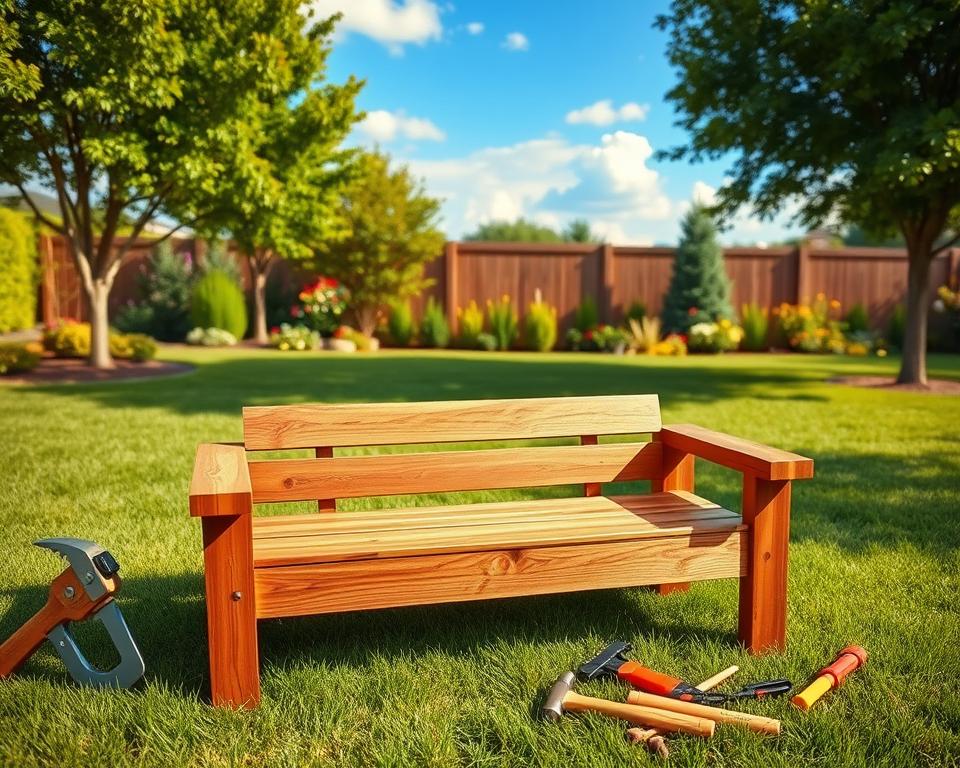
Did you know that over 70% of Americans love being outdoors in their free time? This shows how much people care about their outdoor spaces, including the need for comfy places to sit, like benches. If you want to make your garden or backyard look better, building an outdoor bench is a great idea. This guide will show you everything from choosing materials to the joy of making something unique. No matter if you’re experienced or new to DIY, this guide on how to build an outdoor bench will motivate you to make a piece of furniture that matches your style perfectly.
Key Takeaways
- Building an outdoor bench improves your living space.
- DIY projects can be cheaper than buying from a store.
- Making something yourself is satisfying and joyful.
- Picking the right materials helps your bench last longer.
- Your design can show your style and fit your area.
- You need the right tools to build your bench easily.
- Keeping your bench in good condition is important for its longevity.
Why Build an Outdoor Bench?
Making an outdoor bench is not just for passing the weekend. It adds great benefits to your space and self-improvement. You get to be creative, save money, and feel really proud of what you’ve made. Let’s dive into why this project is so rewarding.
Benefits of DIY Projects
DIY projects, like making a bench, encourage us to be creative and sharpen our skills. You’ll learn to measure, cut, and put things together. These skills boost confidence and prepare you for even bigger projects ahead.
Cost Savings Compared to Store-Bought
Building your own bench saves a lot of money. Instead of paying $100 to $500 for something premade, making it yourself can cost $30 to $50. This huge saving lets you spend your money on other home or garden projects.
Satisfaction of Creating Something Yourself
There’s something special about making your own furniture. Crafting a bench brings a deep sense of pride.
Whenever you sit on it, you feel good knowing you made it. This process of turning raw materials into something useful brings joy. It makes your outdoor space more inviting and personally significant.
Choosing the Right Materials
Choosing the right materials is key for making a durable, appealing outdoor bench. There are many options, each with its own benefits for different tastes and weather conditions.
Types of Wood for Outdoor Use
Cedar, redwood, and pressure-treated lumber are great choices for outdoor benches. Cedar fights off decay and bugs naturally. It’s a top pick for many.
Pressure-treated lumber is treated with chemicals for longer life. It’s also affordable. Every wood type has a unique look, affecting the style of your garden or patio.
Alternatives: Metal and Plastic
For easier care, consider metal or plastic benches. Aluminum or steel benches are strong and last a long time. On the other hand, plastic benches need little maintenance and are made from recycled materials.
Both materials can withstand rough weather. This makes them good choices for any climate.
Weather-Resistant Finishes and Paints
Applying weather-resistant finishes to wooden benches is a must. Products like Thompson’s Water Seal boost durability and highlight the wood’s natural beauty. Choosing the right paint, like a dark walnut finish, can also make your bench stand out.
Designing Your Outdoor Bench
Planning the perfect outdoor bench requires attention to detail. You must think about size and space. This impacts both how it looks and works. Choose a modern or rustic style that matches your outdoor area. Adding storage makes the bench both stylish and practical.
Considerations for Size and Space
First, measure your outdoor space to see where the bench can go. A good bench fits well and looks like it belongs. It must also be comfortable to sit on. Outdoor bench design inspiration comes in many styles. A bench that fits your space well will look better.
Style Options: Modern vs. Rustic
Deciding between modern and rustic styles is important. Modern means clean lines and simple designs. Rustic uses natural wood for a cozy feel. The right style blends with your outdoor space. This choice influences your garden or patio’s overall vibe.
Incorporating Storage Solutions
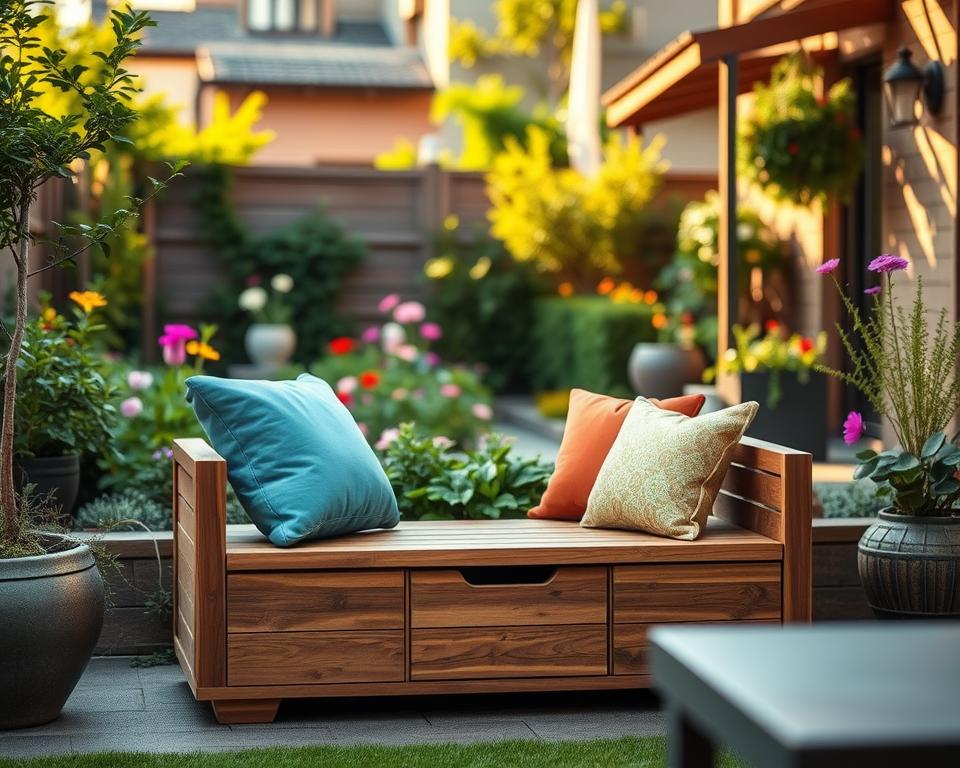
Adding storage to your bench is smart. Use hidden spots for cushions, tools, or toys. This keeps your outdoor area neat. A bench with storage meets design and space needs, especially in small places.
| Style Option | Key Features | Ideal Space Type |
|---|---|---|
| Modern | Sleek lines, minimalistic | Contemporary gardens, patios |
| Rustic | Natural materials, traditional look | Cottages, countryside settings |
Essential Tools for the Job
To build an outdoor bench the right way, you need the proper tools. Knowing the difference between hand and power tools is key. It makes your work efficient. Beginners should start with basic hand tools for an easier approach. But, experienced DIYers often prefer power tools for better speed and accuracy. Also, never forget the safety gear. It’s very important.
Hand Tools vs. Power Tools
Hand tools are great for a more hands-on building experience. They’re good for beginners. You’ll use things like hammers, saws, and chisels. On the other hand, power tools like drills and jigsaws make your work faster and neater. Your choice should depend on how comfortable you are with the tools.
Must-Have Items for Beginners
If you’re starting your first DIY project, you’ll need some key tools. Here’s what you should get:
- Measuring tape
- Square
- Hand saw or circular saw
- Drill
- Screwdriver set
Getting these tools prepares you to take on many projects in the future.
Safety Gear to Keep You Protected
Working safely should always be your top concern. You’ll need special gear for that. This includes:
- Safety goggles to keep your eyes safe
- Gloves to protect from cuts
- Dust masks for clean breathing
The right safety gear keeps you safe. It lets you work on your project with no worries.
Step-by-Step Guide to Building the Bench
Starting a DIY project for an outdoor bench is exciting and fulfilling. With the right steps, you can make a strong, pretty bench for your garden. This guide gives easy-to-follow instructions for making your bench.
Preparing Your Workspace
First, create a tidy and organized area to work in. Make sure you have lots of space and can easily reach all your tools and materials. Always put safety first by wearing gloves and goggles while you work.
Cutting and Assembling the Frame
Cut your wood to the right sizes next. A circular saw will help make accurate cuts. Fit each piece tightly together. Then, stick the frame together with waterproof wood glue and outdoor screws. This will make sure your bench lasts outside.
By carefully following the instructions, you’ll build a solid bench frame.
Attaching the Seat and Finishing Touches
When the frame is ready, attach the seat securely. This ensures both comfort and safety. Finish by sealing the wood to protect it and improve its look. You can add adjustable feet for more stability on uneven surfaces. This makes the bench useful anywhere outside.
Adding Personal Touches
Making your outdoor bench your own is key. Consider custom paint ideas that match your style and surroundings. Choose from bright or soft colors to make your bench stand out.
Custom Paint or Stain Ideas
Picking paint or stain can really make your bench look better. Try ombre or stenciling for more style. Use weatherproof finishes to keep your bench looking good, no matter the season.
Adding Cushions and Comfort
Cushions make outdoor benches more comfortable and stylish. Find cushions that can handle weather and add softness. Mixing patterns can make your bench even more special and inviting.
Unique Accessories: Planters and Cup Holders
Add accessories to your bench for usefulness and style. Cup holders and planters add convenience and beauty. These touches turn your space into a cozy extension of your home.

Maintenance Tips for Longevity
Keeping your outdoor benches in good shape is essential. They last longer and look better if you take care of them. Doing certain tasks every season helps keep your furniture in top condition, even with changing weather.
Seasonal Care for Wooden Benches
Cleaning regularly is key for bench care. Just washing with soapy water can remove dirt and grime. It’s important to check for wear like splintering or color fading twice a year. After cleaning, apply a new layer of sealant or weatherproof finish to protect from water and sun.
How to Repair Common Damages
Over time, wooden benches can get damaged. For small cracks, using wood filler helps fix the look. Sanding before using repair materials makes sure the finish is even. For bigger problems, you might need to replace parts. Having extra wood on hand is useful.
Protecting Your Bench from the Elements
Where you place your bench is important for protection. Keeping it in a shaded spot can reduce sun damage. Covers help against rain and snow when the bench isn’t used. In winter, moving benches indoors or under cover gives them the best protection.
| Season | Maintenance Task | Recommended Products |
|---|---|---|
| Spring | Clean and Inspect | Soap, Soft Brush, Sealant |
| Summer | Apply Weather-Resistant Finish | Outdoor Wood Stain, Varnish |
| Fall | Repair Minor Damages | Wood Filler, Sandpaper |
| Winter | Protect with Covers | Waterproof Bench Cover |
Outdoor Bench Ideas for Small Spaces
Small space outdoor bench ideas can revolutionize your outdoor area. They ensure even tiny patios or balconies have comfortable seating. Here are some clever options to consider.
Folding Benches for Versatility
Folding benches are perfect for maximizing space. They collapse when you don’t need them, ideal for surprise gatherings. These benches adapt easily for relaxing or hosting friends.
Built-In Benches for Patios
Built-in benches blend smoothly with your patio design. They offer lots of seating without taking up too much space. By matching them to your patio, you enhance both function and style outdoors.
Stackable Benches for Easy Storage
Stackable benches save space too. When not needed, stack them away. They’re perfect for different events, giving you the chance to change your outdoor setup as needed.
DIY Bench Plans and Inspirations
Making an outdoor bench by yourself is very rewarding. There’s a lot of help out there to get you started. You can find inspiration or step-by-step guides easily as you begin crafting your bench.
Free Online Resources
Many websites offer great plans for outdoor benches, for all levels of skill. Check out Kreg Tool’s library for projects that are perfect for both newbies and pros. Plus, there are free videos and tutorials that show you how to make a bench, step by step.
Books and Magazines with Designs
If you like flipping through pages, there are books and magazines just for you. They’re full of woodworking projects, including benches. You’ll find easy-to-follow instructions, pictures, and tips. These can help you pick the best bench design for your garden.
Community Workshops for Ideas
Local community workshops are a great place to learn more. They don’t just teach you how to make things; they let you meet others who love DIY. Sharing ideas with them can give you new inspiration for your bench project. It also helps build a community of DIY fans.
| Resource Type | Description | Benefits |
|---|---|---|
| Online Resources | Free websites and video tutorials | Accessible guidance and visual aids |
| Books & Magazines | Print media with designs and articles | In-depth information and inspiration |
| Community Workshops | Local sessions with hands-on experience | Networking and personalized advice |
Safety Considerations When Building
DIY projects can be fun and challenging. Putting safety first leads to success and less risk. It’s important to avoid common injuries, ensure good air flow for wood projects, and know how to handle heavy stuff safely.
Avoiding Common DIY Injuries
Injuries can happen if you don’t use tools right or forget safety steps. Here are some basic safety tips:
- Always wear protective gear like gloves and goggles.
- Keep your workspace organized to prevent tripping hazards.
- Use tools as intended, avoiding makeshift solutions that could lead to accidents.
- Take breaks to prevent fatigue, which can lead to mistakes and injuries.
Importance of Proper Ventilation
When working inside or with certain materials, good ventilation is key. It reduces the risk from harmful fumes. Open windows or use fans to move air around and keep the area safe while you work.
Working with Heavy Materials
Handling heavy items safely is very important. Here are tips to avoid danger:
- Assess the weight of materials before lifting.
- Use proper lifting techniques, bending at the knees and keeping the load close.
- Consider using equipment like dollies or hoists for larger items.
Final Thoughts and Encouragement
As you finish your outdoor bench project, remember to appreciate your DIY creativity. Each cut and stain shows your unique touch. This can bring great joy and satisfaction. Your hard work not only shows your skill but also your personal style.
When your bench is ready, think about showing it to friends, family, or online groups. This sharing can inspire others to start their own DIY projects. It can spark creativity in them. You might be surprised at how your project encourages others to try DIY.
Joining a local DIY group is a great idea too. These groups offer support, new ideas, and friendships with people who love DIY like you. Connecting with fellow DIY lovers can introduce you to new techniques and projects. It makes the DIY journey even more fun.