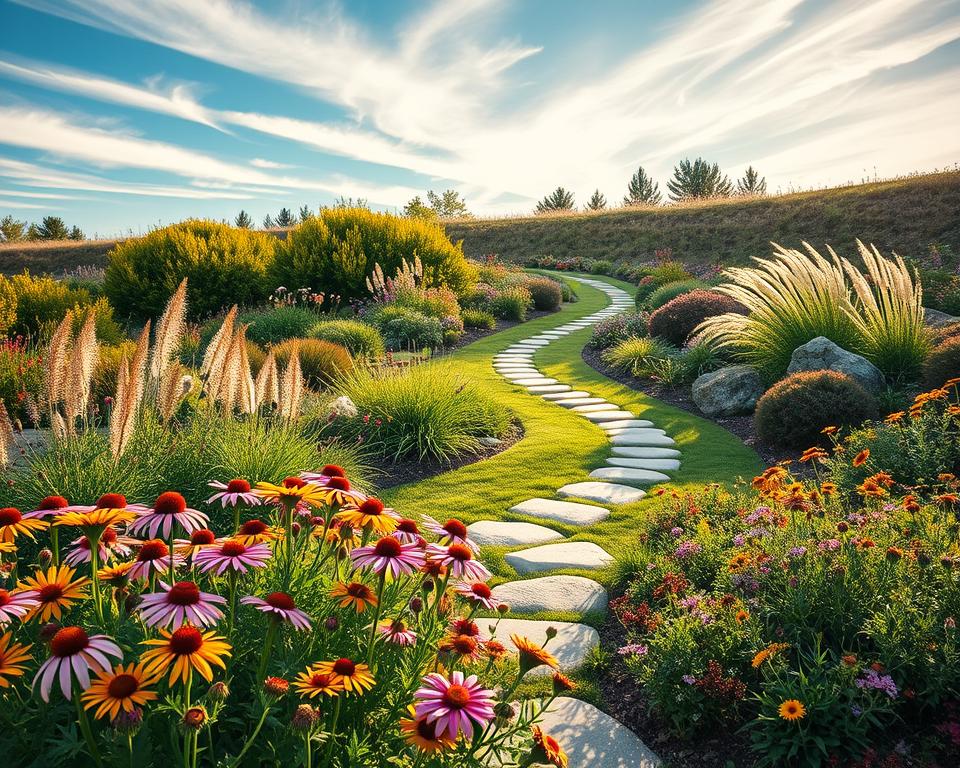
Did you know native plants can cut water use by up to 90% versus regular gardens? This fact shows how local plants in gardens promote sustainable practices. They make your garden look great and help the planet.
Native plant gardens are key to increasing biodiversity and aiding ecosystems. By picking plants from your region, your garden will naturally flourish. This decision lowers your impact on nature.
Key Takeaways
- Native plant gardens can drastically conserve water.
- They enhance biodiversity and support local wildlife.
- Choosing local flora simplifies landscape design maintenance.
- Eco-friendly landscaping benefits the environment.
- Native plants often require fewer chemical inputs like fertilizers and pesticides.
Why Choose a Native Plant Garden?
Choosing a native plant garden brings many benefits for your outdoor space and the planet. These gardens help local ecosystems and offer practical perks for gardeners. They’re good for your garden and the environment.
Benefits for Local Wildlife
Native gardens are crucial for attracting local wildlife like birds and butterflies. They offer food and shelter, supporting balanced ecosystems. This makes your garden not just pretty but also a haven for important creatures.
The presence of native plants boosts local biodiversity. It supports vital wildlife populations. Your garden can help the environment by being more than just a beautiful space.
Low Maintenance Needs
Native plant gardens are easy to take care of. They need less water, fertilizer, and pest control because they’re adapted to the local environment. This means you can enjoy your garden more and work less.
Choosing native plants makes gardening simpler. Your garden will thrive with little effort from you. It’s a smart way to have a beautiful landscape without much work.
Environmental Considerations
A native plant garden supports environmental health. It uses less water, enhances soil, and prevents erosion. By planting native species, you’re helping to create sustainable ecosystems.
This choice is about more than just your garden. It helps the whole planet. You’re contributing to a healthier earth with every native plant you grow.
Getting Started with Your Native Plant Garden
Starting a native plant garden takes thought and recognizing your area’s needs. Begin by assessing your garden space to figure out the best plants. Look at sunlight, shade, and how high your garden sits. This info helps pick plants that will do well.
Assessing Your Space
When checking your garden area, note its size and what’s already there. Spot spots with lots of sun and areas that are more in the shade. Choosing native plants that fit your garden’s specific conditions will be easier.
Understanding Your Local Climate
Your local climate is crucial for your native plant garden. Get to know the temperatures, how much it rains, and how the seasons change. This will guide you in picking plants that can grow well.
Soil Considerations
It’s vital to understand your soil type for a successful garden. Different plants need different types of soil. Find out if your soil is sandy, clay, or loamy. Also, think about how well your soil holds water. This is key to your plants’ health and growth.
| Soil Type | Characteristics | Best Suited Plants |
|---|---|---|
| Sandy | Well-draining, loose, quick to warm up | Prickly Pear, Coneflower |
| Clay | Dense, retains moisture, slow to warm | Black-Eyed Susan, Swamp Milkweed |
| Loamy | Balanced moisture and drainage, nutrient-rich | Wild Bergamot, Joe-Pye Weed |
Designing Your Native Plant Garden Layout
Designing a native plant garden starts with planning for sun and shade. Analyze your garden’s sunlight throughout the day first. This lets you pick plants that will grow well in your yard.
Planning for Sun and Shade
Begin by figuring out where the sun shines in your garden. Find the full sun spots, the partially lit areas, and the shady spots. This way, you can design your garden to fit the light needs of different plants. Choosing the right spot for each plant helps them grow better and makes your garden look great.
Selecting the Right Plant Combinations
Choosing plants that look good together makes your garden stand out. Use plants of different heights and textures. Ground covers, mid-height plants, and taller ones create a natural look. This not only looks beautiful but also helps local wildlife thrive in your garden.
Choosing Native Plants for Your Region
Choosing the right native plants is key for a healthy garden. Learning about local plants can boost your garden’s success. Resources help make your garden beautiful and eco-friendly.
Resources for Plant Selection
Local nurseries and extension services give top-notch advice on native plants. They know which species do best in your area. Botanical gardens let you see plants up close. Online databases offer loads of info on native plants and their benefits.
Popular Native Plants in the U.S.
In the U.S., many gardeners love plants like common milkweed and butterfly milkweed. Black-eyed Susan and coneflowers are also favorites. These plants attract pollinators and are tough enough for different settings. Adding them to your garden helps increase plant diversity and beauty throughout the year.
Planting Your Native Garden
Starting a native plant garden takes more than just digging holes and planting seeds. You need to follow the best practices for planting. This helps your plants grow well in their new home. By planning well, you can make a garden that looks good and helps local wildlife.
Best Practices for Planting
- Prepare the Soil: Begin by checking your soil’s nutrients and pH level. Add compost or organic matter to improve fertility.
- Proper Spacing: Space plants properly by following the recommended guidelines. This avoids overcrowding, ensures good airflow, and lowers disease risk.
- Planting Depth: Plant native plants at the correct depth. Usually, the plant’s crown should be level with the soil for best growth.
Timing Your Planting Season
Knowing when to plant is key to your garden’s success. Spring and fall are the best times to plant native species. The weather during these seasons helps roots grow. Plant your garden in batches to manage watering better and help plants adjust.
Caring for Your Native Plant Garden
Looking after native plants helps them grow strong in their environment. Good watering practices are key to their health. Although these plants are tough and don’t need much water after settling in, they still need careful attention at the start.
Watering Tips
For better moisture, try these tips:
- Use drip irrigation systems to water efficiently.
- Water deeply to help roots grow tall, reaching lower soil levels.
- Change when you water based on the weather and seasons.
Keep an eye on the soil’s wetness. This means your plants won’t get too much or too little water. Looking after them this way makes them better at handling dry times.
Fertilizing and Mulching
Adding organic mulch with your watering efforts benefits your native garden. Here’s the scoop:
- Organic mulch keeps the soil moist, evens out soil temp, and stops weeds.
- Compost gives plants vital nutrients, letting them grow without chemical fertilizers.
- Spread mulch around your plants, but not touching the stems to avoid rot.
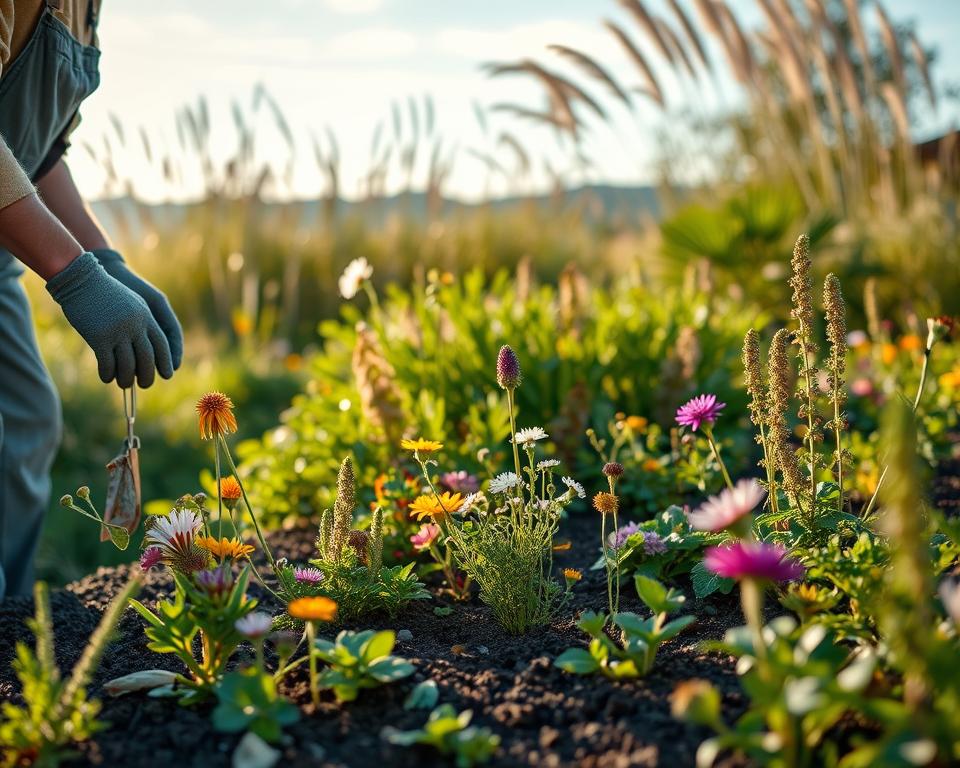
This whole-care method keeps your native plant garden looking great for years. Your outdoor areas will be both beautiful and sustainable.
Attracting Pollinators to Your Garden
Making a home for pollinators like bees and butterflies is crucial for keeping biodiversity alive. By building good habitats, gardeners give these important creatures what they need to live. This action makes your garden more beautiful and helps balance nature around us.
Creating Habitats for Bees and Butterflies
Pollinator habitats need different features to support these insects at all life stages. They should have:
- Native plants for food and nesting
- Water sources for drinking
- Sunny spots for warming up
These efforts are important for bringing wildlife to your garden. They ensure your garden is full of life and buzzing with activity.
Choosing Nectar-Rich Flowers
Picking the right flowers is key to attracting pollinators. Choose a variety of nectar-rich, native flowers that bloom at different times. Here are some popular choices:
| Flower | Blooming Season | Pollinators Attracted |
|---|---|---|
| Asters | Late Summer to Fall | Bees, Butterflies |
| Bee Balm | Summer | Hummingbirds, Bees |
| Goldenrods | Late Summer to Fall | Bees, Butterflies! |
Adding these plants to your garden will create a lively ecosystem. It boosts your chances of seeing your garden buzzing with different pollinators.
Pest Management in Native Plant Gardens
Maintaining a native plant garden requires effective pest control. Using natural methods helps protect plants and wildlife. These tactics keep pest numbers low and increase the garden’s biodiversity.
Natural Pest Control Methods
Natural pest control is great for your garden. By using companion planting, you can keep pests away naturally. This means putting together plants that insects don’t like with those that are bug-prone. This creates a natural barrier. Plus, avoiding chemicals helps keep the good bugs safe, which is key for a healthy garden.
Identifying Beneficial Insects
Knowing which insects help your garden is crucial. Ladybugs, lacewings, and parasitic wasps naturally keep pests in check. Encouraging these good bugs means you can use fewer chemicals. This makes your garden more robust and full of life.
Seasonal Changes in a Native Plant Garden
Gardening fans know each season adds different challenges and beauty. It’s vital to follow seasonal gardening to adapt. Aligning care routines with the season’s demands helps plants thrive and beautifies your garden year-round.
Adapting Your Garden for Each Season
Adapting your gardening methods for each season is key for native plants. Different seasons mean different care is needed. For instance:
- Spring: It’s perfect for planting new natives and splitting large perennials.
- Summer: Watering becomes essential in dry periods. Using mulch helps keep the soil moist.
- Fall: Keep the seed heads to feed local wildlife and enjoy autumn’s colors.
- Winter: Clean garden debris and mulch to protect perennials.
Seasonal Plant Maintenance Tips
Keeping native plants healthy all year requires these maintenance tips:
| Season | Maintenance Task | Benefits |
|---|---|---|
| Spring | Pruning and planting | Spurs new growth and better shape |
| Summer | Watering and mulching | Keeps soil moist and fights weeds |
| Fall | Cutting back and saving seeds | Gets plants ready for sleep and helps with growing new ones |
| Winter | Removing debris and mulching | Keeps roots safe and stops erosion |
Incorporating Hardscaping Elements
Hardscaping makes native gardens look better and work better. Adding paths and patios invites people to see and enjoy the plants. Putting paths in the right spots lets people explore without hurting the soil or plants.
Adding Paths and Patios
Paths and patios help people move around in a garden with native plants. They make nice spots for hanging out. You can use concrete, brick, or flagstone. Just make sure they look good with the plants. A good path lets people see the flowers without stepping on the soil too much.
Using Natural Materials
Using natural stuff like stone, wood, and gravel fits a native garden’s look. It also helps plants grow by draining water well. Pick materials that go well with your area and help nature stay balanced.
Educational Opportunities with Native Plant Gardens
Native plant gardens are a special place for learning and gardening. They offer rich experiences for kids and adults. Gardening here helps people understand ecology, conservation, and the importance of native species. By getting involved, communities grow closer and learn to take care of nature.
Involving Children in Gardening
Gardening with children helps them love the environment. Working with native plants makes learning fun and teaches them about nature’s diversity. They learn everything from planting to taking care of the plants. This creates a strong bond with nature and teaches them about the ecosystem.
Hosting Community Workshops
Community workshops on native plant gardens are great for learning and sharing gardening tips. These events bring together gardening fans and experts. Everyone learns about native plants and how to care for them. Workshops can talk about designing gardens, managing pests, and eco-friendly methods. They encourage community activity and spread a love for gardening.
Celebrate Your Native Plant Garden
Sharing your native plant garden’s beauty can really make your community gardening more fun. When you invite neighbors over, you’re not just showing off your efforts. You’re also making friends in the neighborhood. Talking about native plants’ benefits can inspire them to pick similar plants, leading to a shared love for local greenery.
Opening your garden is one thing, but getting involved with local gardening groups takes it up a notch. These groups offer a chance to share knowledge and have fun with plant swaps. Being part of these communities lets you learn and connect with people who love native plants as much as you do.
It’s key to remember that enjoying your native plant garden goes beyond just your own success. It’s about building a sense of community. By sharing your garden and working with others, you help our planet and form deep bonds through a love of nature.