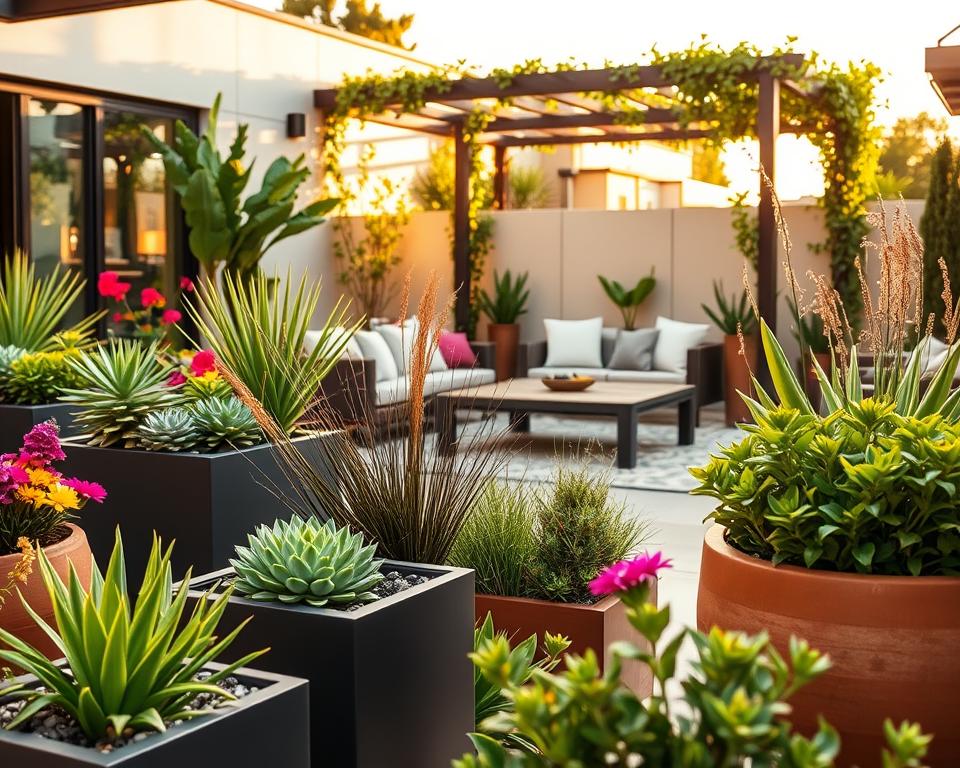
Did you know nearly 85% of Americans live in cities, often with tight space for gardens? This surprising fact shows a big need for modern patio planting. It’s a cool way to make lush outdoor spots. Through modern landscaping, we can make small areas into lovely havens. These spaces not only look good but also improve how we enjoy the outdoors. We’ll explore new garden design ideas that use space and style wisely. Even with little room, your creativity doesn’t have to be small.
Key Takeaways
- Modern patio planting offers creative solutions for limited outdoor spaces.
- Incorporating trendy outdoor planters enhances aesthetic appeal.
- Choosing the right plants can transform your patio into a vibrant retreat.
- Contemporary landscaping ideas are essential for effective outdoor garden design.
- Maximizing style does not compromise functionality in modern patios.
Why Modern Patio Planting Matters
Modern patio planting is key in making outdoor spaces welcoming and useful. With smart garden designs, homeowners boost the look of their outdoor areas. Good gardens show off personal style and bring many benefits.
Enhancing Outdoor Spaces
Adding trendy greenery to backyards makes spaces lively, perfect for relax or fun. Choosing the right plants and designs makes a calm space that invites outdoor fun. It turns your yard into a spot for parties or quiet time outdoors.
Boosting Property Value
Modern garden designs can up your home’s value. Real estate pros say landscaped areas make homes more appealing. A great patio makes your home stand out, attracting buyers with its charm.
Promoting Relaxation
A porch full of plants is a spot for peace and recovery. Being around plants is good for your mental health. Creating a cozy, plant-filled space makes a home where happiness grows daily.
Choosing the Right Plants for Your Patio
Picking the perfect plants for your patio makes it look beautiful and functional. You should think about the climate, plant size, and how you want your patio to look all year. Getting these right means your outdoor space will be lively and appealing.
Climate Considerations
Choosing plants means looking at your local weather first. Plants need different weather to grow well. For instance, tropical plants love warmth and moisture, but succulents thrive in dry conditions. Knowing what works in your area is key to growing plants successfully.
Plant Size and Growth Habits
Picking plants that fit together size-wise stops overcrowding. It’s smart to place taller plants in the back and shorter ones in front. This creates a layered look. Keeping an eye on how plants grow helps your garden stay nice over time.
Seasonal Interest
Plants that look good in different seasons keep your patio interesting all year. Combine perennials for spring with flowers that bloom in summer. And don’t forget about plants that look great in fall. This way, your patio is always a fun place to be.
| Plant Type | Ideal Climate | Growth Habits | Seasonal Interest |
|---|---|---|---|
| Tropical Plants | Warm, humid | Tall, lush | Spring and summer blooms |
| Succulents | Arid, dry | Low, compact | Year-round interest |
| Perennials | Varies | Moderate height | Spring and fall color |
| Annuals | Varies | Varied | Summer vibrancy |
Stylish Container Options
For a modern patio, the right containers make a big difference. They improve both looks and usability. You’ll need to pick the right materials, shapes, and colors. This helps create an eye-catching design that matches modern landscaping.
Materials to Consider
Different materials offer unique qualities for your patio’s containers. Here are some popular ones:
- Ceramic: Tough and stylish, ceramic comes in lots of styles. It adds a classic feel.
- Metal: Metal brings a modern look and stands up to bad weather.
- Wood: Wood is natural and mixes well outdoors, adding coziness.
Shapes That Stand Out
Thinking outside the box about planter shapes can add flair to your garden. Here are some ideas:
- Geometric designs: They bring an arty touch and can start conversations.
- Asymmetrical arrangements: Non-traditional shapes create visual interest.
- Tiered containers: They’re great for saving space and adding depth with plant layers.
Color Choices for Impact
Choosing the right colors for containers can tie your space together and show your style. Bright colors can make a boring patio lively. Softer shades can make a relaxing mood. Make sure the container colors match the plants and structures around. This creates a unified look in your outdoor space.
| Material | Pros | Cons |
|---|---|---|
| Ceramic | Good insulator, extensive design options | Can crack in extreme temperatures |
| Metal | Modern appearance, durable | May get hot in direct sunlight |
| Wood | Natural look, insulates roots | Requires maintenance to prevent rot |
Designing the Layout of Your Patio Garden
Creating a welcoming outdoor area starts with smart planning for your patio garden design. Your layout choice greatly affects both looks and use of your garden. Choosing between symmetrical and asymmetrical arrangements is a great first step.
Symmetrical vs. Asymmetrical Designs
Symmetrical designs bring a timeless beauty, with elements balanced around a center line. They are perfect for gardens that aim for order and calm. Asymmetrical designs, however, offer a casual feel, sparking creativity and unexpected moments in your garden layout. Combining them can create a vibrant outdoor space full of variety and harmony.
Focal Points for Visual Appeal
Adding focal points can turn your patio garden into an enchanting spot. Features like special plants, art, or water fixtures catch the eye and add interest. Placing these key elements thoughtfully makes your garden more intriguing, inviting visitors to look around.
Creating Pathways and Spaces
Well-designed paths and spaces make your patio garden more user-friendly. Clear walkways encourage walking and talking, enhancing social times outdoors. Using materials like stone or gravel can outline paths and match your garden’s theme. This careful planning makes your outdoor area both beautiful and functional.
Low-Maintenance Planting Solutions
Making a beautiful patio garden is easy with low-upkeep planting choices. These options look great and are on-trend, especially in places where saving water is important. Picking drought-resistant plants and hardy perennials means your outdoor area will bloom with little work needed.
Drought-Resistant Plants
Drought-resistant plants are perfect for those who want a lovely garden without lots of care. They do well even when water is scarce. Favorites include:
- Sedum
- Lavender
- Agave
- Rudbeckia
- Salvia
These plants save water and fit perfectly into stylish patio designs. Adding them ensures your garden stays vibrant with ease.
Perennials for Year-Round Beauty
Choosing perennials for year-round beauty greatly improves your patio garden’s look. Perennials come back each year, bringing color and texture without needing to replant. Consider these enticing options:
| Plant Name | Bloom Time | Sun Requirements | Height |
|---|---|---|---|
| Daylily | Summer | Full sun | 24-36 inches |
| Hosta | Late spring | Partial shade | 12-36 inches |
| Echinacea (Coneflower) | Summer to fall | Full sun | 24-36 inches |
| Peony | Late spring | Full sun | 24-36 inches |
By mixing drought-resistant species and perennials, you get a welcoming patio garden. It stays gorgeous over time with little care needed.
Incorporating Vertical Elements
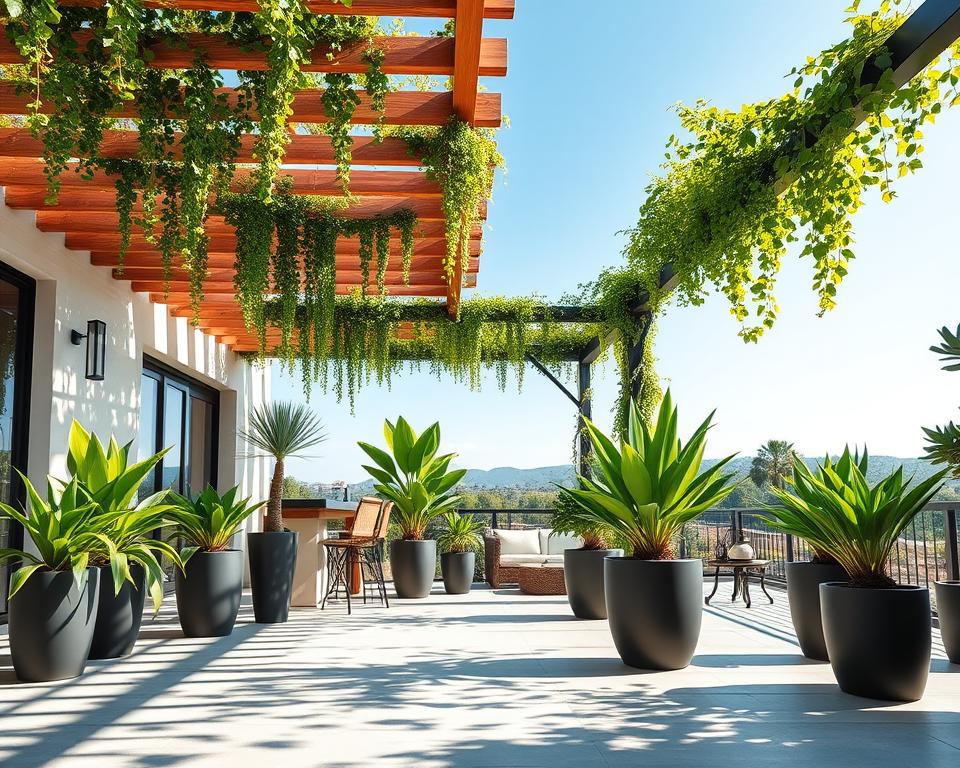
Thinking outside the traditional layout makes a big difference in small gardens. Going vertical is a stylish way to create lush gardens without taking up too much space. It means using trellises, arbors, and hanging planters to make an outdoor area lively.
Using Trellises and Arbors
Trellises and arbors are great for helping plants grow up, not out. This keeps the patio from getting crowded. You can grow things like:
- Sweet peas
- Climbing roses
- Varieties of ivy
- Beans and peas
They’re not just pretty. They also give you privacy and can make things quieter. This turns your patio into a peaceful place.
Hanging Planters for Space Efficiency
Hanging planters are key for a modern-looking patio. They let you have more plants without using up floor space. You can hang them:
- On walls
- Beneath pergolas
- From ceiling hooks
This approach helps make your patio look better while keeping it open for walking and furniture. It adds layers to your garden, making it look full and vibrant.
Sustainable Practices in Patio Planting
Making your patio garden eco-friendly involves smart practices that help both you and nature. By adding native plants and going organic, patio gardens become a haven for wildlife. This way, everyone wins.
Native Plants for Local Ecosystems
Using native plants is really smart. They need less water and are easy to care for because they’re used to your climate. They’re a home for bees and butterflies, too. By picking these plants, you’re helping your local environment stay healthy and diverse.
Organic Gardening Techniques
Going organic makes your patio garden sustainable. Techniques like composting, mulching, and natural fertilizers avoid harmful chemicals. This approach is good for the earth and makes plants strong. It ensures a safe place for your family to enjoy, surrounded by lush plant life.
Creating a Relaxing Atmosphere
To enjoy your outdoor space, creating a relaxing atmosphere is key. Thoughtfully designed seating areas make the area warm and welcoming. This is perfect for hangouts or quiet evenings alone. The right mix of comfy seating and well-placed lights can greatly improve your patio’s feel.
Incorporating Seating Areas
Outdoor seats should be comfy and easy to get to. Think about adding different types of seats, such as:
- Lounge chairs for personal relaxation
- Benches to encourage group gatherings
- Outdoor sofas for a cozy setting
These choices help people come together and make your patio look better. Place the seats so everyone can enjoy views of your garden or other nice features nearby.
Adding Lighting for Ambiance
Ambient lighting is key for a relaxing vibe. Soft, warm lights make outdoor areas great for evening hangouts. People often choose:
- String lights for a fun vibe
- Lanterns for a rustic look
- Solar-powered pathway lights for safety and style
Putting in these lights makes your patio welcoming and useful, even at night. Comfy seating and nice lighting make for an ideal outdoor spot.
Seasonal Themes for Patio Planters
Seasonal themes can make your patio planters stand out. A rotating plant selection adds visual interest. It keeps your garden lively all year. By planning, you can have spring flowers, summer colors, and autumn foliage for a changing landscape.
Spring Blooms
After winter, spring blooms add color. Plants like tulips, daffodils, and hyacinths look enchanting and smell nice. They do well in cool temps and make your patio lively after winter. Add pansies and primroses for more spring colors.
Summer Vibrancy
Summer means bright colors and full planters. Use annuals like petunias, geraniums, and marigolds for flair. Pick heat-loving plants to keep your space looking good in hot weather. Try different plant heights and colors for a striking summer look.
Autumn Foliage
Autumn changes the color scene. Ornamental kale, chrysanthemums, and asters show off fall’s reds, oranges, and yellows. Include evergreens to keep your patio interesting into winter. This theme celebrates nature’s shift and readies your space for cold.
Pest Control in Your Patio Garden
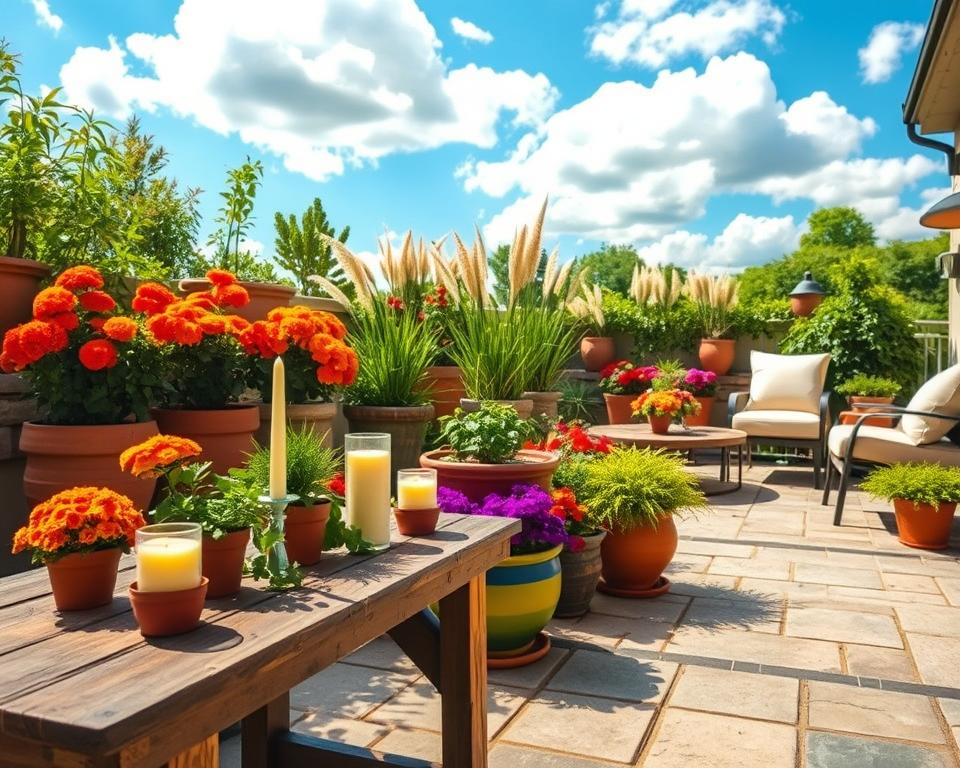
Keeping your patio garden healthy means using good pest control that’s safe for the environment. Instead of harsh chemicals, try natural repellents. They protect your plants and the wildlife around them. With these methods, beneficial bugs will come to your garden, making it thrive.
Natural Repellents
Natural repellents are a great choice over chemicals. They use simple ingredients to keep pests away without hurting the earth. Some well-liked natural repellents are:
- Neem oil: From neem tree seeds, it stops pests from growing.
- Garlic spray: Its strong smell keeps many insects away.
- Diatomaceous earth: Made of fossilized algae, it wards off crawling insects.
Attracting Beneficial Insects
To balance your garden, bring in insects that help control pests. Planting certain flowers and herbs can make your garden more beautiful and welcome useful bugs. Try adding:
- Marigolds: They push away nematodes and bring in good pollinators.
- Lavender: This pretty herb draws bees and other helpful insects.
- Fennel: It attracts ladybugs and lacewings that eat pests.
Use natural repellents and plant things that pull in good insects. This way, your patio garden will do well and have strong pest control.
Incorporating Edible Plants
Turning your patio into a place where you can grow your own food has many benefits. Adding plants you can eat makes your outdoor area look better and gives you fresh ingredients for your cooking. Even if you don’t have much room, you can still grow herbs, veggies, and fruits.
Herbs for Cooking
Having your own herb garden can really change how you cook. Imagine just walking outside to pick some fresh basil for pasta or rosemary for a roast. These plants don’t just make your food tastier, they also don’t need a lot of space. Some herbs that do well in small pots are:
- Basil
- Parsley
- Thyme
- Cilantro
A small herb garden on your patio not only makes cooking more fun but also adds beauty to your space.
Vegetables and Fruits in Small Spaces
You can still grow vegetables and fruits even if you only have a little space. Just a few pots can let you grow a variety of things to eat. Plants like cherry tomatoes, lettuce, and strawberries can do well in small areas. Here are some things to think about for your garden:
| Plant | Container Size | Sunlight Requirements |
|---|---|---|
| Cherry Tomatoes | 5-gallon bucket | Full sun (6-8 hours) |
| Lettuce | 3-gallon pot | Partial sun (4-6 hours) |
| Strawberries | 12-inch pot | Full sun (6-8 hours) |
Choosing the right plants for small spaces means you can enjoy growing your own food. This makes the most of your patio area while giving you the joy of harvesting what you’ve grown.
Real-Life Examples of Modern Patio Planting
Turning a tiny outdoor area into a green haven might seem hard, but it’s truly possible and rewarding. City gardens are popping up everywhere, showing us how to use small spaces creatively. They use modern planting ideas on rooftops and balconies, from Brooklyn to San Francisco. These gardens blend beauty and use, making life in the city better.
Homeowners share stories of their patio transformations. They show different ways to make patios stunning. One amazing example shows a small patio using vertical gardens and colorful pots. People are choosing sustainable materials and plants like succulents. This makes their outdoor space look great with little effort, and it also increases their home’s value.
Looking at these examples can give you ideas to spruce up your patio. It doesn’t matter if you have an apartment or a house. You have countless options to make a cozy garden that shows off your style. Let these success stories inspire you. Start your patio makeover today, and soon you’ll have a lovely place to relax!