About 60% of potential buyers make up their minds on a home based on its exterior look within just 8 seconds. This fact highlights how crucial modern facade design is in architecture today. We now see a huge variety of modern facades, from minimalist to eco-friendly types. These new designs are changing our views on what buildings can look like and do.
Modern facades do more than just look good. They enhance a property’s usefulness and can save energy too. In this piece, we’ll look at materials, colors, and innovative design options. Let’s see how they can make your building both beautiful and fit for today’s world.
Key Takeaways
- Modern facades play a critical role in attracting buyers.
- Innovative designs integrate aesthetics with functionality.
- A variety of materials can be used to create unique facades.
- Color schemes are essential for enhancing visual appeal.
- Eco-friendly designs are becoming increasingly important.
- Urban environments benefit significantly from contemporary architectural solutions.
Why Modern Facade Design Matters
Modern facade design is key in showing a property’s character. An attractive outside draws the eye and sets the home’s mood. It combines beauty with purpose, increasing its curb appeal. This makes a strong impression on guests and those looking to buy.
Enhancing Curb Appeal
New materials and forms make modern facades welcoming. A standout entry, smooth shapes, and bold colors boost a house’s look. Big windows or special doors catch the eye of those passing by. They leave a memorable image. Adding pretty plants matches the modern design, making the home more appealing.
Impact on Property Value
Contemporary facades do more than just look good. They can make a home’s worth go up a lot. Buyers will pay more for homes that look great outside. They see it as a sign of quality and care for details. Using long-lasting materials or advanced designs makes it even more valued. This investment can pay off big when it’s time to sell.
Key Elements of Modern Facade Design
Modern facade design combines many elements for its look and function. Knowing the right materials for facades matters a lot. These materials affect both how it looks and how long it lasts. Picking lively design color schemes can also stir emotions and boost the building’s charm. Using different textures and patterns adds depth. This makes the facade stand out and supports creative building designs.
Materials to Consider
There are various materials for modern facades, each with its advantages:
- Wood: Adds warmth and a natural touch but needs upkeep.
- Metal: Brings a modern, durable look.
- Glass: Lets in light and offers stunning visuals.
Color Schemes That Pop
Choosing the right color scheme is key. Bold and eye-catching colors make a big impact. Meanwhile, softer tones can merge well with the surroundings. Trends now show:
- Monochromatic palettes for a unified appearance.
- Contrasting colors to draw attention and highlight details.
Textures and Patterns
Mixing textures and patterns enhances a facade’s visual appeal. By using different finishes, designers can create a variety of looks. From smooth and sleek to rough and textured. Popular methods include:
- Textured coatings for improved surface feel.
- Geometric patterns for a lively effect on flat areas.
Popular Styles in Modern Facade Design
Modern facade design comes in many styles that boost both looks and use. Every style has its own special flair. For example, minimalist designs are simple, while industrial styles are rugged. They all focus on sustainability, fitting well with modern values.
Minimalist Aesthetics
Minimalist facade architecture loves clean lines and spaces free of clutter. It’s all about keeping things simple to highlight the building’s shape. The use of neutral colors and fewer decorations lets natural materials shine. Glass and concrete are often key, making spaces feel open and welcoming.
Industrial Charm
Industrial facade design showcases raw materials for an urban look. With exposed bricks, steel beams, and big windows, it offers a stylish but rugged vibe. Inspired by factories, it’s perfect for city life. Plus, it adds a touch of history and texture to new buildings.
Eco-Friendly Designs
Eco-friendly facades bring sustainable materials and green practices into architecture. They aim for energy saving with green roofs, solar panels, and recycled stuff. Not only do they help the planet, but they also make buildings look good. It proves being eco-aware can also be eye-catching and nature-friendly.
Choosing the Right Material for Your Facade
Picking the right materials for your facade is key for looks and function. Different materials have their own pros and cons. By looking into wood, metal, and glass, homeowners can find what works best for them.
Wood vs. Metal: Pros and Cons
Wood and metal are both popular for facades. Each offers special benefits and downsides. Knowing these helps make choosing easier.
| Material | Pros | Cons |
|---|---|---|
| Wood |
|
|
| Metal |
|
|
Glass Facades: The Modern Choice
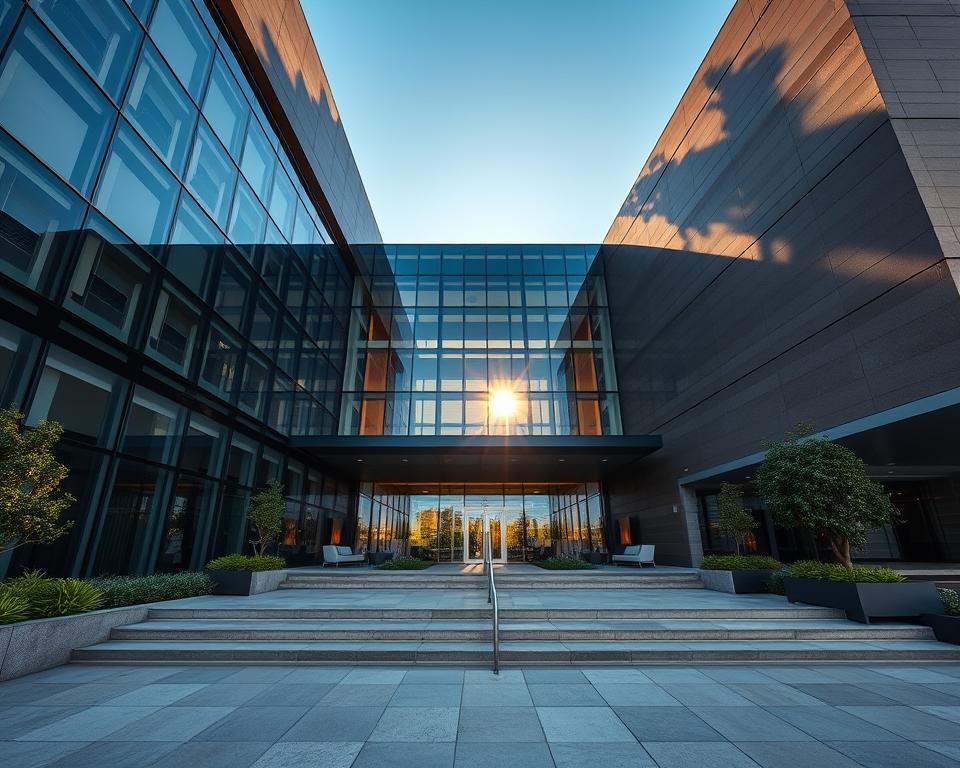
Glass facades are loved for making spaces filled with natural light. They offer great views and blend well with nature. They also help save energy, especially with the right glazing. Homeowners going for a modern look might prefer glass.
Incorporating Natural Light
Natural light is key in modern architecture. It makes spaces bright and welcoming. Big windows connect the inside with the outside. They make places look better and help people feel good.
Benefits of Large Windows
Large windows bring in the sunlight and offer many advantages. They provide beautiful views, making it seem like the outdoors is part of your room. Sunlight can cut down on electric bills by reducing the need for lights during the day.
Rooms with lots of light feel bigger and more comfortable. This makes them great places to relax and enjoy.
Skylights as a Design Feature
Skylights bring in extra light and add to the design. They brighten up dark areas. This makes buildings look more interesting and beautiful.
They’re especially good for large buildings or places without much wall space. Skylights make living spaces brighter, which is great for mental health.
Innovative Architectural Features
In the modern world of building designs, unique architectural features are key. They make buildings look good and work better. Features like overhangs and awnings do two things at once. They keep you dry and add special touches to the building’s look. These not only make the place look better but also make it more comfy for people coming and going.
Overhangs and Awnings
Overhangs and awnings are great for modern buildings. They shield windows and doors from sun and rain. This protection helps the building last longer and saves energy. These features also give buildings cool, eye-catching lines. Plus, they offer shade, making outside areas nicer when it’s warm.
Balconies and Terraces
Balconies are becoming more popular because they give extra outside space. They let people enjoy the outdoors in private. Balconies can turn a simple facade into something special. Terraces offer even more room for things like gardens or parties. They’re perfect for city life. Good balcony designs blend well with the building, making it look even more modern.
Sustainable Facade Design Practices
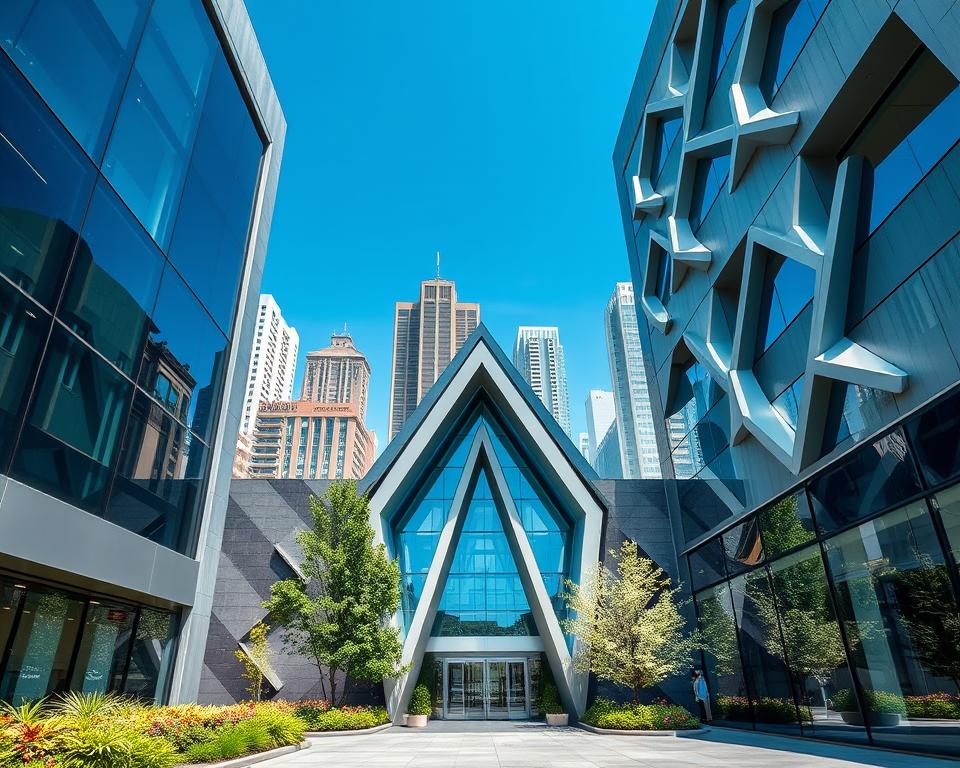
The rise in eco-friendly construction highlights the need for sustainable facade choices. These practices focus on energy efficiency and help protect the environment. By using innovative green materials, buildings can look good and be kind to our planet.
Green Building Materials
Using green materials in facades cuts down on environmental harm and improves durability. Materials like reclaimed wood, recycled metals, and low-VOC paints reflect an eco-wise choice. These choices help create energy-efficient buildings that look great and save on energy costs.
Energy-Efficient Solutions
Architects are now opting for energy-saving solutions in facade design. Insulated cladding and reflective materials keep buildings warm or cool efficiently. Incorporating photovoltaics into facades offers a smart way to use renewable energy. These strategies lead to sustainable and stylish building designs.
The Role of Landscaping in Facade Design
Landscaping is key in making modern facades look better. It adds beauty and offers eco-friendly benefits. With bright plants and gardens, homes merge architecture with nature, standing out more.
Integrating Greenery
Adding green to facades can make a plain outside look welcoming. Vertical gardens, climbing vines, and shrubs soften sharp lines and add color all year. Greenery improves air quality and gives shade, making spaces comfier.
Hardscaping Complementing Facade
Hardscaping like paths, walls, and patios adds structure and use. They match up with landscaping and facades for a unified look. Using stone, brick, or concrete adds texture and visual appeal. Well-planned hardscaping leads visitors to the entrance, passing through a landscaped area, enhancing the home’s feel.
Customization Options for Facades
Today’s facades offer many ways to show personal style. You can shape its design to show off your unique tastes. This approach not only makes your home stand out but also fits nicely with the area around it.
Personalizing Your Style
You can change almost anything, from colors to materials. There are many popular ways to make your facade your own:
- Unique textures that add depth and charm.
- Special shapes and lines that show your home’s personality.
- Choosing sustainable materials for a greener choice.
Thinking outside the box with facade ideas can make your dream home real. Working with architects makes unique facades possible.
Working with Architects and Designers
Teamwork is key to nailing the perfect design. Teaming up with architects helps ensure your custom choices are practical and follow the rules. They offer skill and new ideas, letting you try different looks that make your home shine.
Here are important things to talk over with architects:
- Talking about budget to focus on what’s most important.
- Looking into building codes to avoid any issues.
- Sharing your vision to make sure the final design is what you want.
In the end, good communication with architects and designers can craft a facade that shows off your style. It also boosts your home’s worth and appeal.
Trends in Modern Facade Color Schemes
Modern facade colors are changing, offering many choices for homeowners and architects. We see two main styles: monochromatic schemes and bold, lively colors. Each style brings its own benefits, sparking new ideas in building design.
Monochromatic vs. Bold Colors
Monochromatic schemes give a sleek and elegant look. They use shades of the same color to create a peaceful effect. This style is great for city buildings, making them look neat and unified.
On the other hand, bold colors add life and energy to buildings. They draw attention and make bold statements. Whether to go monochromatic or bold depends on what you prefer and the design of the buildings around.
The Rise of Pastels
Lately, pastel colors are becoming more popular in building designs. They offer a gentle, welcoming feel while still catching the eye. Pastels work well with many design styles, for houses or business buildings.
Choosing the right color palette takes thought. Homeowners should consider how their colors fit with the local environment and materials. In the end, picking facade colors is about finding the right mix of looks and practicality.
| Color Scheme | Characteristics | Pros | Cons |
|---|---|---|---|
| Monochromatic | Variations of a single color | Cohesive look, timeless appeal | Can appear bland if not executed well |
| Bold Colors | Vibrant, eye-catching hues | Creates a striking visual impact | Risk of overwhelming nearby structures |
| Pastels | Soft, muted shades | Inviting, versatile across styles | May not stand out in urban settings |
Resources for Modern Facade Design Inspiration
Entering the modern facade design world can be exciting. To boost your project, gathering inspiration is key. You should use different resources to find ideas that match your style. They must also be trendy and practical.
Online Platforms and Communities
Check out platforms like Pinterest and Houzz for modern architecture ideas. Here, you can connect with architecture lovers and experts. They help fine-tune your designs. Joining forums or architecture social media groups will also provide you with unique tips and a supportive community.
Architectural Magazines and Books
Magazines like Architectural Digest and Dwell are great for seeing new designs. They offer expert opinions on the latest trends. Books such as “Modern Facades” or “The New Architecture of the American West” dive deep into innovative materials and techniques. Mixing print and digital sources will round out your inspiration search.