Did you know almost 70% of Americans say they don’t have enough time for their gardens? This fact highlights a shift towards low maintenance gardens. These gardens focus on easy-care plants. Using native and drought-resistant plants helps make a garden beautiful with less work. This way, you get a lovely outdoor area that stays nice with little effort, letting you enjoy your garden more.
Key Takeaways
- A low maintenance garden is ideal for busy homeowners.
- Easy-care landscaping includes the use of native and drought-resistant plants.
- Minimal upkeep yards can still be beautiful and vibrant.
- Planning and design play crucial roles in reducing maintenance.
- Creating efficient layouts will save time and effort.
Understand the Concept of a Low Maintenance Garden
A low maintenance garden requires less work and effort but still looks beautiful and works well. It includes choices like picking plants that don’t need much water, using smart ways to water them, and planning areas with little to no grass. This creates a garden that’s easy to take care of, looks wonderful, and gives you more time to relax and have fun.
What Makes a Garden Low Maintenance?
Key elements of a low maintenance garden include:
- Selection of native plants that grow well in your area.
- Using mulch to keep moisture in and keep weeds out.
- Choosing perennials that grow back each year without needing to be replanted.
This approach leads to a garden that’s simple to care for. It offers beauty without needing constant attention.
Benefits of a Low Maintenance Garden
Switching to a low maintenance garden has many benefits. Homeowners can look forward to:
- More free time because the garden needs less upkeep.
- Lower water bills thanks to plants that don’t need much water.
- Spending less on things like fertilizers and pesticides, which is also better for the planet.
These advantages make gardening more enjoyable, help local wildlife, and encourage taking care of our environment.
Choosing the Right Plants for Your Garden
Choosing the right plants is key to a low maintenance garden. It means less work for years. Knowing the difference between perennial and annual plants helps you pick what’s best for your garden and lifestyle.
Perennial vs. Annual Plants
Perennial plants make garden care easy. They return every year, so you don’t need to replant, offering beauty with less effort. Annual plants, however, live only one season and need new planting each year. They have bright flowers but require more work.
Popular Low Maintenance Plants
Consider adding these low maintenance plants to your garden:
- Coneflowers: They’re tough, tolerate dry spells, and work in many climates.
- Yarrow: It’s strong, draws in pollinators, and doesn’t need much care.
- Black-eyed Susans: These natives are easy to look after.
- Flowering shrubs: Plants like hydrangeas and butterfly bushes are simple to care for and look great all year.
Checking your garden’s sunlight, soil, and climate matters a lot for perennial plants. With the right choices, your garden will look amazing and stay easy to manage through all seasons.
Designing Your Layout
The design of your garden is key to keeping it easy to care for while looking good. Adding low-maintenance landscaping ideas on purpose helps your garden do well with little work. Good planning lets you put plants where they grow best. It also makes the garden easy and fun to take care of.
Utilizing Space Wisely
Using space smartly means your garden stays beautiful with less work. Here are some easy-care landscaping tips:
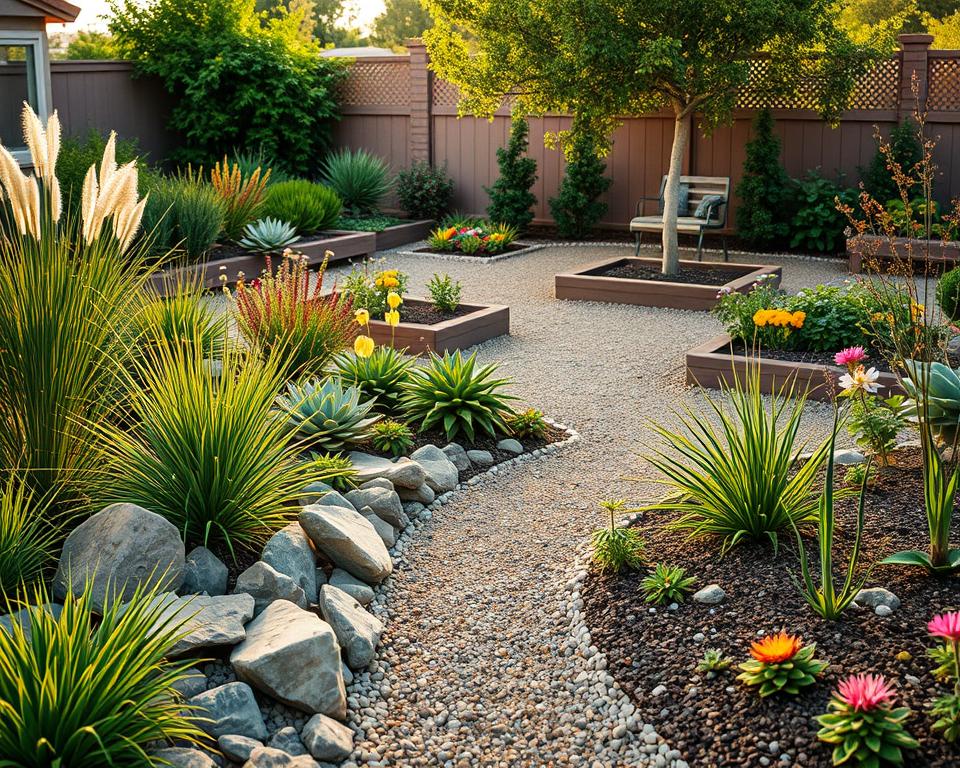
- Incorporate raised beds to improve soil quality and drainage.
- Use vertical gardens or trellising to save ground space while adding visual interest.
- Design micro-climates with varying sun and shade areas to support a diverse plant selection.
Creating Efficient Paths
Good paths make your garden work better and look nicer. Picking materials like gravel or paving stones cuts down on grassy areas. This means less mowing and watering. Consider these tips when planning your paths:
| Pathway Material | Benefits | Maintenance Level |
|---|---|---|
| Gravel | Good drainage, natural look | Low |
| Pavers | Durable, customizable | Moderate |
| Mulch | Weed suppression, improve soil | Low |
Soil Preparation for Easy Gardening
Getting your soil ready is key for a great garden that doesn’t need much work. Healthy plants start with good soil. Understanding what your soil is made of helps plants grow better with less effort later.
Testing Soil Quality
Check your soil before planting. Look at nutrient levels and pH balance. You can get soil testing kits from many local services or buy them online. Testing lets you know what your soil needs to keep plants healthy and make gardening easier.
Essential Soil Amendments
With your soil test in hand, it’s time to improve your soil. Adding organic stuff like compost or old manure makes your soil better and helps it hold water. Depending on your test, you might also need lime to make the soil less acidic or sulfur to make it more acidic.
Good soil preparation means healthier plants. This can lead to fewer bugs and less need for fertilizer. Putting in effort now can make your garden beautiful with less work later.
Efficient Watering Solutions
Keeping your garden healthy is key, and it starts with the right watering methods. When you focus on easy gardening, choosing how you water becomes crucial. Using drip irrigation or picking plants that don’t need much water are great ways to go.
Drip Irrigation Systems
Drip irrigation gets water right to the plant’s roots. This cuts down on waste and is better for the planet. Here’s why it’s a good choice:
- It stops water from evaporating or running off
- Keeps soil moisture steady
- Can be set up with timers, making it easy
This watering system makes garden care easier and helps you use less water.
Water-Efficient Plants
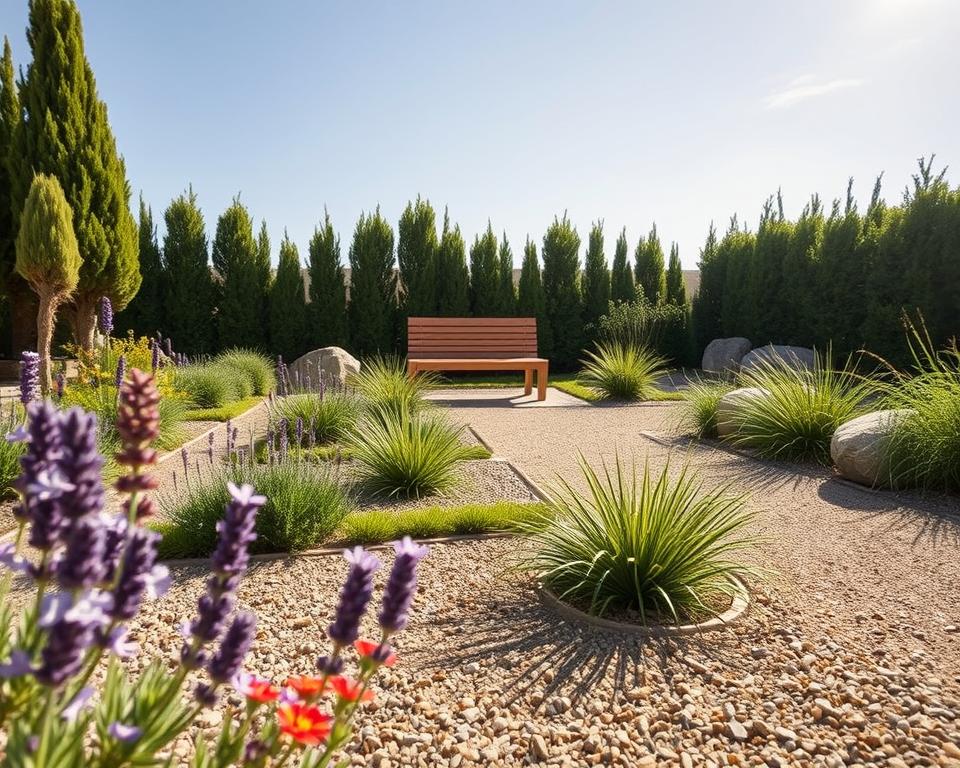
Picking plants that use less water is smart for a simple garden. Go for plants like succulents, lavender, and ornamental grasses. They need less water, but still add beauty and variety to your garden.
| Plant Type | Water Requirements | Benefits |
|---|---|---|
| Succulents | Low | Bright colors, interesting shapes |
| Lavender | Moderate | Smells nice, brings in bees |
| Ornamental Grasses | Low | Adds texture, easy to care for |
Efficient watering and choosing the right plants make your garden better and easier to care for.
Hardscaping Elements to Consider
Hardscaping makes your garden more functional and good-looking while also making it easier to care for. If you’re looking for a garden that’s easy to manage, choosing the right materials for your patios and paths is key. Elements like stone pavers and brick paths create welcoming areas with less maintenance needed than traditional gardens require.
Patio Ideas and Materials
The materials you pick for your patio can shape the look of your outdoor space. Here are some great choices that are also easy to take care of:
- Concrete: Strong, simple to maintain, and comes in different finishes.
- Natural Stone: Looks distinct and needs little care.
- Composite Decking: Stylish, easy to clean, and durable.
Using Gravel and Rocks
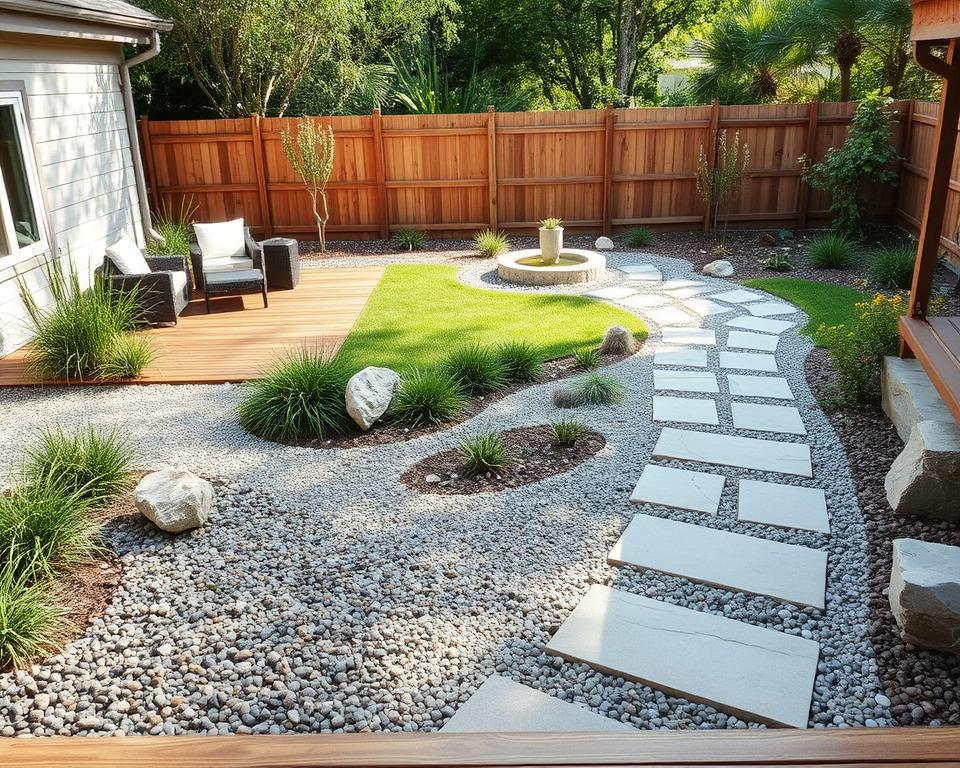
Gravel and rocks are not just for decoration in a low-maintenance garden. They aid in drainage, prevent erosion, and cut down on how often you need to mow. Look at the perks of using gravel and rocks:
| Material | Benefits | Ideal Use |
|---|---|---|
| Gravel | Promotes drainage and stops weeds | Pathways, decorative edges, and ground covers |
| River Rocks | Brings natural beauty, perfect for peaceful gardens | Water features and flower beds |
| Flagstone | Makes long-lasting patios with a natural look | Patios and pathways |
These hardscaping choices can make your garden look great, be easy to handle, and boost your quality of outdoor living with fewer upkeep needs.
Attracting Wildlife Without Extra Work
Bringing wildlife into your garden makes it more beautiful and helps create a busy ecosystem. By choosing the right plants and features, your yard can thrive with little care. Adding plants that bees and butterflies love can make your garden healthier.
Pollinator-Friendly Plants
Using plants that attract pollinators is a great idea for a lively, low-maintenance garden. Plants native to your area need less work and help local wildlife. Here are some easy-care plants that pollinators find irresistible:
- Echinacea (Coneflower)
- Lavender
- Black-Eyed Susan (Rudbeckia)
- Bee Balm (Monarda)
- Milkweed
Birdhouses and Feeders
Putting up birdhouses and feeders is an easy way to draw wildlife. These additions make your garden more inviting while helping control pests. To welcome birds:
- Pick birdhouses made of natural materials
- Place feeders near bushes for safety
- Offer various seeds to attract different birds
By following these tips, you can have a lively garden full of nature. This makes enjoying the outdoors easy, even with a low-maintenance yard.
Seasonal Maintenance Tips
Keeping a garden doesn’t mean ignoring your plants as the seasons change. With straightforward care, your garden can stay healthy and look great with little work. By doing a few easy tasks, your plants will thrive, making your outdoor space beautiful with less effort.
Minimal Seasonal Tasks
Looking after your garden through the seasons involves a few simple, but important, steps. Here’s what you should consider:
- Mulching helps fight weeds and keeps soil moist, easing garden care.
- Checking for pests regularly can prevent big problems later, saving both time and effort.
- Pruning removes dead or damaged branches, boosting growth and bloom with minimal effort.
- Fertilizing just enough in the growing season supports healthy plants without adding too much to your to-do list.
- Cleaning up leaves and debris not only looks good but also stops diseases from spreading in your garden.
Preparing for Different Weather Conditions
Adjusting to changing weather is key to a low-maintenance garden’s success. Keep these tips in mind as the weather shifts:
- In cold seasons, covering sensitive plants with burlap or a frost cloth can shield them from harsh temperatures.
- Changing your irrigation habits based on the weather is crucial; less water may be needed during rainy periods, while dry spells might call for more attention.
- To protect young plants in summer, temporary shade can help them get used to the heat gently.
- Developing a rainwater harvesting strategy for dry times can keep your garden flourishing while conserving resources.
Pest Control and Prevention
An easy-to-care-for garden needs good pest control strategies. Using natural methods can make your garden healthier and lessen the need for chemicals. These approaches help balance and sustainability. They benefit both your plants and you as the gardener.
Natural Pest Control Methods
Natural pest control methods are essential for a low-maintenance garden. Techniques like welcoming good bugs, using natural sprays, and setting up traps work well. For example, ladybugs eat aphids, controlling their numbers. Also, neem oil is a natural bug repellent that’s safe for your plants and good bugs.
Using Companion Planting
Companion planting is key for keeping pests away. By growing certain plants together, you can push pests away and draw in helpful insects. Planting marigolds near vegetables, for instance, fights off nematodes and unwanted bugs. This way, your garden stays healthy with little work.
| Plant Pairing | Pest Deterrent | Beneficial Insects Attracted |
|---|---|---|
| Marigolds & Vegetables | Nematodes | Ladybugs |
| Basil & Tomatoes | Whiteflies | Bees |
| Carrots & Onions | Carrot Flies | Hoverflies |
| Rosemary & Cabbage | Cabbage Moths | Parasitic Wasps |
Showcasing Your Low Maintenance Garden
Creating a beautiful outdoor space doesn’t mean you have to work hard all the time. With just a little effort, you can make your garden look amazing. Think about using stone borders or decorative mulch. These can make your garden beds look neat and don’t add extra work for you. Adding these simple touches will make your garden easy to take care of. Plus, it will look welcoming too.
After you’ve applied your low maintenance landscaping ideas, it’s showtime! Share your garden’s beauty online. You can use social media or garden blogs for this. By sharing pictures and stories, you connect with other garden lovers. You can swap tips and inspire people searching for easy garden projects. Showcasing your garden’s ease can motivate others to try out simple gardening.
So, be bold with your decoration ideas and share them online. You might find a community that loves easy gardening just like you. They’ll offer insights and celebrate simple yet stunning gardens together. Your garden’s story could inspire others and spread the joy of effortless gardening.