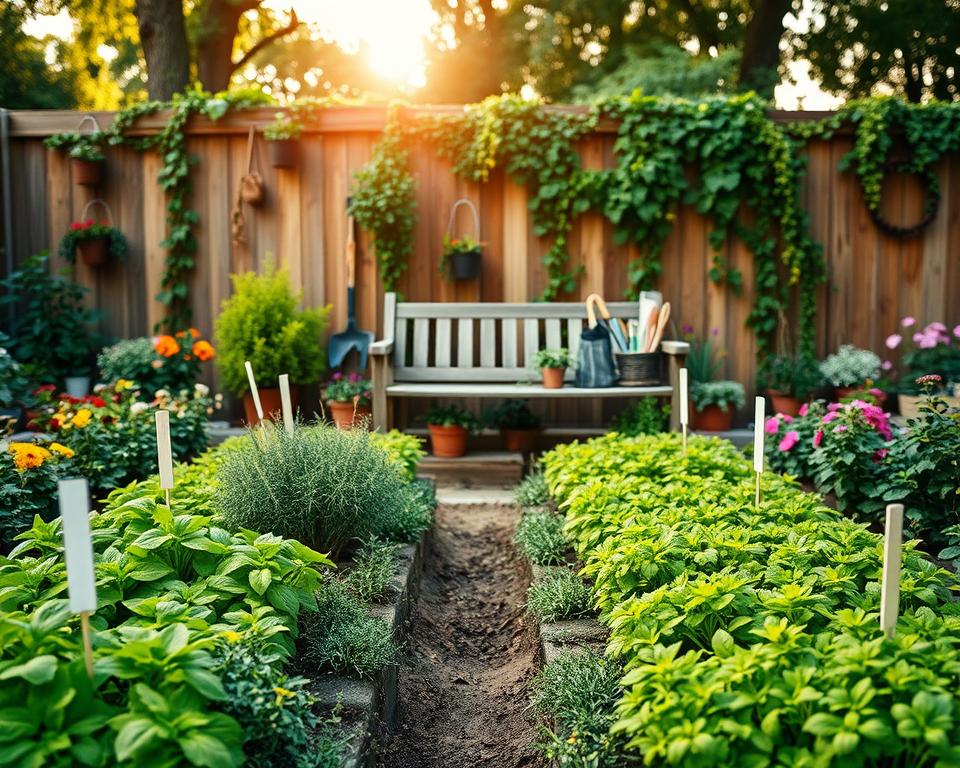
A well-planned herb garden can boost your yield by as much as 20%. This fact shows how vital a good layout is. No matter if you have a big yard or a small patio, the right design can turn any space into a green haven. It all starts with basics like picking the perfect spot and the best herbs.
This creates a strong foundation for a sustainable, beautiful garden. Thoughtful design improves your cooking and helps local wildlife too!
Key Takeaways
- Efficient herb garden layout maximizes space and yield.
- Choosing the right location is crucial for growth and accessibility.
- Understanding sunlight and soil needs boosts plant health.
- Explore various design options like raised beds and containers.
- A well-designed garden can enhance culinary experiences and attract pollinators.
Understanding the Basics of Herb Gardens
To start a great herb garden, you need to know a few important things. An herb garden is a special place where you grow different herbs. These herbs can be used for cooking, medicine, and to make things smell nice. You can have one on a small balcony or in a big backyard.
What is an Herb Garden?
An herb garden is a special place for plants that make food taste better and can help with health. Planning your herb garden well can make it both pretty and useful. You can use pots or plant directly in the ground. Either way, knowing about herbs makes gardening fun.
Benefits of Growing Herbs
There are many good things about growing herbs. Fresh herbs make food taste amazing, can help heal you, and clean the air. Many herbs are easy to grow, which is great for beginners and experts. Using important herbs in your garden brings lots of tastes and smells.
Types of Herbs to Consider
Choosing the right herbs is key for a creative garden. Here are some popular ones:
| Herb | Common Uses | Growing Conditions |
|---|---|---|
| Basil | Salads, pesto | Full sun, well-drained soil |
| Mint | Teas, desserts | Partial shade, moist soil |
| Rosemary | Roasted meats, soups | Full sun, sandy soil |
| Echinacea | Herbal remedies | Full sun, well-drained soil |
Choosing the Right Location for Your Herb Garden
Finding the best spot for your herb garden is key to its success. Consider sunlight, soil, and how close it is to you. With the right location, your herb garden will thrive and be easy to take care of.
Sunlight Requirements
Herbs need 6-8 hours of sunlight a day to grow well. So, it’s important to pick a spot that gets enough sunlight. Watch your yard to see where the sun shines the longest. This will help your herbs do their best.
Soil Considerations
Herbs like soil that drains well and is a bit loamy. If you have clay soil, mix in some horticultural grit and compost. This improves drainage and makes the soil better for herbs. This step is key for a well-set-up herb garden.
Accessibility and Convenience
Having your herb garden near your kitchen and water source makes things easier. It’s good when you need herbs while cooking. Make sure your garden is easy to get to for care. This helps you make the most of your space.
Designing Your Herb Garden Layout
Creating an efficient herb garden layout is important. It affects your herbs’ growth and makes caring for them easier. Here are some popular methods to consider.
Traditional Row Layout
Herbs are planted in straight lines in a traditional row layout. This makes weeding and harvesting simple. It also helps each plant get enough sunlight for healthy growth. Choose this method for a structured garden look if you have space.
Raised Bed Design
Raised beds are great for herbs. They improve drainage and soil, which is perfect if the ground isn’t ideal. They make your garden look attractive and easy to get around in. Put pathways between beds for easy walking.
Container Gardening
Container gardening is smart when you’re tight on space. You can move your herbs around on patios or windowsills. This way, you can grow different herbs easily. It’s great for rearranging as needed.
| Layout Type | Benefits | Best For |
|---|---|---|
| Traditional Row Layout | Easy access, structured growth | Large spaces, organized look |
| Raised Bed Design | Improved drainage, soil quality | Poor soil conditions, aesthetic appeal |
| Container Gardening | Flexibility, mobility | Limited spaces, varied placement |
Popular Herb Garden Styles
Herb gardens can be shaped by personal likes and the space you have. Different styles help use space well and show off herbs’ flavors and beauty. Let’s look at some herb garden styles great for any gardener.
Kitchen Herb Garden
A kitchen herb garden is perfect for fresh ingredient lovers. It often has herbs like basil, parsley, and chives. These are planted near the kitchen for quick use while cooking. This style encourages creative planning for small garden herbs.
Cottage Garden
A cottage garden goes for a whimsical, natural vibe. It mixes herbs, flowers, and wild plants for a bright, welcoming look. This style features lots of colors and textures, making spaces enchanting with sweet scents. It’s great for small gardens, blending herb and flower beauty.
Vertical Herb Garden
This is great for people with little space, like in cities. A vertical herb garden uses wall planters and shelves for herbs. It’s a smart way to grow herbs without using much ground space. This kind of garden makes small areas stylish and useful.
Companion Planting with Herbs
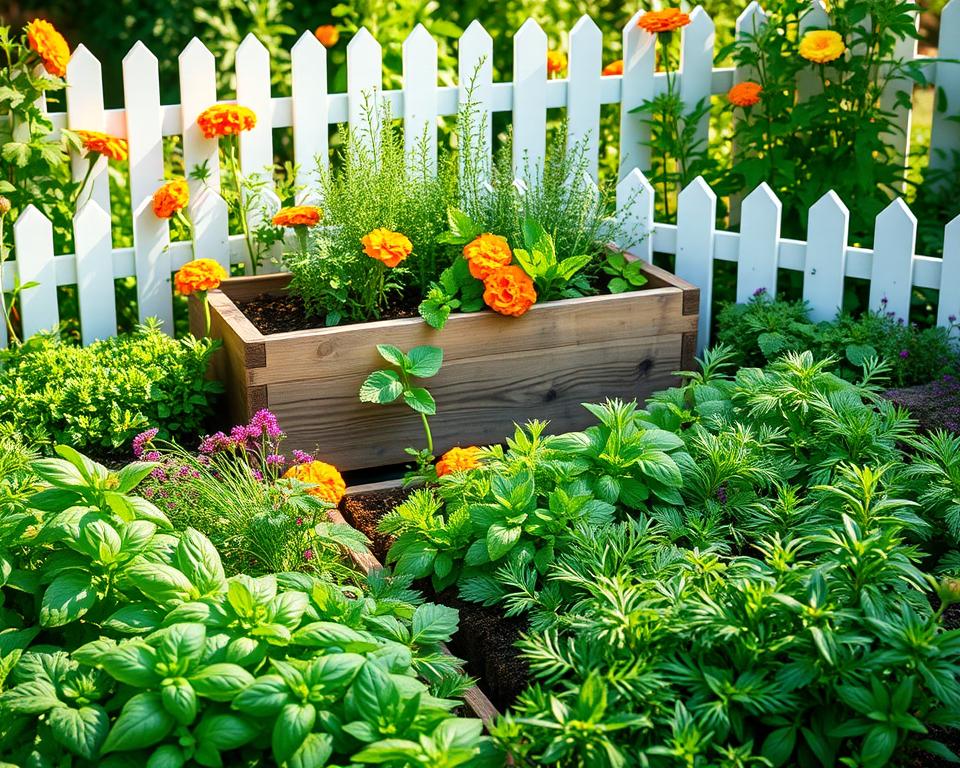
Companion planting with herbs is great for those wanting to use their garden space wisely. By growing herbs with other plants, you can improve growth and keep pests away. This method helps your garden produce more and makes what you grow taste even better.
What is Companion Planting?
Companion planting means some plants do better when grown together. Herbs help veggies and flowers by giving nutrients, keeping pests away, and bringing in good bugs. It’s like creating a happy community in your garden.
Best Herbs for Companion Planting
Some herbs are especially good at helping other plants:
- Basil: It makes tomatoes taste better and keeps flies and mosquitoes away.
- Dill: It attracts good bugs like ladybugs and helps cabbage family plants grow better.
- Cilantro: It fights off aphids and is also tasty in many recipes.
- Thyme: It’s great with cabbage and fights cabbage worms.
Tips for Successful Pairing
For the best companion planting, keep these tips in mind:
- Check how your plants grow. Tall herbs can shade smaller veggies, which helps with sunlight.
- Make sure your plants get the right amount of sun and water.
- Think about how herbs can share nutrients with other plants.
Indoor vs. Outdoor Herb Gardens
Choosing between growing herbs inside or outside depends on a few things. Think about how much room you have, what the weather’s like, and what you like. Both indoor and outdoor gardens are great for different reasons. They let you use your space well and come up with smart designs for your herbs.
Benefits of Indoor Herb Gardening
Growing herbs inside has lots of pluses. You can grow fresh herbs all year, no matter the weather outside. This is super handy if you live somewhere cold. You can also use your kitchen space to keep herbs close while cooking. Indoor gardens also have fewer bugs, so you might not need chemicals. Plus, they make your home smell nice and add some green.
Outdoor Gardening Considerations
For outdoor herb gardens, you need to think about a few things. The weather in your area affects what herbs can grow well. Look at the soil, how much sun your garden gets, and if water drains well. Keeping plants safe from bugs and bad weather helps them grow strong. With the right layout, like raised beds or containers, you can grow more herbs and care for them easily.
Growing Herbs Hydroponically
Hydroponics lets you grow herbs without soil. It’s great if you don’t have much space outside. This way, herbs get food straight to their roots, so they grow fast. There are many setups, from easy DIY projects to fancy systems. Hydroponics is a smart way to use your space and still get lots of herbs all year.
Seasonal Herb Gardening Tips
Understanding how seasons affect herbs is crucial for gardening. Following seasonal tips helps keep your herb garden thriving all year. A keen knowledge of seasonal changes ensures a healthy, robust garden.
Spring Planting Ideas
With warmer weather, it’s a great time to plant herbs like basil, chives, and cilantro. You can sow seeds directly into the soil or use transplants for a quicker start. Good soil and sunlight are key for strong roots this season.
Summer Maintenance
In summer, regular watering keeps herbs healthy during the heat. Pruning is also important to make plants bushier and stop them from flowering, as this can change their taste. Mulch helps keep the soil moist, reducing how often you need to water.
Fall and Winter Care
When it gets cooler, it’s time to get perennial herbs ready for rest. Trimming plants saves energy and guards against frost. Move pot-grown herbs indoors when it’s very cold to protect them until spring.
| Season | Activities | Herbs to Focus On |
|---|---|---|
| Spring | Plant seeds or transplants, prepare soil | Basil, Chives, Cilantro |
| Summer | Water frequently, prune, mulch | Thyme, Oregano, Rosemary |
| Fall/Winter | Cut back, protect from frost | Mint, Sage, Parsley |
Common Mistakes in Herb Gardening
Creating your own herb garden is rewarding. Yet, many gardeners face challenges. To make your herbs flourish, it’s key to know and dodge these common gardening errors.
Overwatering and Underwatering
Getting watering right is vital for your herbs. Too much water leads to root rot because of soggy soil. Not enough water, and your herbs can’t grow well. Check the soil’s wetness often and change how much you water based on the weather and how much it rains where you live. Using soil that drains well helps prevent these watering issues.
Poor Soil Choice
Choosing the wrong soil can hurt your herbs. Soil that’s too heavy, like clay, holds too much water. This is bad for the roots and stops your herbs from growing. Mix in things like compost to make the soil better. This gives your herbs the right nutrients and helps avoid common mistakes.
Neglecting Pest Control
Only worrying about water and soil might cause other problems, like pests. It’s important to look over your plants often to spot pests early. Try planting certain plants together to naturally keep pests away. Doing this can help you avoid many mistakes, making sure your herbs stay healthy.
| Mistake | Impact | Prevention Strategy |
|---|---|---|
| Overwatering | Root rot and wilting | Check soil moisture regularly |
| Poor Soil | Stunted growth | Amend soil with organic matter |
| Neglecting Pests | Infestation and diseases | Inspect regularly, consider companion planting |
Harvesting and Using Your Herbs
Picking herbs at the right time is key for their best flavor. The best time to harvest your herbs is in the morning once the dew is gone. This helps keep their smell strong and their essential oils, which make herbs like basil and rosemary tasty, safe. It’s best to avoid collecting them mid-day because the heat can reduce their flavor.
After picking your herbs, think about ways to keep them so you can enjoy their taste longer. You can dry herbs by hanging them in a dark, cool area, or freeze them in ice cube trays with water or oil. Making herb-infused oils and vinegars can also add a special touch to your cooking. These steps help you use your homegrown herbs all year.
There are so many ways to use herbs in cooking. They make salads, soups, marinades, and dressings taste fresher. Trying different herb mixes can improve even simple dishes, giving your cooking a unique flair. Using your garden herbs fully will make your kitchen a place full of delicious smells.