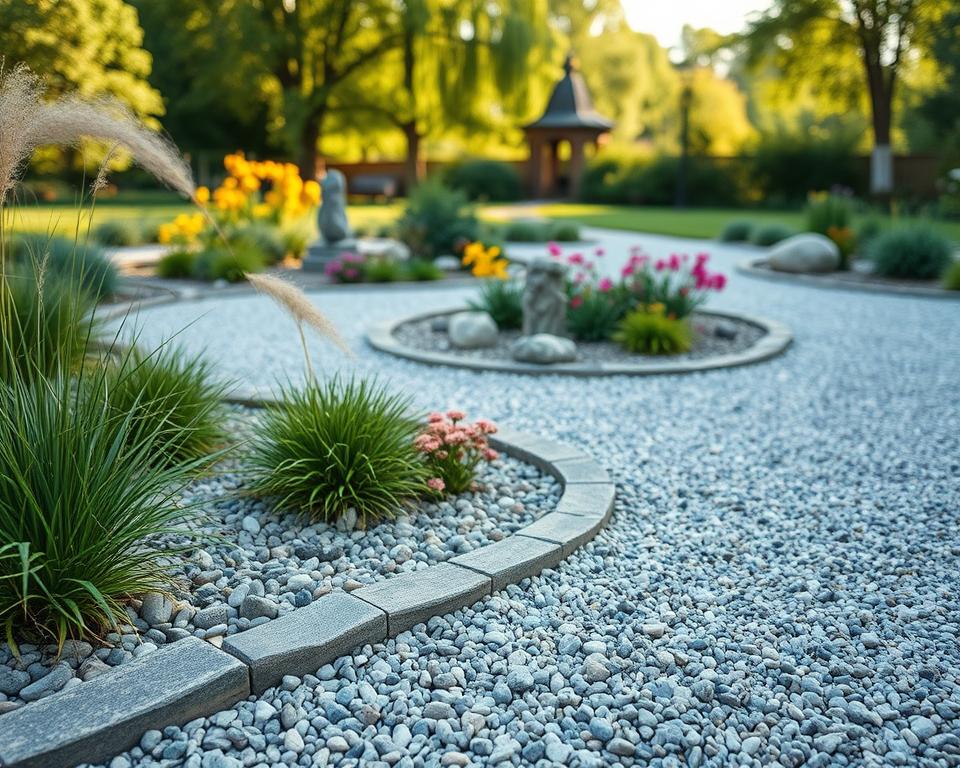
Gardens with gravel can cut water use by half compared to regular lush yards. This fact shows the growing love for gravel garden layouts. They’re not just lovely but also kind to our planet. More and more people want to make their outdoor spaces both beautiful and easy to take care of. With good design tips, you can make a simple spot look amazing. It will do well in places that don’t get much rain and can have different kinds of plants.
Gravel gardens are loved for their ability to fit in with many types of outdoor features. They let you be creative with your space. This article will explore what you need to make a great gravel garden. We want to help you create a space that looks good and is good for the environment.
Key Takeaways
- Gravel gardens can significantly reduce water usage.
- They require minimal maintenance compared to traditional gardens.
- A versatile design allows for creative landscaping elements.
- Proper planning is essential for an effective gravel garden layout.
- Choosing the right plants enhances sustainability and beauty.
What is a Gravel Garden Layout?
A gravel garden uses gravel as the main ground cover. It pairs with drought-resistant plants that need little water to thrive. This layout is great for those wanting a low-maintenance garden.
Definition and Purpose
Gravel gardens are all about blending beauty with function. They focus on saving water and being environment-friendly. The use of gravel improves water drainage and lets you pick plants suited for dry areas.
Benefits of Gravel Gardens
Gravel gardens have lots of pluses. They’re easy to look after, cutting down garden chores significantly. You’ll water less and mow less, saving a ton of time.
They also boost your yard’s look with different textures and hues. This creates a natural scene that’s nice to look at and good for local wildlife too.
Choosing the Right Location
Picking the right spot for your gravel garden is key to its success. You should think about how much sun it gets, the type of soil, and if it’s easy to get to and see. This planning step is crucial.
Sunlight Considerations
Gravel gardens do best with lots of sunlight, usually six hours a day of direct sun. Check how sunny your yard is before deciding where to plant. If it’s too shady, your plants might not grow well. Watch how the sun moves over your yard to pick the best spot.
Soil Conditions
The soil’s quality is very important for a gravel garden. You need soil that drains well so plants aren’t sitting in water. Test your soil to see if it drains well and make changes if necessary. This ensures your plants will be healthy.
Access and Visibility
It’s important to choose a place that’s easy to reach and see. This makes taking care of the garden easier and more enjoyable. Think about the spots you like in your yard and how a gravel garden could enhance them.
Essential Elements of Gravel Garden Design
Designing a gravel garden focuses on choosing components that boost its beauty and use. Picking the right gravel types, plants, and pathways makes a unified experience for walkers. Understanding these key elements can turn any area into a beautiful escape.
Gravel Types and Sizes
Gravel types range in look and use. For example, pea gravel has a softer look, while bigger stones are bolder. When picking gravel, think about how its colors and textures match your plants. The right size matters too; smaller pieces make smooth paths, and larger ones add stability but need more upkeep.
Plant Selection
Choose plants that can handle dry gravel areas and add variety. Native plants usually do best because they need less water and add color and texture all year. A mix of perennials and seasonal flowers keeps your garden looking great all the time.
Pathways and Borders
Pathways and borders organize your gravel garden. They guide visitors and divide the garden into clear sections. Gravel is great for paths and blends well with plants. Use edging to define flower beds or paths, making them inviting yet neat.
Planning Your Gravel Garden Layout
When you plan your gravel garden, starting with a sketch is a smart move. It lets you picture the future look of your garden with both plants and gravel. This early step is great for organizing your thoughts and improving your plan before you start planting.
Sketching Your Design
Drawing your design lets you try out different looks and setups. Whether on graph paper or using digital tools, make a scale model of your garden. Think about where paths, plants, and gravel types will go. These garden layout design tips help you get a balanced look.
Sections and Zones
Dividing your garden into sections helps with organization and adds visual interest. Make zones for different kinds of plants, considering their sun and water needs. A gravel garden with planned areas promotes better plant growth and makes the garden look more vibrant.
Scaling Your Garden
It’s crucial to scale your gravel garden to the size of your space. A layout that’s the right size helps everything look good together. Be mindful of plants’ full sizes and the space for paths. Right scaling makes small gardens feel more open and inviting.
Drainage Solutions for Gravel Gardens
To have a great gravel garden, you need to think about drainage. Knowing how water moves in your garden ensures plants get the right conditions. Good drainage keeps plant roots from getting too wet. A few simple changes can make your gravel garden work better.
Understanding Water Flow
Water moves downhill, so know your garden’s slope. Find out how water travels across your area to stop water buildup or soil loss. Grading your garden right can help water flow away from plants. This helps your gravel garden drain better and your plants grow healthier.
Drainage Materials
Choosing the right materials is key for draining water well. Options include:
- Perforated pipes that help get rid of extra water but keep soil damp.
- Gravel layers that let air in and filter water.
- Geotextile fabric that keeps soil and gravel apart to stop blocks.
These materials make sure your garden’s water management works well. This keeps your garden strong and bright.
Techniques for Effective Drainage
Good strategies make a big difference in draining your gravel garden. Try these:
- Make your garden bed slope so water doesn’t soak plant roots.
- Use swales or shallow ditches to lead extra water to drainage spots.
- Add dry riverbeds with gravel to help guide water flow.
These tips improve how your garden looks and help your plants do well in a dry setting.
Incorporating Hardscaping Features
Hardscaping can make a gravel garden both useful and beautiful. It adds structure and creates areas for chilling out. By adding outdoor seats and focal points, you make a space that’s enjoyable to be in.
Patios and Seating Areas
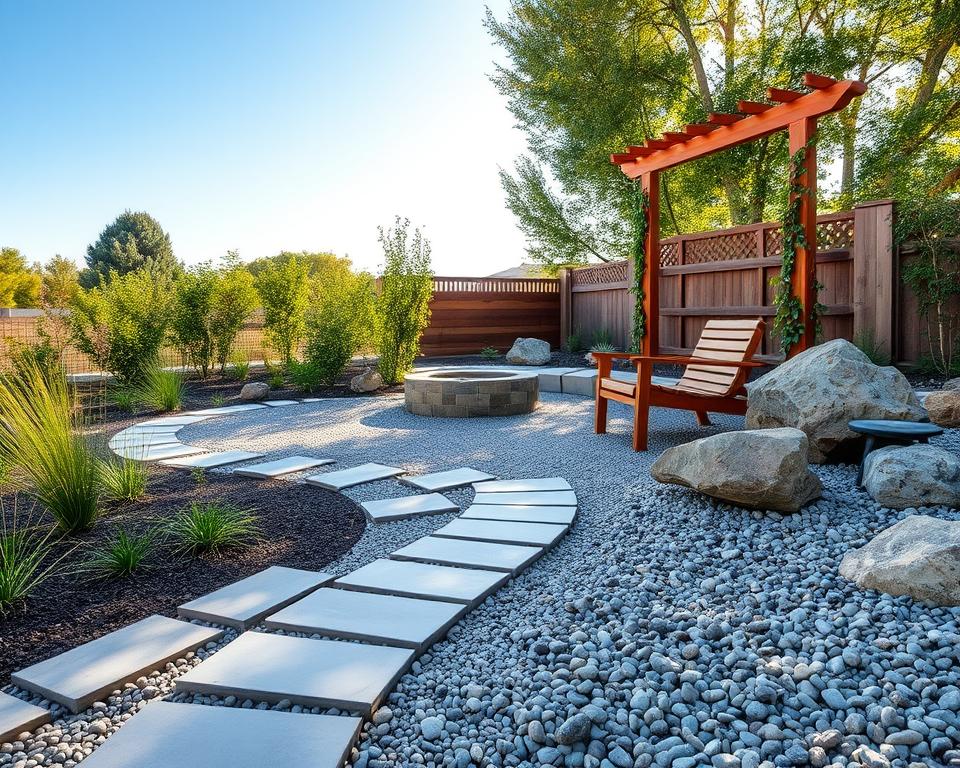
Patios and seating spots turn a gravel garden into a cozy place. They make people want to stay and take in the view. Made from stone, brick, or other materials, they contrast with the gravel and vegetation. They bring both comfort and fashion to the garden.
Focal Points and Sculptures
Adding focal points to a gravel garden boosts its charm. Things like sculptures, water features, or special rocks catch the eye and spark interest. Putting these items in the right places makes the garden look put together and well-planned.
| Feature Type | Description | Materials |
|---|---|---|
| Patios | A level outdoor space designed for seating or socializing. | Stone, brick, concrete, pavers |
| Outdoor Seating | Benches or chairs incorporated into the garden for relaxation. | Wood, metal, plastic, wicker |
| Focal Points | Distinct features that create visual interest. | Sculptures, fountains, unique plant arrangements |
By adding these features, you’ll make your gravel garden more enjoyable. Not only will it look lovely, but it will also be more useful.
Selecting Appropriate Plants
To start a gravel garden, choose the right plants that do well in dry soil. Pick plants that don’t need much water and can go a long time without it. Adding a variety of plants makes the garden look good all year.
Drought-Tolerant Varieties
If you want a colorful garden without using a lot of water, pick drought-tolerant plants. Plants like lavender, agave, and sedum are perfect for gravel gardens. They are easy to take care of, making them great for anyone who’s busy.
Seasonal Interest Options
Having plants that bloom at different times keeps the garden interesting. Choose plants that bloom early and others that bloom in summer. This way, your garden changes and grows all season.
Perennials vs. Annuals
Choosing between perennials and annuals depends on the garden’s look you want. Perennials come back every year, giving lasting beauty. Annuals add quick color, perfect for filling empty spots. Mixing both gives you a garden that’s always lively.
| Plant Type | Water Requirements | Bloom Time | Longevity |
|---|---|---|---|
| Drought-Tolerant | Low | Summer | Perennial |
| Seasonal Bloomer | Medium | Spring to Fall | Varies |
| Annual | High | Summer | Annual |
Maintenance Tips for Gravel Gardens
Keeping your gravel garden in good shape means it stays beautiful and healthy. You need to care for it often. This involves pulling weeds, smoothing out the gravel, and fighting pests and plant sicknesses.
Weeding Strategies
Weeding is super important for gravel gardens. Weeds take food and water from your plants, so you have to keep them away. Here are some smart ways to do that:
- Do hand-weeding every few weeks to control the weeds.
- Put down mulch to block weeds and keep the soil wet.
- Use weed killers early in the spring to stop weed seeds from starting.
Gravel Raking and Refreshing
Raking your gravel keeps it looking neat and helps with water drainage. It stops the stones from getting packed down too. Here’s how to take care of your gravel:
- Smooth the gravel with a rake after it rains to fix any uneven spots.
- Angle the rake just right to keep the gravel deep enough without harming the plants.
- Add new gravel every few years to make up for any that’s gone and keep it looking fresh.
Pest and Disease Control
A strong plan to manage garden pests keeps your gravel garden healthy. Watching for pests and diseases can protect your plants. Try these ideas:
- Look over your plants for pest signs like holes in leaves or sticky spots.
- Choose organic methods to get rid of pests, like bringing in good bugs or using neem oil.
- Change which plants you grow together each year to stop diseases and make plants stronger.
Eco-Friendly Practices in Gravel Gardens
Making a gravel garden sustainable can be done with smart, green practices. Use recycled materials, choose native plants, and use less water. These steps not only make the garden look good, but they also help the planet.
Recycling Materials
Adding recycled items to your gravel garden cuts down on waste and adds flair. Reclaimed stones can make paths or borders. This is both practical and stylish, and it keeps stuff out of landfills. Think about using old bricks, broken tiles, or glass pieces to make your garden stand out.
Native Plant Benefits
Picking native plants for your garden is smart. They’re used to the local climate and soil, so they need less water and don’t get sick easily. They also help local wildlife by giving them food and a place to live. This choice saves you work and helps keep nature in balance.
Water Conservation Techniques
Saving water is key in any garden, especially in dry places. Using smart watering systems, like drip irrigation, cuts down a lot of water waste. This type of system waters plants right at the roots. This saves water and keeps your gravel garden looking great.
Common Mistakes to Avoid
Making a gravel garden is fun and rewarding. But, it’s key to avoid a few usual mistakes. These mistakes can harm your garden’s look and health. Paying close attention to details is vital.
Overcrowding Plantings
Putting too many plants close together is a big issue. They fight for sunlight, water, and nutrients. This can make plants weak and small. To avoid this, plan your garden well to give plants enough room.
Ignoring Soil Prep
Getting the soil ready is important for a gravel garden. Skipping this step can hurt your plants. Always check and improve your soil before adding gravel. This helps your plants grow better.
Poor Drainage Practices
Good drainage keeps your garden healthy. Bad drainage means water can pool and harm roots. Make sure water drains well in your garden. Good drainage helps your plants and gravel last longer.
Inspiration for Your Gravel Garden
Turning your yard into a gravel garden is an exciting adventure. Looking at real gravel gardens can boost your creativity. It lets you see different design tricks, plant options, and beautiful styles. Seeing how others use gravel can inspire your own garden ideas.
Real-Life Gravel Garden Examples
Many gardens show how gravel can make beautiful landscapes. Here are examples that show different styles:
- Desert Oasis: This garden has drought-friendly succulents with gravel paths and big rocks.
- Zen Retreat: A peaceful space with simple rocks and lush plants for a calm area.
- Modern Minimalism: Uses bold shapes and different gravel colors with eye-catching plants for a sleek look.
Online Resources and Communities
The internet has lots of garden design communities full of ideas. You can find forums, social media groups, and blogs all about gardening. These places let people share and learn new things about gravel gardens. Here are some places to look:
| Resource Type | Description |
|---|---|
| Forums | Places where gardeners talk, ask questions, and share gravel garden tips. |
| Social Media Groups | Groups on sites like Facebook and Instagram with lots of gravel garden photos and ideas. |
| Blogs | Articles with advice, stories, and how-tos on making gravel gardens. |
Final Thoughts on Gravel Garden Layout
Gravel gardens offer many benefits. They are easy to take care of, making them great for enhancing outdoor spaces. They need the right plants and smart drainage to work well.
Starting a gravel garden might seem tough, but it’s doable with good info. You can make a cozy place for yourself. Look at our earlier examples and think about helping local nature too.
Gravel gardens are stylish, practical, and good for the planet. Use our tips to make your outdoor space lovely and peaceful. Start your gravel garden project now and enjoy making it your own.