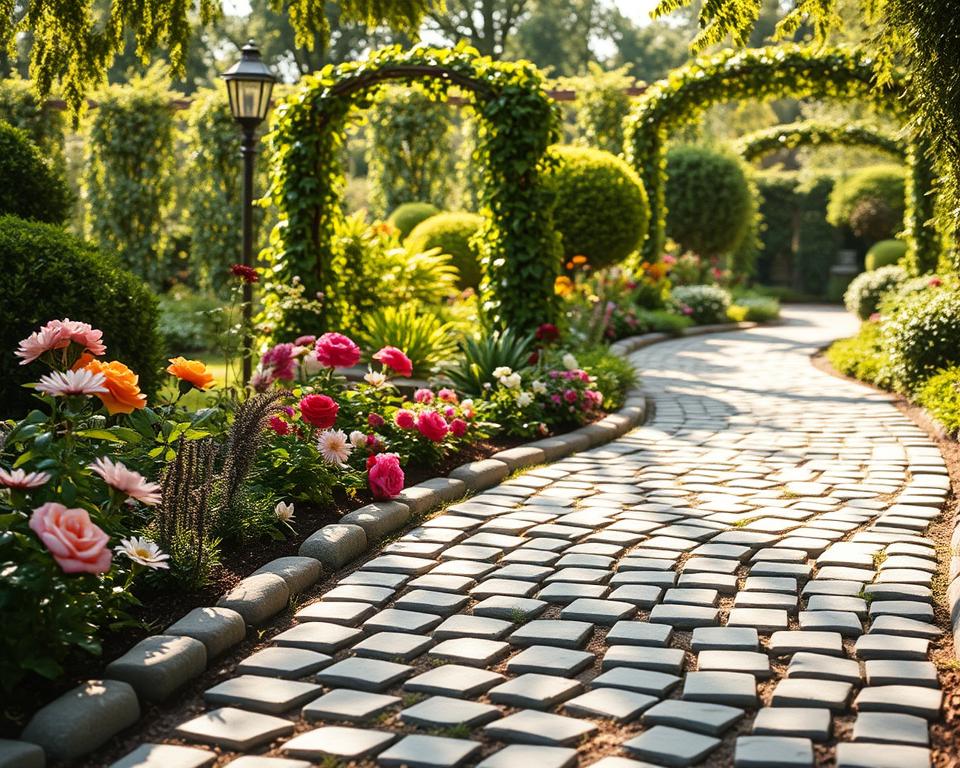
Did you know that a great garden pathway design can raise your property’s value by as much as 15%? It shows how important a good outdoor walkway is. It not only makes your yard look better but also makes it easier to walk around. A well-placed pathway is key to tying your garden together, connecting various spots.
This makes your outdoor area not just good-looking, but handy and welcoming too. Let’s dive into how designing pathways can make your outside spaces better and more beautiful.
Key Takeaways
- Well-designed pathways enhance property value.
- They improve accessibility and flow in outdoor spaces.
- A cohesive design draws attention to focal points.
- Pathways can be both functional and aesthetically pleasing.
- Choosing the right materials is crucial for durability and appearance.
Benefits of a Well-Designed Garden Pathway
A well-designed garden pathway can transform your outdoor space. It makes your home look better and your garden more useful.
Enhancing Curb Appeal
Pathways are key to boosting your home’s first impression. A good pathway welcomes visitors and makes them want to see more of your garden. The materials and design you choose play a big role in this.
Improving Accessibility
It’s important to make pathways that everyone can use easily. A smart pathway design helps people move through your garden comfortably. This is good for inclusivity and encourages everyone to spend more time outside.
Adding Structure to Your Garden
Pathways help organize your garden by marking different areas. They give your garden a neat structure and guide visitors around. Whether they’re straight or curved, pathways connect your garden’s features nicely.
Creating a Focal Point
Pathways can lead eyes to the best parts of your garden. They can point out lovely flowers, art, or water features. This makes your garden more interesting and enjoyable to visit.
Styles of Garden Pathways
Exploring different styles of garden paths brings creativity and function to landscaping. Each style has its unique charm. It improves the beauty and usefulness of outside areas. Here’s a look at various pathway styles that can upgrade any garden.
Traditional Brick and Stone Paths
Traditional pathways made of brick and stone have lasting beauty. These materials are durable and add a classic look. They fit well in formal and cottage gardens. You can arrange them in special patterns. This adds beauty while being good for walking on.
Modern Gravel and Pebble Walkways
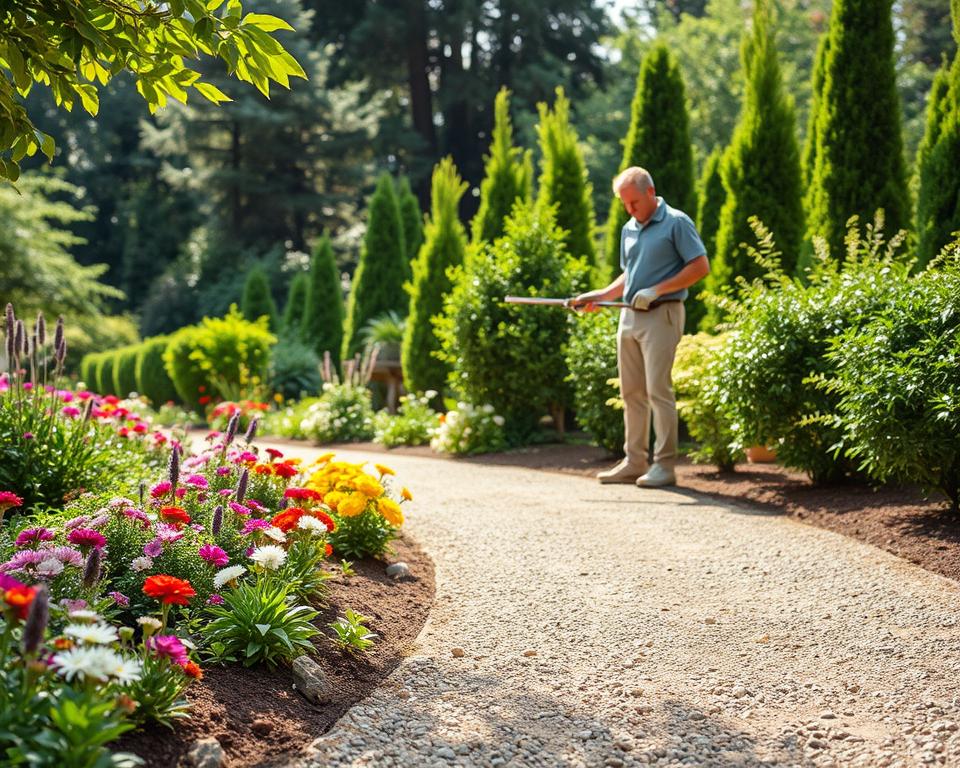
Modern walkways use gravel and pebbles for their flexibility and casual look. They’re great for modern gardens. Installation is easy, and they don’t need much upkeep. Gravel’s texture makes a garden feel soft. It creates a relaxed atmosphere for enjoyment and discovery.
Natural Wood Boardwalks
Natural wood boardwalks fit perfectly in natural settings, like woods or coasts. These paths mix well with their surroundings, giving a rustic but classy look. They’re perfect for leading people through green gardens or over wet areas. They mix use with a natural style.
Artistic Mosaic Designs
Artistic pathway designs offer a chance to be creative. Using colorful tiles, stones, or glass lets homeowners make unique paths. These paths stand out in their gardens. They not only look good but also show the owner’s personal taste. Each path tells its own story.
Choosing the Right Materials
Choosing the right materials for your garden path is key to its durability and look. There are different options, each with its own advantages and drawbacks. Knowing about garden path materials aids in making a smart choice to enhance your garden’s beauty.
Pros and Cons of Concrete
Concrete is a strong option for paths, known as one of the most cost-effective pathways. It stands up to lots of walking and tough weather well. However, the concrete pros and cons show it’s practical but lacks the beauty of natural stones. Over time, it can crack, leading to extra costs for fixes.
Exploring Natural Stone Options
Natural stones like flagstone or slate add timeless beauty to any garden. They’re not just good looking but durable too. The main issue is their high upfront cost. Despite this, the allure of natural stone may justify its price for some.
Eco-Friendly Alternatives
For eco-conscious choices, materials like reclaimed brick or permeable pavers are great. These options help water drain better and support the environment, without sacrificing function. They align with sustainable landscaping trends, proving style and eco-friendliness can go hand in hand.
Cost Considerations
It’s crucial to think about not only immediate costs but also long-term upkeep when picking materials. The sturdiness of each option affects the total cost. Concrete may look cheaper initially, but natural stone might last longer, offsetting its higher price. Finding a balance between looks and budget can lead to a satisfying pathway.
Planning Your Pathway Layout
Making a pathway layout that looks good and works well is key for a nicer garden. First, look carefully at your garden to see what it needs and what makes it special. This way, you can make a path that flows well and fits right in with your outdoor space.
Assessing Your Garden Space
Start by really getting to know your garden. Consider how big it is, what plants you have, and how close it is to things like patios. Knowing these details will help you figure out the best layout for your path. You’ll want to measure spaces and spot important features along the way.
Factors to Consider for Design
Designing a pathway is not just about looks. It has to be useful too. Think about how many people will walk there, what they’ll do, and if you want it to feel open or enclosed. The path’s width and the materials you use should make it work well and match your garden’s style.
Creating Flow and Balance
To make your pathway look great, focus on flow and balance. Straight paths have a simple beauty, while curved ones add mystery and fun. Place plants along the path to make walking through your garden a delight.
Incorporating Curves and Angles
Adding curves and angles can make your pathway much more interesting. Curved paths draw the eye along, and sharp angles add a sense of order. Using both can make your garden feel lively and invite people to explore more.
Lighting Your Garden Pathway
Lighting up your garden pathway is important for safety and looks. Good lighting makes your outdoor area more attractive. It helps guests see where they are going at night. You can choose from eco-friendly options or those that shine brightly all the time.
Types of Pathway Lighting
You have a few choices for pathway lighting:
- Solar lighting: These lights use the sun’s energy to light up your path at night. They save energy.
- Electric lights: These are strong and connect to your home’s power. They are very reliable.
- LED lights: LEDs last a long time and use little energy. They work well with solar and electric systems.
Solar vs. Electric Options
Deciding between solar and electric lighting changes how they’re installed and the feeling they give:
| Feature | Solar Lighting | Electric Lighting |
|---|---|---|
| Installation | Easy, no wiring needed | Needs a pro to install and wire |
| Energy Source | Sunlight (eco-friendly) | Electricity (costs more) |
| Brightness | Changes with the sun | Always bright, you can adjust it |
Safety and Aesthetic Considerations
Choosing the right safety features keeps your path clear and prevents accidents. Soft lighting adds beauty to your garden. It feels welcoming. Picking the best lights for your garden path is key. They can show off your landscape and make your path welcoming.
Maintenance Tips for Pathways
Keeping a garden pathway inviting and useful all year is key. Start with a clear plan that includes cleaning, seasonal care, and plant management. These steps will make your paths last longer and boost your garden’s look.
Cleaning and Repairing Surfaces
Clean your pathways regularly to keep them strong. Sweep off leaves, dirt, and stuff that could make them slippery. Use a pressure washer on stone and brick paths to get rid of tough stains. Fix any cracks or chips quickly to stop more damage and keep your paths looking great.
Seasonal Upkeep
Each season asks for different pathway care. In spring, fix any winter damage. Summer might mean cleaning more often because of more people and plants. In fall, clear pathways of leaves and stuff to stop mold and mildew. Doing these things helps keep your paths in good shape and looking nice.
Plant Management Along Pathways
Adding plants along your pathways makes for a pretty journey. But, you must manage them right. Trim plants regularly so they don’t block the path. Pick plants that add beauty without taking over the space. Always check plant health and remove dead plants to keep the area neat and welcoming.
Incorporating Plants and Flowers
Adding greenery and flowers along paths does more than just look good. It makes your garden welcoming and boosts its natural charm. By mixing different types of plants, you make walks more interesting.
Framing Your Pathway with Greenery
Green plants can beautifully outline your walkways. Soften the harsh lines with dense plants or low shrubs. This blends the path into the surrounding areas nicely.
Use big plants in the back and let small flowers show in front. This adds depth and texture to your garden.
Seasonal Blooms for Color
Seasonal flowers add sparkle and keep your garden lively all year. Choose plants that bloom in various seasons. This way, there’s always something colorful.
Imagine seeing bright daffodils in spring or bold chrysanthemums in autumn. They draw eyes and make the garden more inviting.
Hardy Perennials vs. Annuals
Enhancing paths means choosing between perennials and annuals. Perennials come back every year with little work. Annuals add quick color but need replacing each year.
Mixing perennials with annuals gives you a garden that’s both pretty and easy to keep up.
Budgeting for Your Pathway Project
Making a garden pathway is not just about picking materials and designs. Setting a good budget is key to stay on track and not overspend. We will show you how to budget well, including DIY choices, hiring experts, and what costs to watch out for.
Setting a Reasonable Budget
Start by looking at how big your project is. Think about how long and wide the pathway will be and what materials you want. A solid budget helps you decide what you need versus what you want. List your expenses:
- Materials
- Labor
- Permits (if required)
- Landscaping accessories
This way, you won’t forget any part of your project or spend too much.
DIY Options vs. Hiring Professionals
Choosing DIY or professional help is a big part of your budget. Doing it yourself can save money, especially if you’re good with tools. But be realistic about what you can do. Some tasks might need special skills and could cost more if done wrong. Hiring pros ensures top quality but will increase your costs.
Unexpected Costs to Consider
Pathway projects often have unexpected costs. You might need more materials or have to fix the soil. Planning for these surprises will make things less stressful. Setting aside about 10% of your budget for surprises helps keep your project going smoothly.
Eco-Friendly Pathway Design Ideas
Designing an eco-friendly pathway improves both its use and its impact on the planet. By selecting sustainable materials, adding native plants, and managing rainwater smartly, your pathway can meet ecological goals and make your garden look great.
Sustainable Material Choices
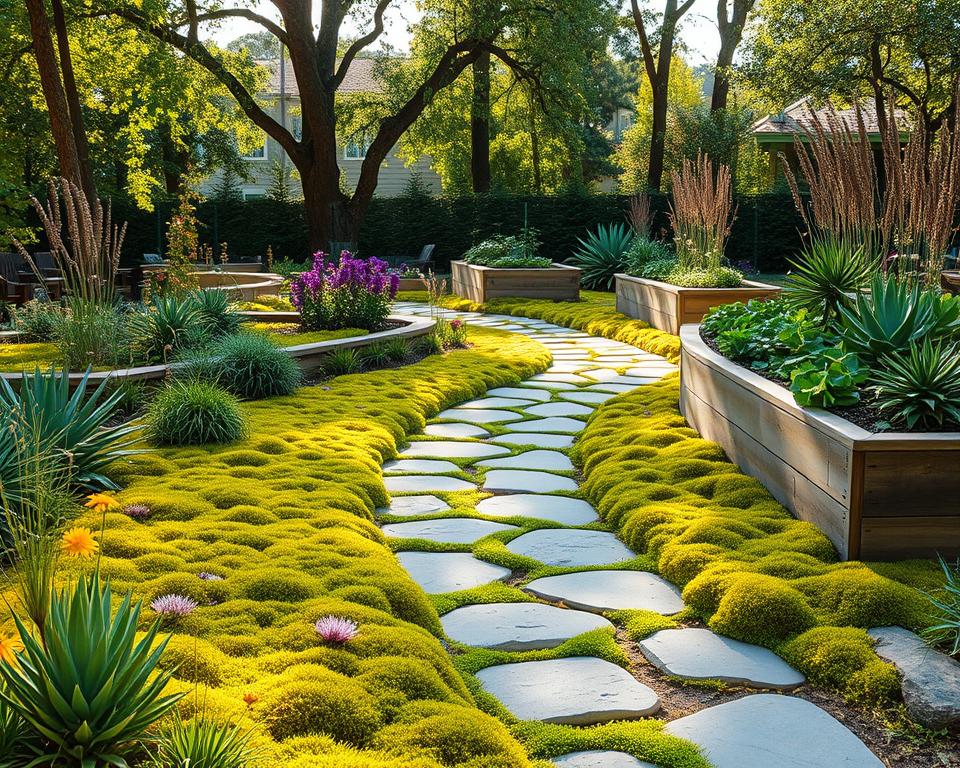
Choosing sustainable materials like permeable pavers, recycled bricks, and natural stones cuts down on environmental harm. These materials are durable and pretty. They allow rainwater to soak through, which is key for eco-friendly pathways.
Incorporating Native Plants
Adding native plants to pathways has many perks. They do well in local conditions with less upkeep. Native plants attract local wildlife, increase biodiversity, and make gardens more resilient and attractive.
Rainwater Management Strategies
Good rainwater management is essential for eco-friendly pathways. Using gravel paths helps with natural water runoff, which lessens erosion and stops water from pooling. This method makes your garden healthier and supports sustainable landscape practices.
| Aspect | Benefits |
|---|---|
| Sustainable Materials | Reduces environmental impact, promotes longevity |
| Native Plants | Supports local ecosystems, minimizes maintenance |
| Rainwater Management | Prevents erosion, facilitates natural drainage |
Seasonal Pathway Enhancements
Garden pathways are the backbone of outdoor spaces. Adding seasonal touches can make your garden vibrant all year. By integrating holiday decorations, seasonal planting, and temporary decor, your pathways will always look appealing. Let’s explore creative ways to transform your garden walkways.
Decorating for Holidays
Adding holiday decorations to your pathways brings out the festive spirit. String lights, wreaths, and themed ornaments can enchant even simple paths. For Halloween, use pumpkins and cobwebs. For Christmas, go for twinkling lights and nutcracker figures. These decorations welcome guests with a festive vibe.
Seasonal Planting Ideas
Seasonal planting adds color and beauty to your paths. In spring, tulips and daffodils brighten the walkways. In fall, chrysanthemums add warmth. Using plants that thrive in cooler weather keeps your pathways lively in winter. Choose your plants wisely to make a difference every season.
Temporary Features and Decor
Temporary decor allows for creative decorating. You can switch out potted plants, movable sculptures, or seasonal banners easily. This approach keeps your garden fresh and engaging. Seasonal wind chimes are a simple way to add fun without a big commitment.
| Season | Recommended Decorations | Suggested Plants |
|---|---|---|
| Spring | Flower wreaths, fairy lights | Tulips, daffodils |
| Summer | Colorful lanterns, garden flags | Petunias, marigolds |
| Autumn | Pumpkins, hay bales | Chrysanthemums, sedum |
| Winter | Evergreen garlands, snowflakes | Winterberry, holly |
Using seasonal enhancements will make your garden beautiful and inviting. Try these ideas to keep your pathways magical for everyone.
Pathway Safety Features
Designing a garden pathway requires focus on safety to ensure everyone enjoys it. By adding safety features, we reduce accidents. This makes your outdoor spaces both safer and more useful.
Slip-Resistant Materials
Picking the right pathway materials is key. Textured concrete or certain stones prevent slipping, which is important when it’s wet or icy. These materials make your pathway safer and last longer.
Edging and Borders
Edging does more than just look nice. It keeps your pathway clear by preventing erosion and containing materials. Using bricks or wood for strong borders also makes the path easy to see. This keeps everyone on the path and prevents tripping.
Adequate Lighting for Visibility
Good lighting is a must for using the pathway at night. Installing lights, like low-voltage or solar lamps, makes the path safe after dark. Lights highlight any hazards and make the pathway welcoming. Lights placed just right improve the look while focusing on safety.
Inspiring Garden Pathway Examples
Changing your outdoor space can begin with your garden pathway. Looking at different inspiring pathway examples can spark new ideas. With everything from rustic to modern designs, there’s a wide variety of options for homeowners.
Real-Life Case Studies
Let’s explore real-world garden pathways that show off various styles and materials. For example, in a Boston suburb, a garden mixes cobblestones and greenery, showing beauty through texture and color. Then, there’s a gravel path in Portland, surrounded by local plants, focusing on easy movement and caring for the environment. These cases prove that your style can match your preference and fit the environment too.
Visual Gallery of Ideas
To spark more ideas, imagine a gallery full of different pathway styles. Think of paths winding through flowers or stepping stones in a peaceful setting. Each picture is a guide, helping you combine elements to make your garden special and fit your way of living.
Tips from Landscape Designers
For pathways that look good and work well, take advice from landscape designers. They suggest looking at how people will move around to pick the best path size. They also highlight using various materials to catch the eye. Thinking about upkeep early on saves you work later. With careful choice and planning, your outdoor area can become an amazing escape.