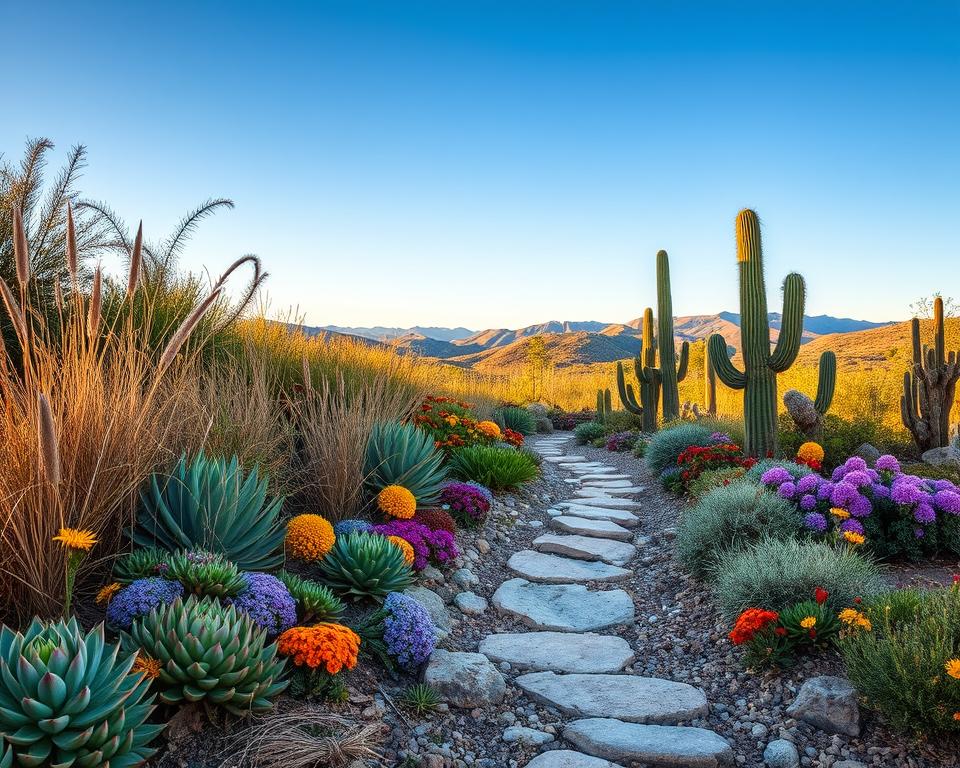
Did you know nearly half of the water used in American gardens goes to waste? This happens due to inefficient watering techniques and overwatering. With climate change getting worse, it’s very important to have gardens that don’t use a lot of water. A garden that can handle drought uses less water and still looks beautiful with its tough plants. These gardens not only save water but are also easy to take care of. We’ll show you how to plan, create, and maintain a garden that’s wise about water.
Key Takeaways
- A drought tolerant garden reduces water usage and promotes sustainable practices.
- Choosing the right plants can enhance your garden’s aesthetic while conserving resources.
- Effective planning and layout are crucial for creating a successful drought resistant landscape.
- Maintenance strategies can keep your garden thriving despite limited water availability.
- Integrating hardscaping elements can enhance both beauty and functionality.
- Engaging local wildlife can support ecosystem health in your garden.
What is a Drought Tolerant Garden?
A drought tolerant garden uses less water but still looks great. It has plants that do well with little water. Knowing about drought tolerance helps in creating these gardens.
Definition of Drought Tolerance
Drought tolerance means plants can handle dry soil and not much water. These plants keep living where others can’t. Choosing them means less water and work for the garden.
Benefits of Drought Tolerant Gardens
Drought tolerant gardens have many benefits. They use less water and are cheaper to maintain. They’re good for the planet, support local wildlife, and look beautiful.
Why Choose a Drought Tolerant Garden?
A drought tolerant garden helps with saving water and protecting the environment. These gardens are key in fighting water scarcity. They make the area beautiful while saving water.
Environmental Impact
Drought resistant gardens lessen the harm to our planet. They use native plants that need less water, which is good for the earth. These gardens help the soil and create more life, showing what sustainable gardens can do. Adding mulch helps the soil hold water, cutting down on the need for watering.
Cost Savings
Using plants that need less water cuts down on water bills. This means spending less on watering systems and upkeeps. Over time, these gardens save money and bring us closer to nature.
Key Plants for Drought Tolerant Gardens
Starting a sustainable garden in areas with scarce water begins with the right plant choices. Drought tolerant plants are key for a lovely, thriving landscape in dry areas. They need less water, so gardeners can create amazing gardens that last through hot seasons. Here are some top plant choices.
Succulents and Cacti
Succulents and cacti are perfect for dry gardens. They store water in leaves and stems, using it wisely.
- Aloe Vera: It’s good for health and needs very little watering.
- Jade Plant: Loves the sun and doesn’t need much water to flourish.
- Barrel Cactus: It looks great and withstands dry conditions well.
Native Plants
Using native plants makes drought tolerant gardens even stronger. Plants like Black-Eyed Susan and Russian sage grow well with little care. They’re used to the local weather.
- California Poppy: Bright and attracts pollinators, doing well in dry places.
- Stonecrop: It covers the ground and thrives with minimal water.
- Agastache: This plant loves dry conditions and brings in bees and butterflies.
| Plant Type | Water Needs | Sun Exposure |
|---|---|---|
| Succulents and Cacti | Low | Full Sun |
| Native Plants | Moderate to Low | Full Sun to Partial Shade |
Adding these plants to your garden helps the environment and makes a beautiful, drought-friendly space.
Designing Your Drought Tolerant Garden
Creating a garden that resists drought starts with good design. It not only makes your outdoor area look better but also saves water. And saving water means your garden helps the planet.
When you think about how your garden looks, it can really make a difference. A well-planned garden does well.
Layout and Planning
Start by putting plants with the same water needs together. This saves water and keeps plants healthy. Make pathways so it’s easy to walk around without wasting water.
Having plants of different heights adds beauty. It also blocks the wind, which is good for plants that don’t like too much water.
Choosing the Right Soil
Choosing the right soil is very important. You need soil that drains well but keeps enough moisture. Adding stuff like compost helps plants grow better.
Putting mulch on the soil keeps it moist, so you don’t have to water as much. A smart garden plan shows you care about being green.
Maintenance Tips for Drought Tolerant Gardens
To make your drought-tolerant garden flourish, follow some key maintenance actions. Paying close attention to how you water and trim plants can boost their health. This also beautifies your garden. Such care ensures your garden stays lively and gorgeous while saving water.
Watering Strategies
Using the right watering methods is vital in a garden that doesn’t need much water. Keep these strategies in mind:
- Water deeply but not too often to promote strong roots. This helps plants get water from deep soil.
- Water early in the morning or late in the day to cut down on water lost to evaporation.
- Use drip irrigation or soaker hoses to get water right to the plant roots.
Pruning and Care
Pruning is key for a healthy garden. Follow these care tips:
- Trim dead or too-big branches regularly to help air flow and sunlight reach plants.
- Get rid of weeds quickly so they don’t steal nutrients and water from your plants.
- Put mulch around your plants. It keeps soil moist and stops weeds from growing.
Seasonal Changes in Your Garden
Understanding how to garden with the seasons is key to a drought-resistant garden. Every season has its tasks that make your plants healthier and more beautiful. It also helps the environment. Let’s explore spring planting tips and fall care must-dos.
Spring Planting Strategies
Spring is great for adding drought-tolerant plants to your garden. Planting them early gives them strength before the summer heat. Choose local plants because they need less water and handle weather changes better. Proper spacing helps with air flow and stops plants from fighting over food.
Fall Maintenance
Getting your garden ready for winter is essential as summer ends. Begin by getting rid of dead or sick plants. This step keeps pests and diseases away during the winter. A new layer of mulch keeps moisture, looks good, and helps control soil temperature. These fall steps are good for the planet and make your garden thrive.
Common Mistakes to Avoid
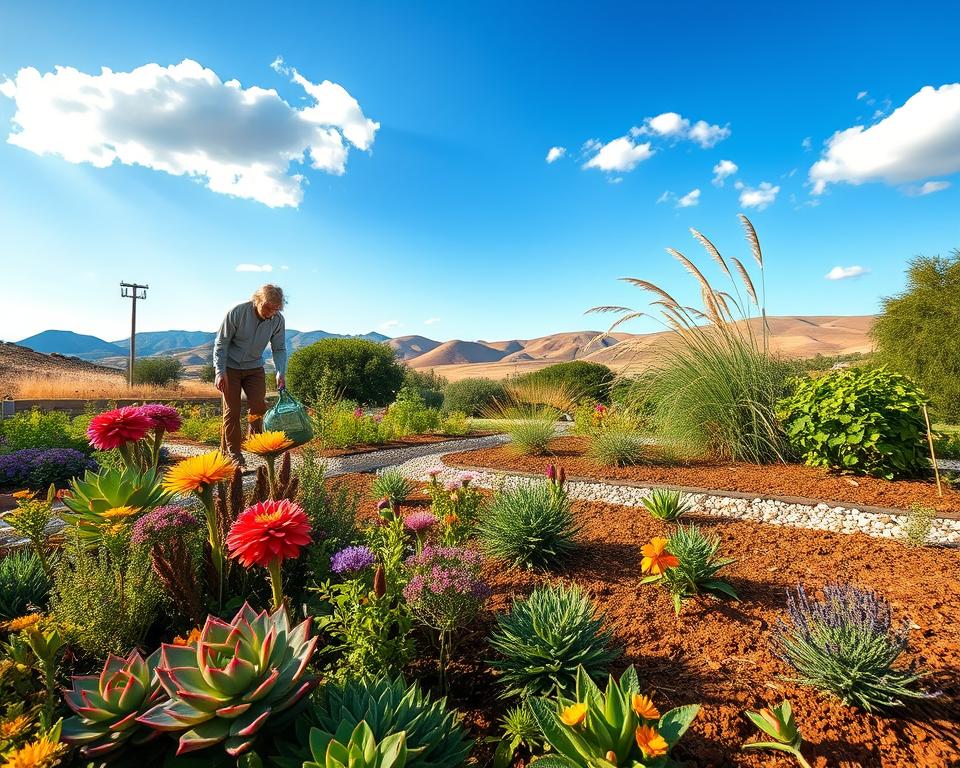
Gardening brings joy but making common mistakes can spoil it. Mistakes can affect your garden’s look and health. It’s key to know these errors, especially in dry gardening.
Overwatering Plants
One big mistake in gardening is giving plants too much water. Some think that more water means healthier plants. But plants that need less water can get damaged from too much. It’s important to know how much water each plant needs.
Choosing Non-Native Species
Picking plants from other places can also cause problems. These non-native plants often need more water and care to survive. Using local plants is better. They make your garden strong and easy to take care of.
Incorporating Hardscaping Elements
Hardscaping elements are key to making drought-resistant landscaping both functional and attractive. They add beauty to the garden and help save water. Using pathways and patios can make your outdoor space easy to walk through. At the same time, they reduce water loss and keep the ground moist.
Pathways and Patios
Choosing materials that let rainwater soak into the ground is smart for pathways and patios. This prevents standing water and helps the soil stay moist, very important during dry times. You can pick from gravel, permeable pavers, and flagstone to design paths. These paths not only look good but also outline different areas and enhance the garden’s look.
Decorative Rocks and Mulch
Adding decorative rocks to your landscape brings in interesting structures and has practical benefits. They stop soil from washing away and keep moisture in the ground by keeping weeds away. Combining rocks with mulch boosts the garden’s look while supporting water-saving landscaping. Choosing rocks and mulch in different colors and sizes creates an eye-catching contrast with green plants, making your garden both beautiful and effective.
| Hardscaping Element | Benefits | Best Materials |
|---|---|---|
| Pathways | Reduces evaporation, directs foot traffic | Gravel, permeable pavers, flagstone |
| Patios | Increases outdoor living space, encourages social interaction | Concrete, brick, stone |
| Decorative Rocks | Prevents soil erosion, minimizes weed growth | River rocks, pebbles, boulders |
| Mulch | Retains soil moisture, provides insulation | Wood chips, bark, gravel |
Attracting Wildlife to Your Garden
Having a lively garden that attracts wildlife can make your area look better. By using certain plants that don’t need much water, you can welcome different animals. This kind of garden makes your space pretty and helps the planet too.
It supports the local ecosystems, making our surroundings better and more fun.
Pollinators and Beneficial Insects
Pollinators like bees and butterflies help plants grow and keep life diverse. Adding plants that give them food, like nectar and pollen, helps their numbers grow. Pick plants that handle dryness well, like lavender, salvia, and milkweed, to attract them.
These plants do well without much water and help control pests by bringing in good insects.
Bird-Friendly Plants
Birds are important for controlling pests and helping plants breed. Choosing plants that feed and shelter birds is good. Try picking native plants that produce berries, sunflowers, and coneflowers.
These choices feed local birds and make your garden look great. Seeing birds enjoy your garden is a special part of making a garden that saves water.
Combining Aesthetics with Functionality
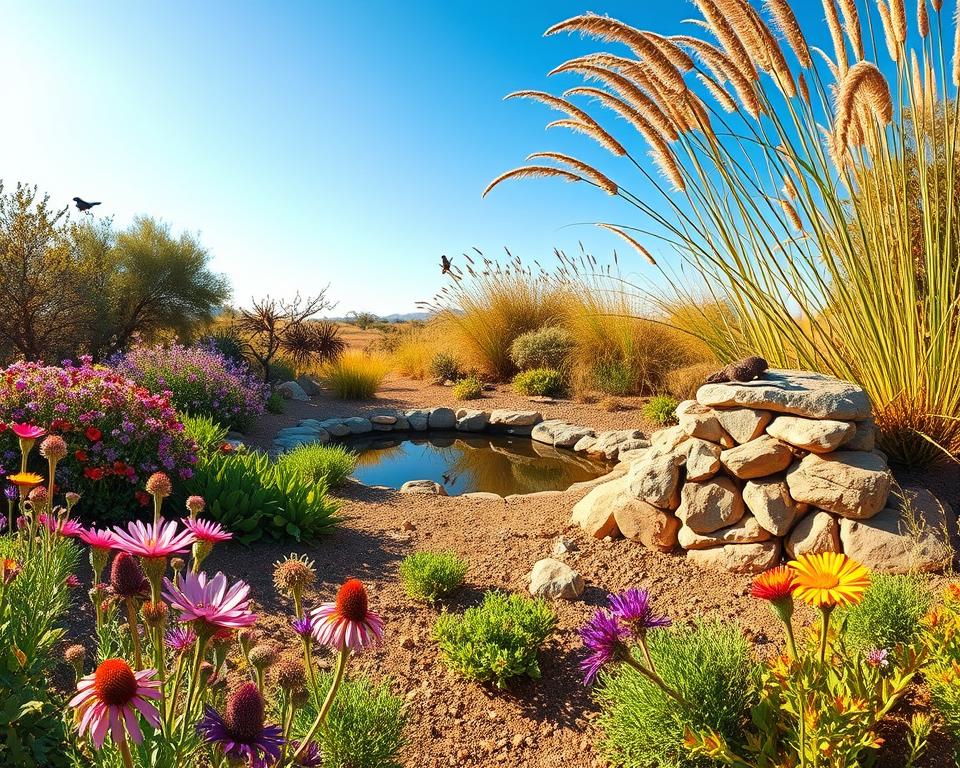
Finding a good balance between beauty and usefulness is key for drought-resistant landscapes. When you design your garden, mixing different colors and textures can really make it pop. This careful planning makes your garden more welcoming and sticks to eco-friendly gardening ideas, letting beauty and practical use come together perfectly.
Color Schemes and Textures
Using many colors can bring life to your garden while also being smart about design. Pick plants that bloom at different times to keep things interesting all year. The varied textures of leaves, stones, and other elements add depth, giving your space a full look without needing a lot of water.
Creating Focal Points
Adding focal points helps catch the eye and give your garden structure. Things like decorative stones, big sculptures, or beautiful flower beds act as centerpieces. This setup keeps things balanced and shines a light on drought-resistant gardening, making a place that’s both stunning and good for the planet.
Resources for Drought Tolerant Gardening
Looking at different resources can really help you get better at drought tolerant gardening. It doesn’t matter if you’re experienced or new to gardening, there are many guides and communities to help. They offer great advice, tips, and a community feeling that helps improve gardening.
Books and Guides
Many books on drought tolerant gardening have expert advice on picking plants, preparing soil, and designing your landscape. These trusted guides share ways to garden sustainably, saving resources and helping the environment. Here are some books to consider:
- The Drought-Resistant Garden by Eric S. Taylor
- Water-Wise Plants for the Southwest by Michael Brown
- Eco-Friendly Garden Design by Linda Green
Online Communities and Forums
Joining online communities and forums offers continuous support as you try out tips for drought tolerant gardening. These places let people share what works and what doesn’t. They also connect you with others who love sustainable gardening. Here are some spots to check out:
- Reddit gardening communities
- Facebook gardening groups
- Gardening Blogs with comment sections for discussion
Conclusion: Embrace Drought Tolerant Gardening
Our world is changing because of climate change. Having a drought tolerant garden helps us in many ways. It’s about saving water and helping the environment.
We make our gardens look good and help the planet. This is how we face the future of gardening.
Future of Gardening in a Changing Climate
Water is getting scarce. It’s important for gardeners to think about the future. Drought tolerant gardens are an answer to this challenge.
They help us keep our gardens green without wasting water. By choosing the right plants, we make a better future for all.
Being a Responsible Gardener
Making smart choices shows we know how gardening affects the environment. Drought tolerant gardening is a good way to do this. Other gardeners can learn from us.
Together, we can show how gardens can be both beautiful and eco-friendly. Every garden can show we care about our planet.