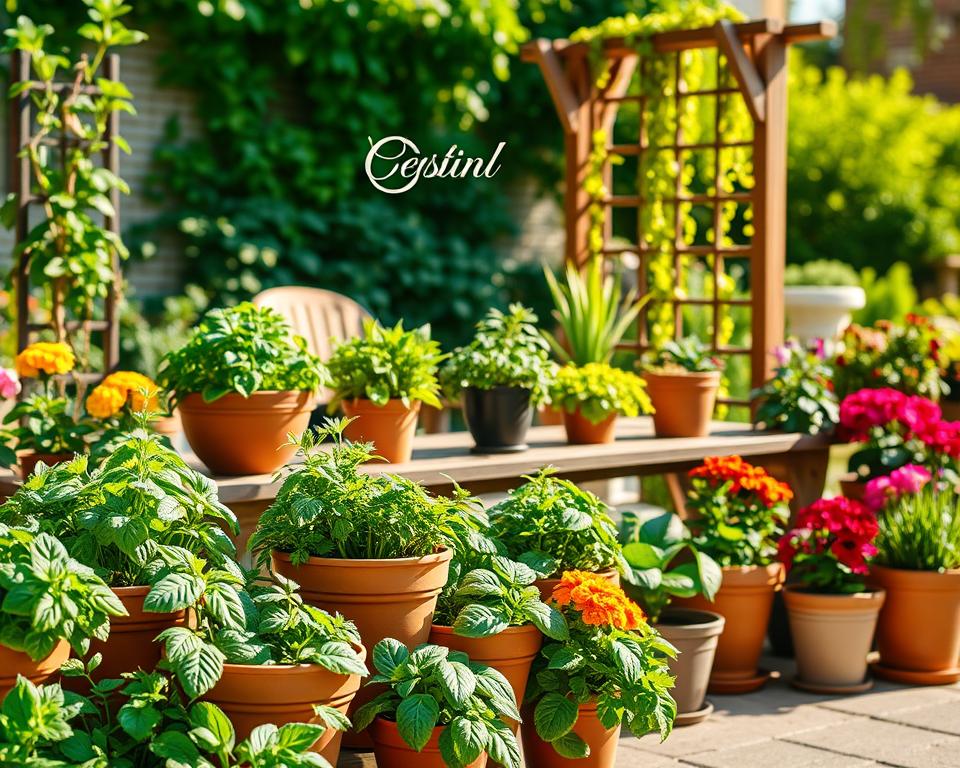
Did you know more than 80% of Americans live in cities? This fact shows how important it is to find ways to garden in small areas. Container gardening is a great option for people who don’t have much room. It lets you turn places like patios and balconies into green spots. With careful design and planning, everyone can enjoy gardening, no matter how much space they have. These gardening tips can change any small area and produce lots of plants.
Key Takeaways
- Container gardening allows you to maximize limited outdoor space.
- Creative layout designs can enhance the beauty and functionality of your garden.
- Choosing the right containers is essential for success.
- Proper planning can help you achieve a vibrant container garden.
- Outdoor container garden tips can turn any area into a green sanctuary.
- Small space gardening ideas are perfect for urban environments.
Introduction to Container Gardening
Container gardening lets you grow plants in pots instead of in the ground. It’s great for people with little to no yard space. If you live in the city, you can still have a beautiful garden on your balcony with containers. It’s easy for beginners and makes gardening less of a hassle. This makes it a fun and rewarding hobby.
What is Container Gardening?
Container gardening means growing plants in pots or boxes. It’s popular with city folks who don’t have room for big gardens. You can pick different containers to match your style. This way, you can move your plants around to catch the sun, helping them grow better.
Benefits of Container Gardening
Container gardening comes with a lot of perks. Here are some of the best ones:
- Flexibility in placement allows for maximizing sunlight exposure.
- Fewer soil-borne pests and weeds simplify maintenance.
- Ideal for small spaces, making it perfect for city living.
- Control over soil quality ensures healthy plant growth.
- Easier access for watering and harvesting.
Container gardening is a great option for starting a garden in the city. It’s perfect for beginners and anyone looking to add greenery to their urban space. The possibilities with container gardening are limitless.
Choosing the Right Containers
Picking the right containers is key to a successful garden. You have many choices for outdoor gardening, so you can find something that fits your taste and meets your plants’ needs. Knowing about different containers and what to consider helps your garden grow well.
Types of Containers Available
- Clay Pots: Porous and allows air and moisture to move through.
- Plastic Containers: Lightweight and often come in various designs.
- Metal Planters: Durable and provide a modern aesthetic.
- Fabric Bags: Excellent for aeration and root development.
Factors to Consider for Selection
When picking containers, here’s what to keep in mind:
- Drainage Capabilities: Make sure the container has holes to let out extra water. This stops root rot.
- Size: Bigger containers give roots more space, leading to healthier plants.
- Material: Different materials have their own benefits like keeping temperature steady, being light, and lasting a long time.
- Aesthetic Appearance: Choose containers that look good in your outdoor area. This makes the space more appealing.
Keep these points in mind to match your garden plans with the perfect container. This ensures your garden thrives beautifully.
Planning Your Container Garden Layout
Creating a container garden layout needs careful thinking to use space well and keep plants healthy. It’s important to consider the size, sun, and wind. This can lead to a garden full of life. First, find the best spot for your containers. They should fit nicely in your space. A good layout improves access and helps plants grow better.
Determining Your Space
Start by measuring where your containers will go. Look at the size and any space limits. This will help you plan your garden layout well. You want a balanced space that’s easy to use. Try to arrange containers. This can create walkways or areas for different kinds of plants. It makes your garden more enjoyable.
Sunlight and Wind Considerations
Knowing how much sun your garden gets is key. Watch how sunlight moves through your space during the day. See which spots get full or partial sun. Different plants need different amounts of light. So, place them where they’ll thrive. Wind can also affect delicate plants. Arrange containers to protect them from strong winds. This keeps them healthy and strong.
Selecting the Right Plants
Picking the right plants is crucial for a successful container garden. It’s important that the plants you choose go well together. This helps create a garden that looks good and is healthy. Think about the water and sunlight needs of each plant to make sure they grow well together.
Compatible Plant Combinations
Try to choose plants that look good together and have similar growing needs. Some great pairs include:
- Herbs like basil and oregano are great together and add flavor to dishes.
- Tomatoes and peppers like the same amount of sunlight and grow well together.
- Leafy greens and radishes make for a colorful and productive mix.
Seasonal Planting Ideas
Adding plants that fit the season can make your garden interesting all year. Here are some ideas:
| Season | Plant Options |
|---|---|
| Spring | Petunias, pansies, and lettuce will make your garden pop. |
| Summer | Sunflowers and zinnias bring vibrant colors. |
| Fall | Chrysanthemums and ornamental cabbages add fall charm. |
| Winter | Hardy perennials and evergreens keep your garden colorful in the cold. |
Soil and Drainage Considerations
Getting the right soil and drainage is key to great container gardening. Choosing the best soil mix helps plants grow healthy in small spaces. It keeps moisture just right and prevents too much water.
Importance of Good Soil Mix
A top-notch soil mix is crucial for growing plants in pots. It usually has peat moss, perlite, and vermiculite. These elements keep moisture balanced and air flowing.
Using a peat-based soilless mix is good for boosting plant health. It helps plants get nutrients well, important when roots have limited room to spread out.
Drainage Solutions for Containers
Good drainage stops roots from rotting in pots. Ensure your pots have holes to let out extra water. This keeps soil from getting too wet.
Adding broken pottery or coarse gravel at the bottom of pots helps drainage. By managing soil and drainage well, you give your plants a thriving environment.
Plant Arrangement Techniques
Arranging plants in containers uses creative methods for visual appeal. These techniques improve the overall look and feel. They create depth and ensure your plants stand out in any room.
Layering Plants for Visual Appeal
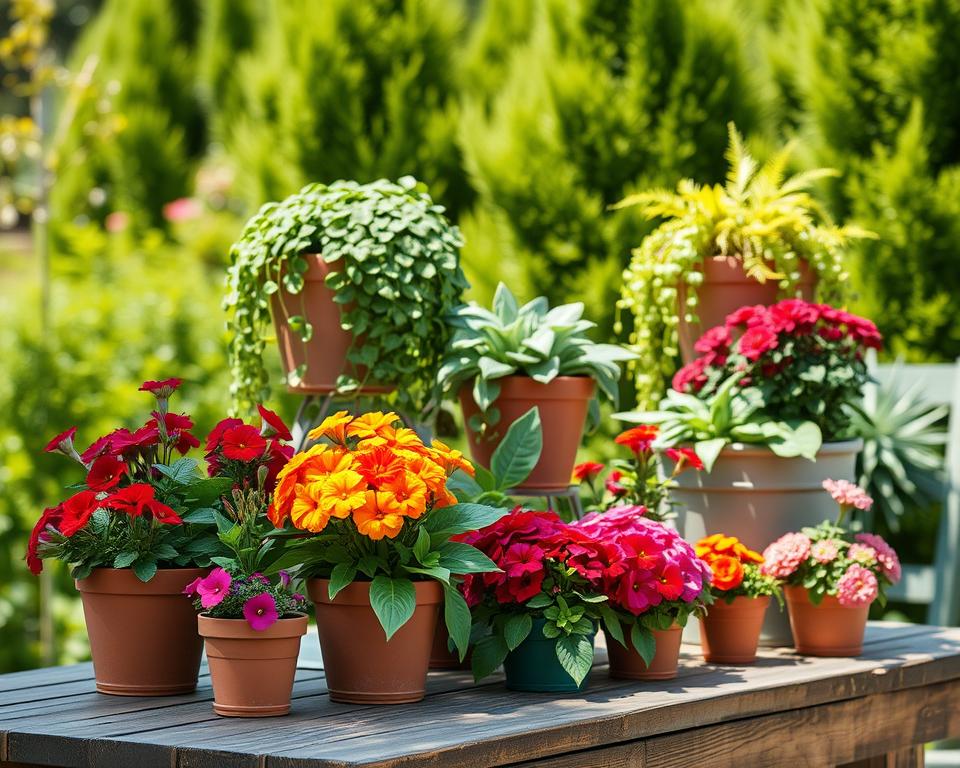
Layering plants is crucial for a stunning container garden. By using plants of different heights, the garden gets more exciting. You can have tall plants in the back and shorter ones up front.
Imagine a tall, colorful grass behind flowing petunias. This setup catches the eye and makes the garden pop.
Color Coordination for Aesthetic Balance
Color coordination can make your garden visually appealing. Mixing colors that complement each other brings out a vibrant look. For example, pairing deep blues with bright yellows can be very striking.
Choosing colors that blend well creates a calm, unified look. Paying attention to color really boosts your garden’s beauty.
Vertical Container Gardening
Vertical gardening is a great way for people with little space to enjoy gardening. It lets plants grow up, not out, which is perfect for city living. Gardeners can create a beautiful vertical garden that’s both useful and nice to look at.
Benefits of Vertical Gardening
Adding vertical gardening to your space brings many perks. Here are some important ones:
- Space-saving: It’s great for tight spaces, using walls and other vertical areas.
- Improved air circulation: Plants spaced out properly grow healthier.
- Increased privacy: They can also block views, making your outdoor space more private.
Popular Vertical Gardening Systems
There are many ways to add vertical gardening to your outdoor area. Some favorite methods include:
- Wall planters: Perfect for herbs and small plants, they attach to walls.
- Trellises: Climbing plants love them, and they make your space beautiful.
- Stacking pots: You can arrange them in different designs for flexibility and fun.
Seasonal Container Gardening Tips
Creating a thriving container garden means changing how you plant with the seasons. Every season offers ways to make your garden look good and grow well. From the bright flowers of spring to the strong plants of fall and winter, knowing what to do each season is key.
Spring Planting Suggestions
Spring starts the gardening season with many choices for bright flowers and tasty herbs. Here are some good plants for your garden containers:
- Petunias – These colorful flowers can make any patio look better.
- Lavender – It smells nice and you can use it in cooking.
- Cherry Tomatoes – They’re a favorite for people who want fresh veggies.
In spring, make sure your containers drain well to avoid too much water. Also, using a good potting mix helps plants grow strong.
Fall and Winter Container Plants
When it gets colder, pick plants that can handle the cold. Adding decorative shrubs can give your container garden a nice shape. Here are some great choices:
- Pansies – They stay colorful in cold weather.
- Kale – It’s good in food and looks nice with its bumpy leaves.
- Evergreen Varieties – Like boxwood, these stay green all year.
Putting mulch in your containers helps keep roots warm in winter and saves water. Changing your container plants with the seasons keeps gardening interesting.
Container Garden Maintenance
Keeping a container garden healthy depends on proper care. It’s vital to give your plants enough water and food. Check the soil’s wetness regularly. This helps you know how much water your plants need.
Watering Guidelines
Soil in containers dries out faster than in gardens. So, having a regular watering schedule is key:
- Check the soil’s moisture often.
- Water deeply until it runs out the bottom. This encourages strong roots.
- Remember, during warm weather, your plants might need more water.
Fertilizing Your Container Plants
Potting mix only feeds your plants for a little while. They’ll need more food to keep growing strong. Fertilizing often keeps your garden looking good:
- Add a balanced fertilizer every few weeks in the growing season.
- For a green option, use compost or aged manure.
- Slow-release fertilizers are great for ongoing nourishment.
Pest Control in Container Gardens
It’s crucial to manage pests in your container garden for healthy plants and good harvests. The close quarters of container gardening can sometimes raise the number of pests. Spotting these pests early can greatly help your plants stay healthy.
Identifying Common Pests
Some pests often find their way into container gardens, like:
- Aphids: Small insects that suck on plant sap and usually gather on new growth.
- Spider mites: Tiny spiders that damage leaves, liking dry places.
- Whiteflies: Small, flying white bugs that stick to the bottom of leaves, causing them to turn yellow.
Regularly check your plants to spot pests early.
Organic Pest Control Methods
Using organic methods to control pests keeps your garden healthy without bad chemicals. Here are ways to fight pests:
| Method | Description |
|---|---|
| Insecticidal Soap | A spray made of soap that takes out insects like aphids and spider mites by suffocating them. |
| Neem Oil | This oil comes from the neem tree. It stops many pests from eating by messing with their life cycle. |
| Beneficial Insects | Adding bugs like ladybugs or lacewings to your garden helps by eating the bad insects. |
| Companion Planting | Growing certain plants can keep pests away. For example, marigolds keep away nematodes and other bugs. |
Staying on top of things and treating pests early is crucial. By using these organic methods, your container garden can flourish without relying on harsh chemicals.
Enhancing Your Container Garden’s Aesthetics
To make a container garden look amazing, it’s not just about planting. You need to think about how to make it look better with decorations and special touches. Adding unique things can make your outdoor garden stand out beautifully.
Adding Decorative Elements
Add stones, driftwood, or special decorations to make your garden unique. These things add interest and connect your garden with the area around it. Pieces like sculptures or bright pots catch the eye, bringing life and fun to your garden. These tips can make your outdoor garden a place that people love.
Using Mulch for Visual Interest
Putting mulch in your containers does more than keep plants moist. It adds color and texture, making your garden look better. Choose materials like bark or decorative stones that go well with your plants. This easy step makes your garden more beautiful and brings everything together in an inviting way.
Harvesting from Container Gardens
Knowing when to pick your plants is key in container gardening. You’ll get the most out of your garden if you can tell when your plants are ready. For most plants, harvest time is when they’re big but still soft.
When to Harvest Your Crops
Each plant has signs that show it’s ripe. Leafy greens are best tasted to check. But for fruits and veggies, watch for their color and feel. Keep an eye on them, so they don’t get too ripe and lose taste.
Tips for Maximizing Yield
For a thriving container garden, follow these tips:
- Water your plants well and regularly.
- Pick the right fertilizer for what you’re growing.
- Make sure they get enough sun, moving them if you have to.
- Space your plants out so they’re not too crowded.
Conclusion and Next Steps
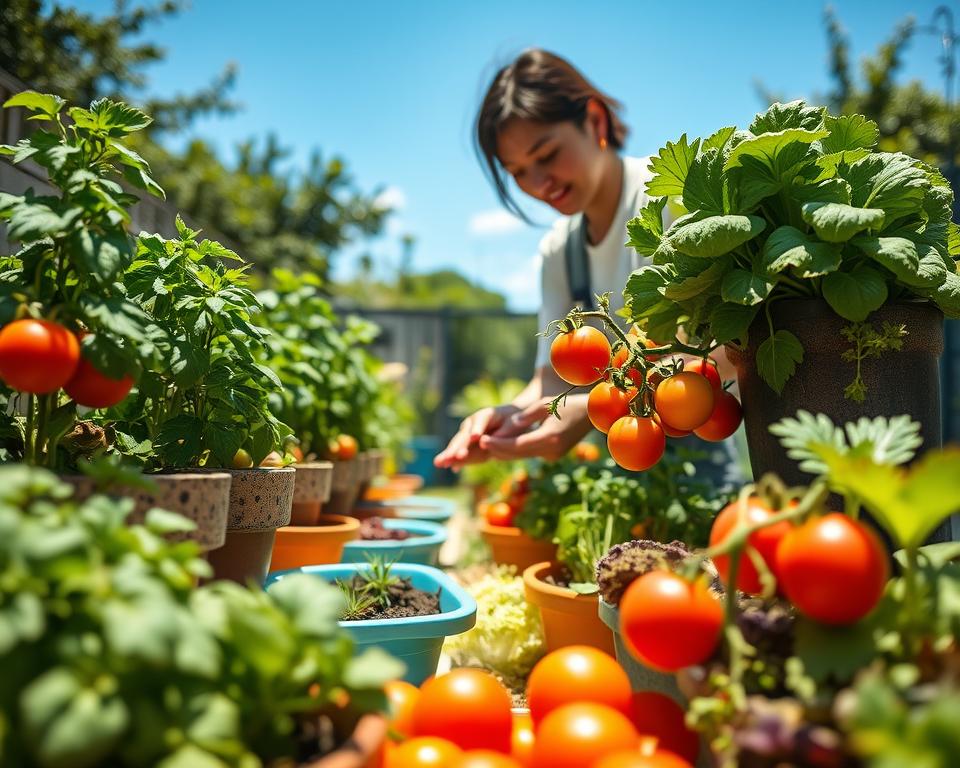
Container gardening is a smart way to garden when you don’t have a lot of space. It’s important to pick the right containers, choose plants that will grow well together, and take good care of them. These steps help make sure your garden will do well and be fun to work on.
Want to get better at gardening? There are lots of resources out there. You can learn a lot from local gardening workshops and community classes. Also, the internet has lots of helpful advice, tutorials, and forums where you can meet other people who love gardening. These can really help you grow as a gardener.
Learning more about gardening can make you better at it. It doesn’t matter if you’re just starting or if you’ve been gardening for years. There’s always something new to learn. Get into container gardening and see how your skills can bloom!