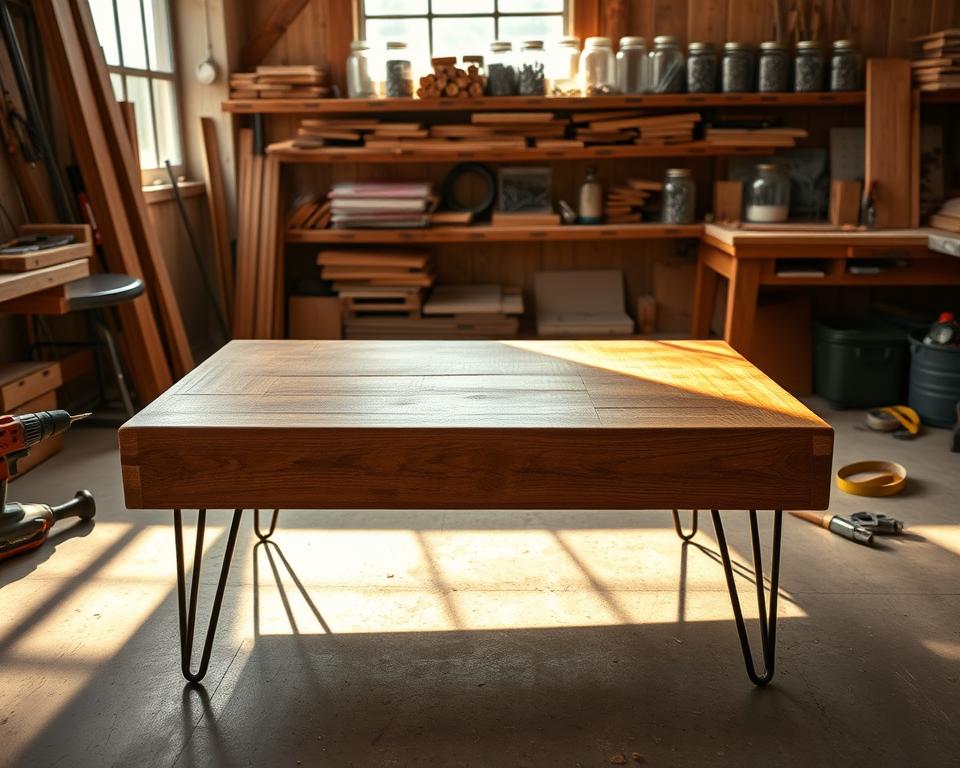
Did you know the DIY furniture market might hit over $700 billion by 2026? More and more people are getting into crafting their own furniture. It’s a fun and rewarding experience. Creating a coffee table by yourself is one of the coolest projects. Not only does it make your living space look better, but it also teaches you new skills. Whether you know your way around tools or are just starting, there are DIY coffee table plans for everyone. Dive into the fun world of building your own coffee table.
Key Takeaways
- DIY furniture projects are growing in popularity and value.
- Building your own coffee table adds a personal touch to your home.
- Creating a homemade coffee table can be both fun and educational.
- DIY coffee table plans cater to various skill levels.
- Crafting furniture helps develop practical skills that you can apply elsewhere.
Why You Should Consider a Coffee Table DIY Project
Creating your own coffee table is full of exciting chances. When you start a DIY project, you get to make something that truly shows who you are. Let’s look at why making your own furniture is great, how it lets you make something unique, and how it can save you money.
Benefits of DIY Furniture
DIY furniture lets you make pieces that fit your space just right. You can pick the size, color, and finish for your coffee table so it matches your home exactly. Making your own furniture means you decide exactly how it will look, making sure it’s what you really want.
Personalization Options
DIY projects offer tons of ways to make your pieces special. You can turn a simple idea into something amazing with different methods, materials, and styles. Whether you’re going for a rustic, modern, or vintage look, your coffee table can show off your personal style. It will definitely impress anyone who sees it.
Cost-Effectiveness
Choosing DIY furniture projects can be a way to save money over buying something ready-made. By wisely picking materials and looking for deals, you can make a beautiful piece without spending too much. There are many stories of people saving a lot while still getting the look they want.
Essential Tools for DIY Coffee Tables
Making a coffee table can be a fun project. The right tools help a lot. You need different tools, from simple to complex, to get the job done. Let’s look at what you need to start.
Basic Tools You’ll Need
You need some key tools for a basic coffee table:
- Circular Saw: Ideal for making precise cuts in various wood types.
- Screws: A must-have for secure assembly of the table components.
- Wood Glue: Provides additional strength alongside screws.
- Clamps: Essential for holding pieces together while the glue dries.
- Measuring Tape: Ensures accuracy in all dimensions.
Optional Tools for Advanced Builds
If you want to take your project to the next level, think about these advanced tools. They can really make your coffee table stand out:
- Router: Perfect for creating smooth edges and custom designs.
- Pocket Hole Jig: Makes hidden joints easy to achieve for a clean finish.
- Specific Drill Bits: Useful for various types of holes, including countersinks.
- Band Saw: Excellent for curved cuts or intricate designs.
Choosing the Right Wood for Your Coffee Table
When starting a coffee table DIY, picking the right wood matters a lot. Different woods affect the table’s look, strength, and how it’s used. Knowing about the woods and their traits helps make a good choice.
Types of Wood to Consider
Some woods are better for coffee tables because of their special features. Here are the popular ones:
- Pine: It’s cheap, light-colored, and easy to work with. Great for first-timers.
- Oak: With its unique grain and toughness, oak is long-lasting. It handles lots of use well.
- Maple: Maple has a fine finish and is strong, perfect for fancy looks.
- Plywood: Good for modern looks and affordable, plywood is also strong.
Weight and Durability Factors
How much wood weighs is often not thought about. But, using heavy wood like oak means it’s strong yet hard to move. Light woods like pine are easier to move but might not last as long. Finding a balance between how heavy it is and how long it lasts is key for a good coffee table. Choose materials that meet your design needs and are durable for everyday use.
| Wood Type | Weight (lbs/board foot) | Durability | Cost ($/board foot) |
|---|---|---|---|
| Pine | 2.5 | Low to Moderate | 3-5 |
| Oak | 3.5 | High | 6-8 |
| Maple | 3.0 | High | 5-7 |
| Plywood | 2.0 | Moderate | 2-4 |
Popular Coffee Table Styles for DIY
Looking for different coffee table styles can be fun for DIY lovers. You might like rustic charm or the simple lines of minimalist design. Here, we share some ideas to spark your creativity for your next build.
Rustic Coffee Tables
Rustic coffee tables bring warmth and personality to any room. They often use reclaimed wood, which highlights natural flaws and textures. You can add features like:
- Distressed finishes
- Wooden pallets
- Live edge designs
These ideas can make even a modern space feel like a cozy hideaway.
Modern and Minimalist Designs
If you prefer simplicity, modern and minimalist tables are for you. They focus on practicality and shape, blending glass, metal, and wood. You might want to include:
- Geometric shapes
- Neutral colors
- Understated elegance
This furniture style keeps things simple yet elegant.
Vintage-Inspired Options
For a bit of history in your home, try vintage-inspired coffee tables. You can upcycle old pieces or create new ones that look classic. Consider features like:
- Antique finishes
- Intricate carvings
- Retro colors
Adding these elements can link your space to different times while staying chic.
Step-by-Step Guide to Building Your Coffee Table
Making your own coffee table is rewarding. It’s important to follow a plan for good results. You start by designing. Sketch your ideas and work out the size needed for your room.
Planning Your Design
First, decide on the table’s style and the materials you’ll use. You can choose a traditional or modern look. Planning the design carefully helps with the steps that follow.
Measuring and Cutting Wood
Measuring and cutting wood accurately is key. Always use a good measuring tape and check sizes twice. Miter or circular saws are best for clean cuts. Follow your table plans for the correct lengths. Make sure to mark where to cut to avoid errors.
Assembling the Table
After cutting, you’ll assemble the table. A guide on putting it together will show you what to do. Use strong joints and glue for durability. Always wear safety gear and follow the tools’ instructions.
Being patient is important. Take care at each step for a strong, good-looking table. Imagine the finished table as you work to stay motivated. With careful planning and precise work, your DIY table will be a highlight in your home.
Finishing Touches: Stains and Paints
The right finishes make a coffee table look much better. Knowing how to finish your table is key for DIY fans who want pro results. The best finish will make the wood grain pop, and keep your table strong and safe.
Choosing the Right Finish
Picking the right stains and paints matters a lot. Think about the kind of wood, the look you want, and how you’ll use the table. There are several popular choices:
- Oil-based stains: They’re awesome for bringing out wood grain.
- Water-based stains: They dry quick and don’t smell much.
- Spray paint: It goes on smooth and comes in many colors.
- Gel stains: They’re great for when you’re working on walls and need control.
Application Techniques
Putting on your finish the right way gets you the best look. Here are some top methods to try:
- Brushing: Best for thick paints or stains, use a good brush for smoothness.
- Rolling: It’s good for big areas and gives uniform coverage.
- Spraying: For a perfect, pro look, try a spray can or sprayer.
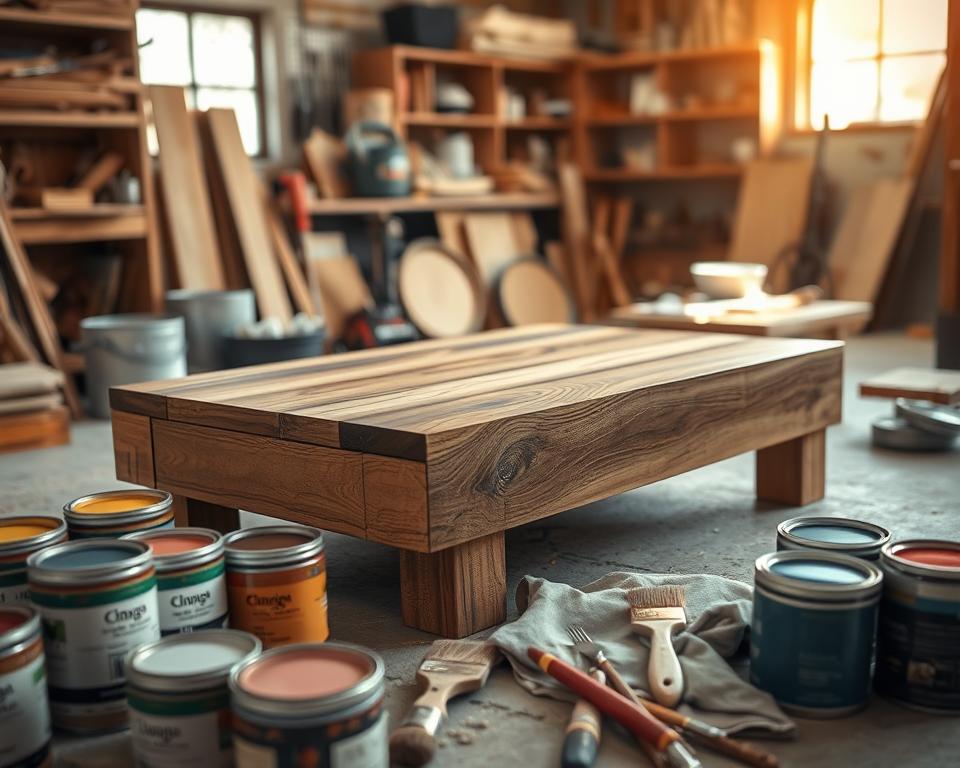
These DIY tips help you get a neat, trendy finish. Always test your stains and paints on a scrap piece first. Doing this makes sure your coffee table looks exactly how you want, and makes finishing fun.
Adding Functionality with Storage Solutions
Making a coffee table both stylish and useful improves your living space. Adding smart storage to coffee tables turns them into versatile furnishings. This is vital in small homes where making the most of space matters.
Hidden Storage Options
Hidden storage in furniture is a big trend. Lift-top coffee tables, for instance, reveal spaces perfect for storing blankets and remotes. This is great for small rooms, keeping them neat without losing style.
- Lift-top designs with hidden compartments for convenience.
- Built-in drawers for easy access to frequently used items.
- Ottoman-style tables offering both seating and discreet storage.
Shelving Ideas
Add shelves to your DIY coffee table for more function. Open shelves let you display decorations or books, adding charm. Here’s some shelving inspiration for you:
- Adjustable shelves for customizable storage solutions.
- Vertical shelving units that maximize storage without taking up too much floor space.
- Cubbies that can hold wine bottles or knick-knacks, enhancing both function and aesthetic appeal.
By adding these storage ideas, your coffee table will not only look great but serve your needs easily.
Creative Ways to Customize Your Coffee Table
Make your coffee table a creative centerpiece. It should be both functional and have artistic flair. You can personalize your table with various designs and styles. By using different materials and styles, your coffee table will reflect your taste while being practical.
Unique Legs and Bases
Choosing unique furniture legs can make your coffee table stand out. You can try out shapes or materials like reclaimed wood or fancy metal designs. These legs come in many heights and styles, offering creative possibilities. For example, tapered legs give a mid-century vibe, whereas industrial metal bases look modern. You can find materials at local stores, reclaimed lumber outlets, and online.
Incorporating Glass or Metal
Adding metal and glass gives your coffee table a sleek look. Consider a glass top with metal legs for a modern style. A glass surface makes small rooms look bigger. Or, use metal accents, like a mesh shelf or decorative strips, for texture. This mix not only customizes your table but also makes it more durable.
Budgeting for Your DIY Coffee Table
Making a DIY coffee table is rewarding, especially with a set budget. Knowing the material costs is essential to stay on budget. This helps you make smart choices while working on your table.
Estimated Costs for Materials
The cost for materials varies based on your coffee table’s design and size. Let’s look at some typical prices:
| Material | Estimated Cost |
|---|---|
| Wood (Pine) | $2.50 per board foot |
| Wood (Oak) | $4.00 per board foot |
| Plywood | $30 – $60 per sheet |
| Hardware (screws, hinges) | $10 – $25 |
| Finish (stains, varnishes) | $15 – $35 |
How to Save Money
Using money-saving tips can lower your project’s cost. Try these strategies:
- Use reclaimed wood from local sources or salvage yards.
- Watch for sales at hardware stores, particularly during holiday seasons.
- Check online marketplaces for secondhand supplies.
- Consider borrowing tools instead of purchasing them outright.
- Plan your project during off-peak seasons when discounts are more common.
Safety Tips for DIY Projects
Starting a DIY project is exciting and can also bring a lot of joy. It’s important to focus on safety first. Knowing how to stay safe while working with wood is key. It ensures a good experience and keeps accidents away. Keep safety in mind as you build your coffee table to keep things safe.
Protecting Yourself While Building
Wearing the right safety gear is crucial in woodworking. Make sure to wear safety goggles to keep your eyes safe from dust. Gloves protect your hands from cuts. Keeping your workspace clean is important too. It helps avoid trips and makes it easy to find your tools.
Safe Tool Practices
Knowing how to safely use tools is very important for any DIY project. Learn about your tools, like saws and drills, and how to handle them safely. This reduces the chance of getting hurt. Always keep tools in good shape and store them safely. These tips will help you enjoy woodworking safely.
Maintenance Tips for Long-Lasting Coffee Tables
Keeping your coffee table in top shape is vital. It ensures its beauty and usefulness don’t fade. We will share tips on caring for your table and fixing any damage. This way, your DIY coffee table can look good and last longer.
Regular Care and Cleaning
Your coffee table can quickly look worn out from dust and spills. To keep it looking its best, here are some easy care tips:
- Use a soft, lint-free cloth for dusting to prevent scratches.
- Clean spills immediately with a damp cloth, avoiding harsh chemicals that can damage the finish.
- Apply a furniture wax or polish periodically for added protection and shine.
- Consider coasters and placemats to prevent food and drink stains.
Repairing Damage
Accidents happen, but quick fixes can make your coffee table look good as new. Here’s how to fix common problems:
- For minor scratches, use a touch-up marker that matches the wood finish.
- Dents can be repaired by applying gentle heat with a damp cloth and an iron to encourage the wood fibers to rise.
- For deep gouges, consider using wood filler to level the surface before refinishing.
By following these care and repair tips, your coffee table can stay beautiful. It will keep being the focus of your living space. Show off your style and craftsmanship for many years.
Inspirational Coffee Table DIY Projects
Diving into DIY offers endless inspiration for coffee table projects. The online world is rich with creativity and skill. Woodworkers share their unique designs, showing off simple wood’s transformation into beautiful centerpieces. These projects range from rustic to modern, proving personalized touches make each piece stand out.
Looking for more inspiration? There are numerous resources for woodworking fans. Social media and forums buzz with people posting their projects and advice. They also share the struggles they face while creating. This community is great for finding unique ideas or tips, encouraging you to start your own coffee table project.
Exploring these projects and connecting with others boosts your skills and confidence. It’s about more than just making something. It’s about sharing, learning, and letting creativity turn wood into art. By being part of this journey, you create not just furniture, but a piece with a story, for your home.