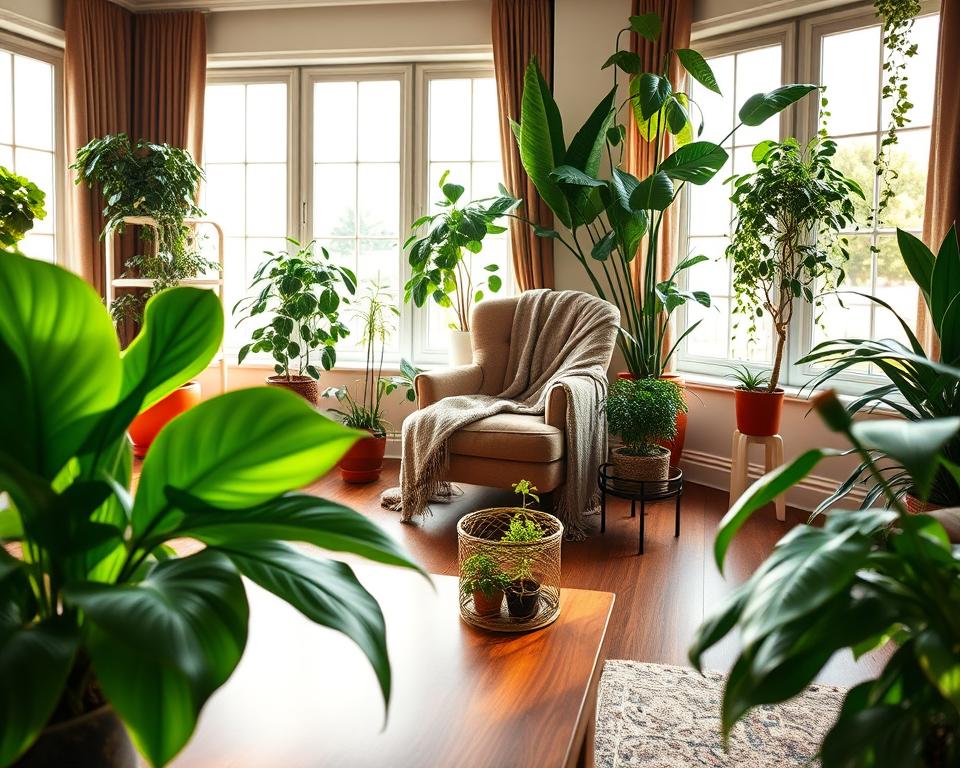
Did you know that homes with indoor plants can see a 60% drop in airborne toxins? Not only do these plants make your space look better, but they also boost your health. As they grow in popularity, styling indoor plants has become key in home decorating. This adds a lively touch to any area.
Decorating with indoor plants isn’t just about looks; it’s about making a space that makes you happy and cleans the air. This article gives you top tips for indoor gardening. It will guide you through picking the right plants and styling them in ways that make your home a green haven.
Key Takeaways
- Indoor plants can significantly improve air quality.
- Stylish houseplant design can enhance your home’s aesthetic appeal.
- Choosing the right indoor plants is crucial for their care and longevity.
- Innovative indoor gardening tips can simplify plant care.
- Grouping plants together can create a vibrant interior atmosphere.
- Using plant decor effectively can transform any room.
Why Indoor Plants Are Essential for Your Home
Adding indoor plants to your space does more than make it pretty. These green friends don’t just look good; they make your home healthier. They clean the air and make your environment better.
Benefits of Indoor Plants
Indoor plants are great for cleaning the air. They remove pollutants and keep your space fresh. This makes you feel better overall.
They also boost humidity, which helps with breathing problems and allergies. Having plants around makes you want to take care of your space. This creates a happier place to live.
Psychological Impact
The positive effects of plants on your mind are huge. Studies show they can make you feel happier, less stressed, and more productive. They add beauty and calm to your space.
Being around plants can lower your anxiety and clear your mind. They help you feel peaceful.
Common Indoor Plants
Popular houseplants include the Spider Plant, Snake Plant, and Peace Lily. They’re tough and don’t need much light. People also love the Monstera and Fiddle Leaf Fig for their looks and air-cleaning abilities.
Choosing the Right Indoor Plants for Your Space
Picking the right indoor plants means looking at light, space, and your style. These factors help your plants grow well and make your home look good.
Factors to Consider
Think about these things when choosing plants:
- Lighting: Know how much natural light your place gets. Some plants love bright light, but not direct sun. Others do well in darker spots.
- Room Size: Pick plants that fit your space right. Big plants can be eye-catching. Small ones add nice touches without taking up much room.
- Personal Style: Choose plants that fit your home’s style. It could be modern, cozy, or anything else that reflects you.
Popular Plant Choices
Snake Plants and Peace Lilies are great for many homes. They don’t need much care. So, they’re perfect for both new and expert plant lovers.
Low-Maintenance Options
Looking for easy-care plants? Try succulents and pothos. Succulents need little water and come in different shapes. Pothos has beautiful vines that are easy to look after.
Styling Techniques for Indoor Plants
Styling your indoor plants can make your home look great. It’s a fun way to show your personal style. Start by choosing plants with different heights and looks for an interesting setup. Adding big leaves with smaller plants makes the place look full of life.
Grouping Plants Together
Putting plants together looks nice and helps them grow better. Make sure they need the same amount of sun and water. Try mixing up sizes and types to see what looks best.
Using Plant Stands
Plant stands help you use space better by adding height. They’re great for small rooms. Use stands of different heights for a cool effect.
Hanging Planters
Hanging plants are great for saving space. You can hang them from the ceiling or walls. This way, your place looks bigger and more open.
Best Locations for Indoor Plants
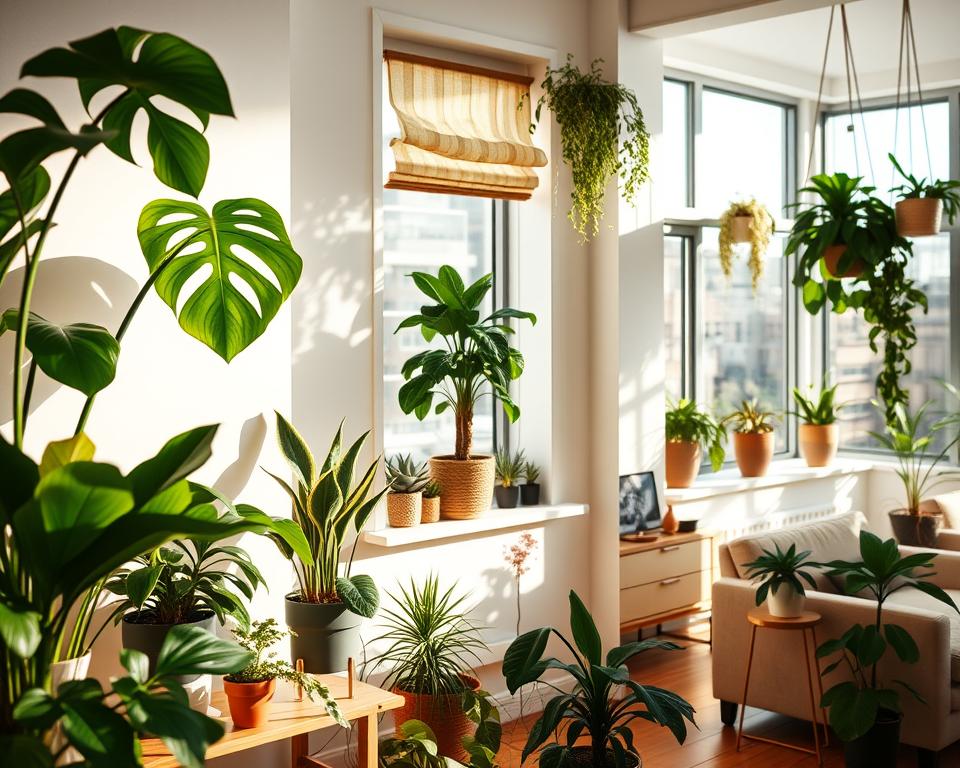
Putting indoor plants in the right spots makes them and your space look better. It’s important to know what light they need to pick the best spots for them. Every plant is different, so where you put them can really help them grow well.
Natural Light Considerations
Most indoor plants love natural light, but each type needs a different amount. For example, succulents want a lot of direct sunlight, but ferns do better with less direct light. Knowing this helps you place your plants in the best spots, so they’re healthy and make your rooms look nicer.
Ideal Rooms for Plant Placement
Here are some good rooms for your plants:
- Living Room: It’s great for big plants that fill corners or work as living room dividers.
- Kitchen: Herbs do well here because of the humidity and lots of light.
- Bathroom: It’s perfect for plants that like steam from showers.
Avoiding Common Pitfalls
When putting plants around, watch out for things that can hurt them. Like, keep them away from air conditioning vents to avoid dryness. Always check to make sure they’re not too close to heat or in very drafty spots, as that can be bad for them.
| Plant Type | Light Preference | Ideal Location |
|---|---|---|
| Snake Plant | Low to medium light | Bedroom, office |
| Fiddle Leaf Fig | Bright, indirect light | Living room |
| Boston Fern | Indirect light | Bathrooms, kitchens |
| Peace Lily | Low to medium light | Bedroom, office |
Incorporating Plants into Your Home Decor
Adding plants to home decor brings a fresh look to any space. It’s key to merge your greenery with the style of your home. The right plant choices can make your home feel welcoming and lively.
Matching Plants with Color Schemes
Selecting plants that fit your room’s colors creates a unified appearance. Neutral and earthy pots match well with the greens of plants. Light shades in your room can make the plants pop, becoming eye-catching parts of the decor.
Creating Focal Points
Putting plants together can catch attention and set a focal point. Mix plants of different heights and textures to spice up the view. This setup can turn a simple corner into a cozy area that stands out in your home.
Combining Plants with Other Decor
Integrating plants with your decor makes your space feel complete. Add plants to your decor items like books, candles, or art for more character. This method doesn’t just brighten up the place; it also introduces elegance, making your home cozy and inviting.
Seasonal Indoor Plant Styling Tips
Changing your indoor space with the seasons can make your home welcoming. Adjusting how you care for plants can make your plant displays more lively. We provide helpful winter indoor plant tips to keep your plants healthy in the cold. We also have fun ideas for summer plant styling to make your home bright.
Winter Plant Care
When it gets colder, your plants need enough light and moisture. Many plants need less sunlight in winter. Move them closer to windows or use grow lights. To keep them moist, use a humidifier or place water trays nearby. Choose indoor-friendly plants like peace lilies or snake plants, as they do well in low light.
Summer Styling Ideas
Summer is a time for bright and varied plant styling. Use colorful pots and different textures for an attractive look. Put plants on stands to add layers to your decor. Growing herbs like basil and mint adds greenery and gives you fresh flavors for cooking.
Seasonal Plant Selection
Picking plants for each season can improve your indoor space. In winter, try plants like cyclamens or poinsettias to add color. For summer, choose lively succulents or plants with colorful leaves. Having the right plants for the season makes your home lively and beautiful, all year round.
DIY Indoor Plant Styling Projects
DIY plant projects make your indoor space look better. They also let you show your own style. Making your own plant stands, thinking of new potting ideas, and using old items differently can change your plant decor. It brings new life to your space.
Homemade Plant Stands
Making your own plant stands gives your indoor garden a special touch. By changing the heights, you make a lively display for your plants. Use simple things like wood pallets, crates, or metal pipes for a cool design. Pick finishes and colors that go well with your decor.
Creative Potting Ideas
Find new ways to pot your plants with unusual containers. Use vintage mugs, terracotta pots, or baskets for a mixed look. Mixing textures and colors makes your home look united. With your own designs, you show your personality and care for your plants.
Upcycling Household Items
Upcycling items is great for eco-friendly plant styling. Turn old jars into stylish terrariums and wine bottles into unique vases. Reusing items cuts down on waste and adds special touches to your plant decor. These pieces tell personal stories.
Maintenance Tips for Indoor Plant Care
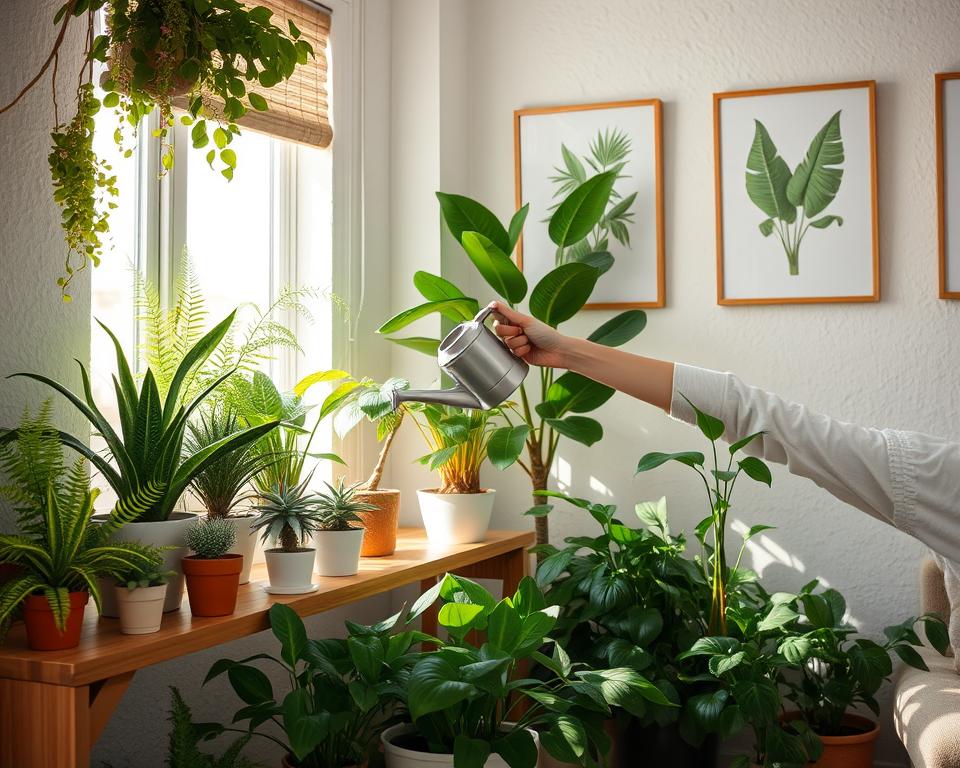
Keeping indoor plants healthy requires some effort. If you take care of them properly, they will flourish indoors. You should know how much to water them, the kind of soil they need, and how to deal with pests. Here are essential tips to ensure your plants stay bright and thriving.
Watering Frequency
The amount of water plants need depends on their type and the time of year. Here are some rules to follow:
- To check if your plant needs water, stick your finger about an inch deep into the soil. If it’s dry, it’s time to water.
- In the winter, plants usually need less water, but in the summer, they might need more.
- Remember, each plant is different. Some might need to dry out before you water them again.
Soil Types and Nutrients
Choosing the right soil is vital for your plant’s health. Plants need different things:
| Plant Type | Soil Type | Nutrient Considerations |
|---|---|---|
| Succulents | Well-draining soil (cactus mix) | Low-nitrogen fertilizers |
| Ferns | Moist, rich potting mix | Balanced liquid fertilizers |
| Orchids | Bark-based medium | Special orchid fertilizers |
Pest Management
Managing pests is important to keep plants healthy. Here’s what you can do:
- Regularly check your plants for pest signs like holes or sticky leaves.
- Use natural agents like neem oil to keep pests away.
- If a plant gets infested, separate it from the healthy ones until it’s better.
Inspiring Indoor Plant Styling Examples
Looking at real home tours gives tons of cool plant styling ideas. Homeowners use plants to make their spaces look good and feel calm. No matter the size of the home, you see plants adding a personal touch.
Instagram and Pinterest are full of amazing plant decor ideas. Users post pictures of their plant setups, sharing tips too. These social media sites can help you think of new, stylish ways to arrange your plants.
Influencers have a big impact on decor trends, especially with plants. They mix usefulness and beauty to make eye-catching displays. You can find lots of inspiration from them, whether you like things simple or more wild.