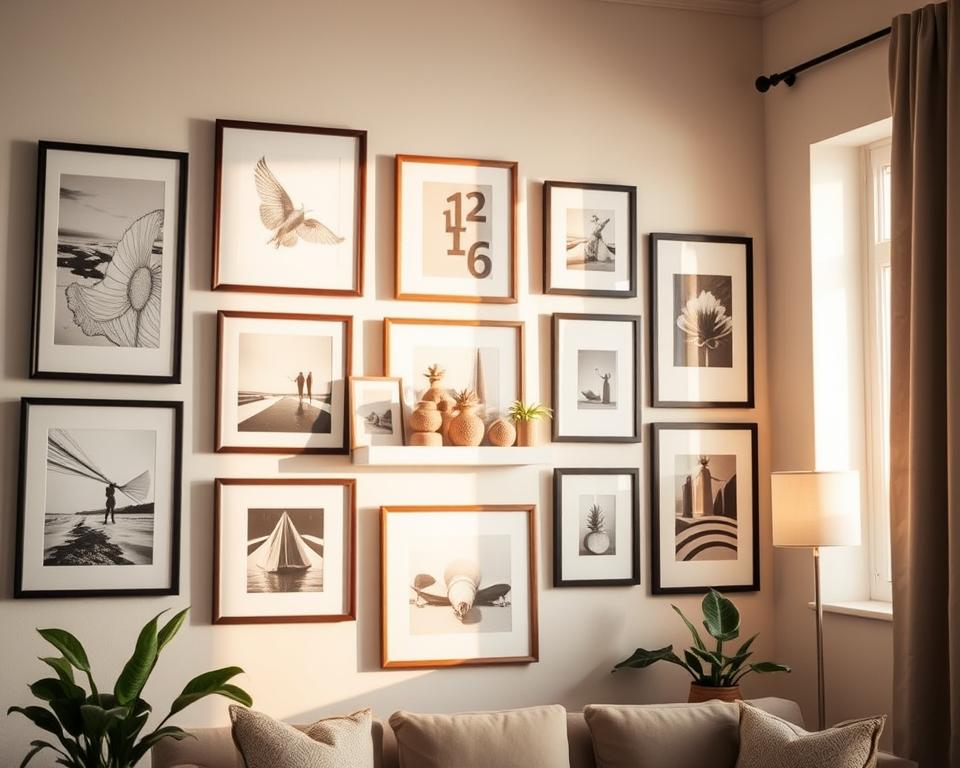
Did you know a smart gallery wall can make a room look 20% more valuable? These colorful setups turn empty spaces into beautiful art and self-expression spots. It’s vital to know the basic rules of gallery wall layouts. This knowledge helps create balanced walls that boost your home’s look and show off your style. This article will share cool ideas and useful tips for making a striking gallery wall.
Key Takeaways
- Gallery wall layouts can significantly enhance the value of a space.
- A well-balanced gallery wall reflects personal style.
- Understanding layout principles is crucial for effective design.
- Creative and cohesive displays can transform blank walls.
- It’s important to incorporate a mix of art styles for depth.
Understanding the Basics of Gallery Wall Layouts
A gallery wall makes any room stand out by showing off art, photos, and decorative items. Learning about gallery walls is key to improving your home’s look. How you arrange everything is vital for keeping the area attractive and together.
What Is a Gallery Wall?
A gallery wall is a well-planned display on a wall. It turns an empty area into an eye-catching display that shows off your unique taste. Whether it’s family memories or chosen artworks, knowing about gallery walls means seeing how they make your space better.
Importance of Layout in Design
The design’s layout makes sure your gallery wall looks united and pleasing. A smart layout leads the eye through the art smoothly. It’s about mixing sizes, colors, and themes to boost each item’s impact and achieve a trendy look.
Common Styles to Consider
There are many styles of gallery walls to pick from. These include:
- Symmetrical Layouts: These use frames of the same size for a neat and traditional feel.
- Asymmetrical Layouts: These are laid-back and use frames of different sizes and shapes for interest.
- Grid Patterns: Artworks are arranged in neat rows and columns, perfect for lovers of order.
Choosing the Right Space for Your Gallery Wall
Looking for the best spot for your gallery wall takes careful thought. You have to think about wall size, shape, and how it looks in the room. Here’s how to pick the perfect spot for a stunning gallery wall.
Assessing Wall Size and Shape
Start by measuring the wall to know how big your gallery wall can be. Smaller walls need tighter groups of art, while bigger spaces can hold more. Think about how a wall’s height and width might affect your layout. This makes sure your gallery wall looks good.
Evaluating Natural Light and Background
Natural light makes a big difference for gallery walls. Bright areas bring out the best in colors and details. Darker spots might need artworks that stand out on their own. Also, think about what’s behind your art. A simple backdrop lets your gallery shine.
Proximity to Furniture and Traffic
Where you put your gallery wall near furniture or walkways matters. In busy spots, choose artwork that’s interesting but not too busy. Make sure furniture isn’t too close, so people can enjoy the view. This keeps your gallery both beautiful and practical.
Selecting Art and Decor for Your Gallery
Starting a gallery wall begins with choosing the right art. You can use prints, photos, or textiles. Each brings a unique touch and fits well with your decor.
Types of Art to Use: Prints, Photos, or Textiles?
Looking at wall art options? Here are some to think about:
- Prints: They’re affordable and come in many styles. Prints offer a variety of themes and looks.
- Photographs: Make it personal with family photos or travel pictures. They give a special touch.
- Textiles: Adding woven pieces or fabric art can bring in texture. It makes your gallery wall stand out.
Mixing Styles: Modern vs. Vintage
Mixing art styles adds interest and depth. Modern and vintage pieces can go well together. This mix shows off your unique taste.
Try combining a modern print with an old painting. This contrast grabs attention.
Color Coordination Tips
Keeping a consistent color scheme is key in a gallery wall. A matching color palette brings harmony. Here’s how to coordinate colors well:
- Start with a main color for your art.
- Use neutral colors to soften bright ones.
- Choose art that fits your room’s style but also adds color.
Balanced vs. Asymmetrical Layouts
Choosing a gallery wall style is crucial. You need to know the difference between balanced layouts and asymmetrical ones. Each offers a unique vibe that changes your space’s look and feel. Having knowledge of their pros and cons aids in selecting the best option for your home.
What Is a Balanced Layout?
A balanced gallery layout uses symmetry. It ensures the art’s visual weight is evenly spread out. This layout brings a structured, calm look. It’s great for formal areas, where order matters. It gives a room a polished, well-thought-out feel.
Exploring Asymmetrical Arrangements
Asymmetrical arrangements, however, bring creativity. They mix art sizes, positions, and types. This choice creates a lively, informal feel. It’s ideal for surroundings that value uniqueness. Asymmetrical designs suit eclectic rooms, making the gallery wall pop with personality.
Pros and Cons of Each Style
It’s important to understand the pros and cons of both layouts. This knowledge is essential for making a wise choice. Below is a comparison:
| Style | Pros | Cons |
|---|---|---|
| Balanced Layout |
|
|
| Asymmetrical Arrangements |
|
|
Creating a Focal Point in Your Gallery Wall
A gallery wall turns a simple area into an eye-catching display. The focal point is key to drawing attention. It not only looks good but sets the mood for the whole setup. By choosing a central piece wisely and balancing the items around it, your gallery will look well-put-together.
How to Choose a Central Piece
Pick a central piece that speaks to you or shows off your style. It could be an eye-catching painting, a vivid photo, or a special textile art. It should be big enough to command the wall but not too big.
Surrounding Your Focal Point
After picking the central piece, surround it with other artworks and decor to create balance. Place smaller items so they highlight the central piece without fighting for attention. This way, everything feels in harmony.
Using Scale and Proportion
Getting scale and proportion right is crucial for a great gallery wall. Make sure the size of items around the main piece makes sense. Mixing larger and smaller artworks adds depth. This planning makes your gallery wall flow smoothly.
| Aspect | Importance |
|---|---|
| Focal Point | Draws attention and sets the tone |
| Central Piece Selection | Defines the gallery’s style and significance |
| Surrounding Arrangement | Creates balance and flow of visual interest |
| Scale and Proportion | Ensures cohesive visual impact |
Frame Types and Their Impact on Design
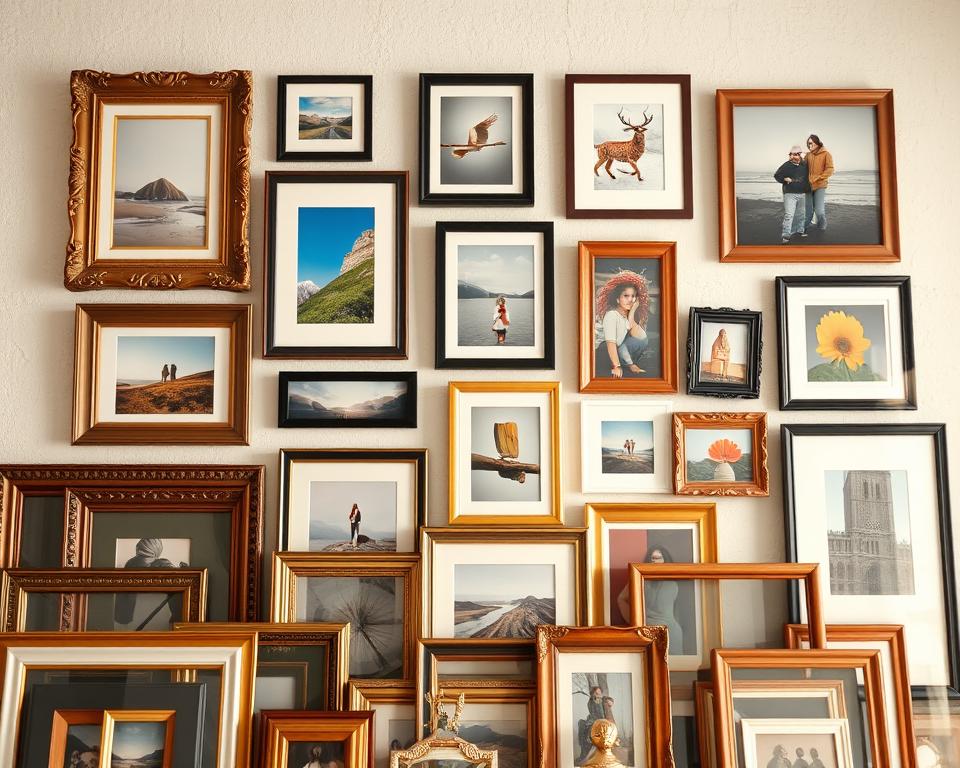
Choosing frames for gallery walls is key to their look. You can pick from wood, metal, or colorful frames. Each type changes the display’s visual feel. Matching frame sizes make the design look uniform. A mix of styles adds a unique touch to your space.
Variety of Frame Styles: Wood, Metal, or Colorful?
There are many frame styles to fit your taste. Wooden frames bring a warm, classic vibe. Metal frames give a modern look. Colorful frames add energy and make your art pop. Think about the mood you want before picking frame materials.
Matching Frame Sizes for Unity
Using frames of the same size makes your gallery wall look together. It creates balance and harmony. This stops any piece from standing out too much. Keeping frames the same shape and size keeps the look cohesive.
Mixing Frame Styles for a Unique Look
Mixing frame styles can create a special look. Try different finishes, textures, and colors. This adds personality to your gallery wall. Make sure there’s a common theme or colors to keep things balanced.
Spacing and Arrangement Techniques
Making your gallery wall look good is about smart spacing and arranging. Use certain techniques to enhance the wall’s impact. Knowing how to arrange things well makes for an inviting look.
The Rule of Thirds
The Rule of Thirds is a key idea in art, for gallery walls too. Imagine your wall divided into nine equal parts. Put main pieces at the intersections to catch the eye. This makes it visually appealing without being too much.
Maintaining Consistent Spacing
Keeping spaces even is key for a neat look. Try to leave about three inches between each artwork. This keeps everything looking orderly, so your wall doesn’t seem too crowded. It helps every piece to shine as part of a beautiful whole.
Layering and Overlapping Elements
Add depth to your display by layering art. Mix smaller pieces with bigger ones for an interesting look. This not only looks great but also saves space. Picking the right shapes and sizes for layering makes your wall stand out.
Tools and Materials for Installation
Making the perfect gallery wall relies on having the right tools and materials. High-quality tools for gallery wall installation ensure a better process and outcome. With the correct setup and gear, you’ll see a big improvement.
Essential Tools for a Gallery Wall
Get your tools ready before starting to save time and avoid problems. You will need:
- Tape Measure – For accurate spacing and alignment
- Level – Ensures your frames hang straight
- Pencil – For marking spots on the wall
- Drill and Drill Bits – Helpful for heavier pieces
- Hammer – Ideal for nails and small hooks
Choosing the Right Hanging Hardware
The right hanging hardware is crucial for your artwork’s support. Different hardware varies in support. Here are some choices:
| Hanging Hardware Type | Best For | Weight Capacity |
|---|---|---|
| Picture Hooks | Light to Medium Frames | Up to 20 lbs |
| Wall Anchors | Medium to Heavy Frames | Up to 50 lbs |
| French Cleat | Large or Heavy Frames | Over 50 lbs |
Tips for Mounting and Aligning
Good mounting practices are key for a professional look. Follow these tips for a neat display:
- Use templates: Cut paper to the size of your frames and tape them to the wall for a visual guide.
- Mark your spots: Lightly mark where each frame will hang to avoid guesswork.
- Start with the center: Always begin by hanging your central piece to establish your layout.
Adding Personal Touches to Your Gallery Wall
Creating a gallery wall with personal touches tells your story. Adding personal photos makes the space truly yours. Mix in some DIY art and decorative pieces for a touch of your style.
Incorporating Personal Photographs
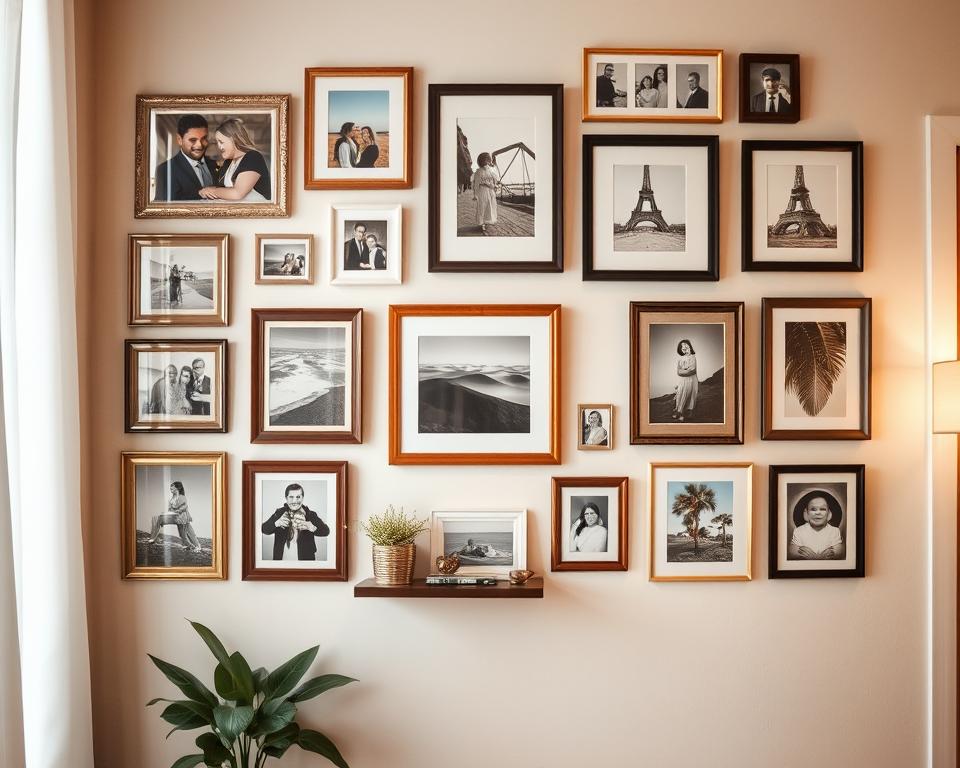
Adding personal photos brings warmth to your gallery wall. Use pictures from happy times like family events and trips. These moments add beauty and start conversations. Try different frames to make each photo pop.
Using DIY Artwork
DIY projects add creativity to your gallery. With simple artwork tips, make pieces that show off your taste. Include your kids’ art for a special touch that makes everyone smile.
Adding Decorative Items: Shelves and Plants
Decor like shelves and plants adds depth to your gallery. Shelves can hold small treasures or books. Plants bring in life and freshness. These additions make your gallery wall inviting.
Experimenting with Vertical and Horizontal Layouts
When setting up a gallery wall, understanding how to arrange it is key. Vertical and horizontal displays do different things for a room’s feel. Exploring both can make your gallery wall stand out and bring depth to your decor.
Advantages of Vertical Arrangements
Vertical setups give a tall, impressive look that draws your eyes up. They can make rooms seem bigger and taller. This is great for small spaces or areas with high ceilings, as it highlights architectural features.
Benefits of Horizontal Displays
Horizontal displays spread out a room, making it feel wider and more welcoming. They’re perfect for living rooms, creating a unified look. A well-done horizontal layout adds a comfy, relaxed vibe to your space.
Combining Both for Dynamic Effects
Mixing vertical and horizontal elements can make your gallery wall pop. This approach lets you play with size and balance. It brings a lively rhythm that makes the wall a key feature, not just background.
Seasonal Changes: Refreshing Your Gallery Wall
Updating your gallery wall with the seasons keeps it exciting. Add seasonal decor to celebrate each time of year. This helps your gallery wall feel alive and welcoming.
Need some ideas for rotating artwork? We’ve got you covered. Here’s how to keep your gallery wall fresh and interesting.
Ideas for Seasonal Decor Updates
- In spring, consider adding floral artwork and bright colors to bring freshness into your space.
- Summer can feature vibrant landscapes or beach scenes that evoke a sense of adventure.
- Autumn welcomes rich, earthy tones and images of fall foliage for a cozy feel.
- Winter allows for more serene pieces like snowy landscapes or holiday-themed art to capture the essence of the season.
How to Store and Rotate Artwork
Smooth artwork rotation starts with good storage. Use portfolios or flat containers to keep art safe. This way, changing your gallery wall with the seasons is easy.
Keeping Your Gallery Wall Dynamic
Updating your gallery wall often makes it more engaging. Try new layouts and styles to reflect your unique taste. Adding seasonal decor keeps your space feeling new and creative.
Final Tips for a Successful Gallery Wall
To make the perfect gallery wall, it’s more than just hanging art. It’s about paying attention to avoid easy mistakes like putting pieces too close or not spacing them right. Give each artwork space to stand out. This lets people see the thought behind each piece. Aim for a balance that reflects your style and brings harmony to the space.
Common Mistakes to Avoid
Avoiding errors is key to a stunning gallery wall. Too many items can make it look cluttered, not cohesive. Also, frames that don’t match in size or color can create a messy look. Try to keep a consistent theme, using different sizes on purpose to catch the eye.
Seeking Inspiration from Design Trends
Need new ideas? Sites like Pinterest and Instagram are full of the latest design trends. Whether you love simple designs or bold mixes, these trends can help find what suits your taste. Use these platforms for inspiration and bring in what strikes you.
The Importance of Enjoying the Process
Creating a gallery wall should be fun. It’s a chance to show your interests and tastes, so take your time picking pieces. Let yourself connect with the art and enjoy making it. A well-thought-out gallery wall not only looks good but also shares your story.