Did you know over 60% of people looking to buy a home think landscaping is key? This fact shows how crucial a nice front yard is when making a good first impression. Having a great front yard not only makes your home look better but also shows you care about your place. Whether you like modern designs or classic gardening, planning well can make your home stand out. Getting help from a professional can boost your home’s value and make it more inviting. Let’s look at why front yard landscaping is so important.
Key Takeaways
- Landscaping significantly influences first impressions in home buying.
- A well-designed front yard can boost property value.
- Diverse outdoor landscaping designs cater to various tastes.
- Front yard gardening reflects homeowners’ personalities.
- Professional landscaping services make projects easier and effective.
- Thoughtful landscaping enhances overall curb appeal.
Why Front Yard Landscaping Matters
Your front yard’s design shapes your home’s overall vibe. It’s the first thing visitors or potential buyers see. This makes smart landscaping crucial for anyone wanting to highlight their home.
First Impressions Count
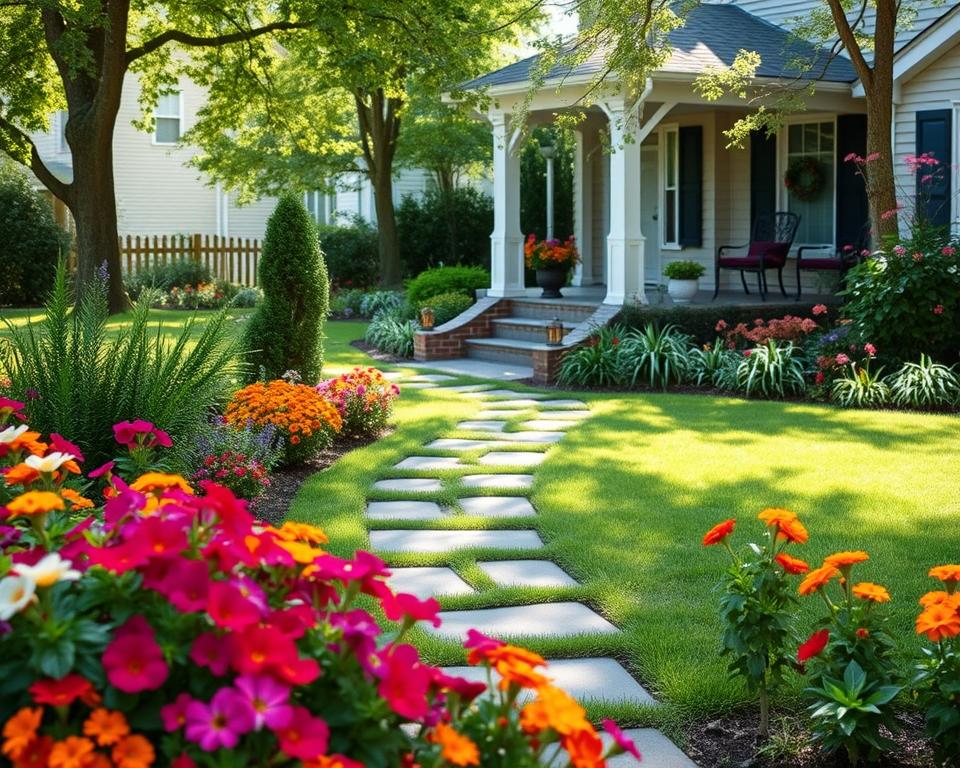
As people walk up to your home, the front yard welcomes them. Things like bright flowers, neat lawns, and paths that lead the way offer warmth right away. A tidy, appealing yard starts the visit on a positive note, making your home stand out.
Boosting Property Value
Good landscaping is more than just pretty; it can also bump up your home’s value. Homes with nice front yards tend to sell for more. Making your yard look its best is a smart move for owners wanting to invest wisely.
Enhancing Curb Appeal
Curb appeal is huge in real estate, affecting both a property’s value and how happy people feel living there. A well-kept yard shows care and attracts attention. Great plant layouts and decorations can make everyone, including you and your neighbors, really appreciate your home.
Key Elements of Front Yard Design
To make your front yard welcome guests, blend different things. Add plants, flowers, and hard features that serve a purpose. These key parts make your landscape pop and useful at the same time.
Plants and Flowers
Plants and flowers give your front yard life. Pick the right ones for color and to set the mood. Mixing perennials with annuals keeps things looking good all year. Native plants are easy to care for and help local animals.
Hardscaping Features
Hardscaping is as important as plants. Walkways and walls organize your space and lead people. Use stone, concrete, or brick for both looks and lasting use. Hardscape pieces match the living parts of your yard beautifully.
Focal Points
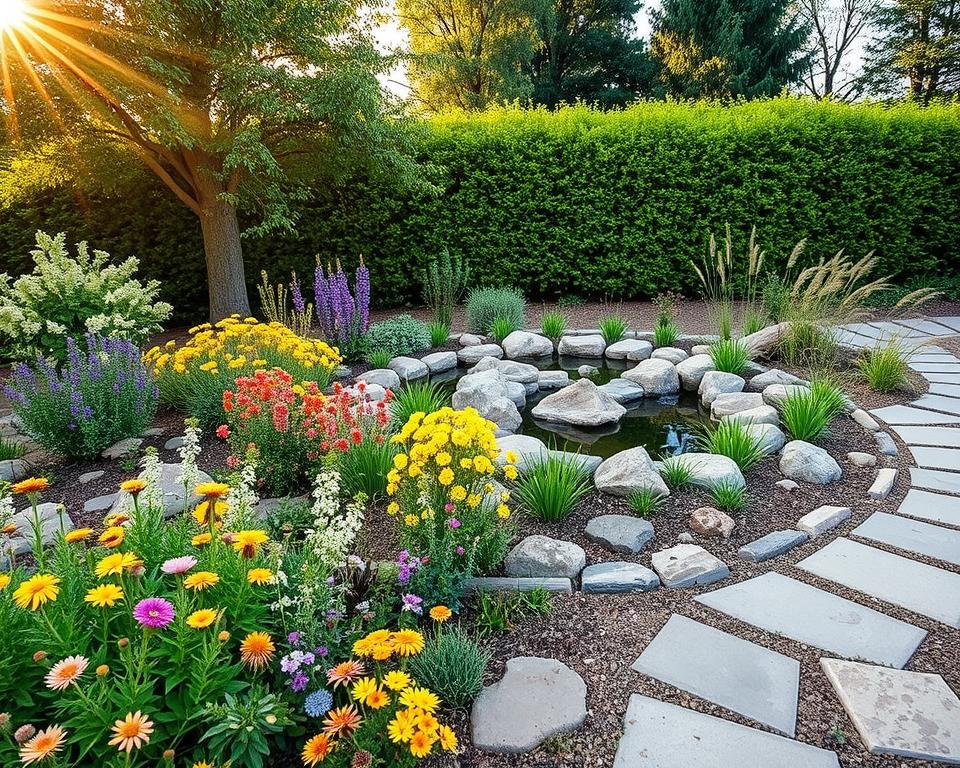
Add focal points to catch the eye and give your yard a purpose. Pick something stunning like a big tree, art, or a water feature. Focal points tie your yard together, making it look and feel great.
| Element | Examples | Benefits |
|---|---|---|
| Plants and Flowers | Roses, Lavender, Hostas | Color, Life, Attract Pollinators |
| Hardscaping Features | Paved Walkways, Stone Walls | Structure, Low Maintenance, Functionality |
| Focal Points | Water Features, Sculptures | Visual Interest, Draws Attention, Creates Anchors |
Popular Front Yard Landscaping Styles
Various designs allow homeowners to show off their personality and style through their front yards. Each option has unique features, helping to find the best match for their home. Knowing the different styles can make your outdoor area more attractive and enjoyable.
Modern and Minimalist
The modern minimalist style is all about simplicity and clean looks. It often uses a few colors and focuses on geometric forms. Features like concrete paths, easy-care plants, and smart lighting make the space calm and appealing. It’s perfect for those who love a tidy, simple space with beauty.
Cottage Garden Charm
A cottage garden style brings a playful and welcoming vibe. It’s known for dense plantings, bright flowers, and mixed textures. By combining perennial and annual plants, the garden stays colorful all year. Quaint walkways and rustic fences add to its fairytale feel, ideal for front yards with a nostalgic touch.
Tropical Oasis
Tropical landscaping turns your front yard into a vacation spot. It features striking plants, bright blooms, and water elements. The design creates a peaceful retreat with vibrant plants and thick greens. Adding palms, hibiscus, and ferns makes the yard a tropical getaway, perfect for relaxation and renewal.
Choosing the Right Plants
Choosing the right plants can make your front yard burst into life and color. It’s important to think about seasonal changes to keep it beautiful all year. Use native plants to make your garden eco-friendly and attractive to wildlife. If you don’t want much upkeep, look into easy-care landscaping for a lovely yard with less work.
Seasonal Interests
Picking plants with seasonal appeal means your yard looks good all the time. Mix plants that bloom or change at different times for a vibrant scene. Start with spring flowers like tulips, add summer perennials, and round out with fall grasses for year-round color.
Native vs. Non-Native Plants
Go for native plants for better growth in your yard. They need less water, resist pests well, and fit the local climate. They’re also great for birds and bees. But, non-native plants might need more care and water. A mix can create a beautiful, sustainable yard.
Low-Maintenance Options
Want a great yard without much work? Choose plants like sedum and daylilies, and native shrubs for less effort. Ground covers cut down on weeds and handle different weather well. These choices keep your yard looking great with minimal effort, no matter the season.
Incorporating Hardscaping
Adding hardscaping to your front yard boosts both its look and function. Non-plant materials bring structure. They define spaces with elements like patios, walkways, retaining walls, and borders. Each adds its own benefit and style to the yard.
Patios and Walkways
Patios and walkways are key for moving around your outdoor space. They connect areas. Using brick, stone, or concrete offers many design choices. These paths lead to cozy spots or wind through your yard, playing a vital role.
Retaining Walls
Retaining walls help manage slopes and stop soil from washing away. They also define spaces, boosting your property’s look. Made from stone or decorative bricks, they’re not just practical. They also add beauty.
Decorative Borders
Decorative borders help separate different parts of your yard, organizing the space. Choosing stone or metal edges gives a clean look. They also keep mulch in place. It’s a small detail that adds a lot to the yard’s overall charm.
Designing for Sustainability
Sustainable landscaping makes your yard more beautiful and helps the planet. You can use less water, grow native plants, and make habitats for wildlife. This turns your garden into a place that’s good for nature and looks great.
Water-Efficient Landscaping
Using less water in your garden, like xeriscaping, cuts down on water use. This approach involves drought-tolerant plants, drip irrigation, and mulch to keep soil moist. These steps save water and support eco-friendly landscaping.
Using Native Plants
Native plants are key to an eco-friendly yard. They fit the local weather and soil, need less water, and are easier to take care of. Adding these plants brings in local wildlife, creating a lively garden that helps nature.
Creating Wildlife Habitats
Adding habitats for wildlife makes your yard unique and helps the planet. Things like birdhouses and butterfly gardens invite different creatures. With native plants, these features make your garden a welcoming place for wildlife, supporting nature’s balance.
Front Yard Lighting Ideas
Effective front yard lighting boosts your home’s look and safety. It involves different lighting strategies to make your home welcoming. You can choose from ambient lighting to spotlights and various power sources.
Ambient Lighting
Ambient lighting makes your home cozy and inviting. It lights up paths, flower beds, and other areas softly. For this soft glow, use lanterns or recessed lights. Solar lights are good for the environment and turn on by themselves at night.
Spotlighting Features
Spotlighting highlights your yard’s best parts, like beautiful trees or sculptures. Lights aimed at these spots add nighttime beauty. You can play with light angles and brightness for a creative look. Electric lights work well for bright spots on certain parts of your yard.
Solar vs. Electric Options
Choosing between solar and electric lights is key for front yard lighting. Solar lights are easy to use and good for the planet. They don’t need wires; just sunlight. Electric lights are stronger but might need an expert to install them. Consider both options to keep your yard lit beautifully.
DIY vs. Hiring Professionals
When you think about fixing up your front yard, you might wonder if you should do it yourself or hire experts. It’s good to think about what skills you have and how much time you can spend on the project. Choosing between DIY and professional help depends on these points and each option has its pluses and minuses.
Assessing Your Skills
Before you start a garden project on your own, it’s smart to honestly think about what you can do. Ask yourself if you know about taking care of plants, planning out a space, and putting everything in place. If you’re good at these, doing it yourself might be fun and rewarding. If not, hiring pros could save you from trouble and make you happier with the result.
When to Call in Experts
Some yard projects are just too tough to tackle alone. Building things like decks or dealing with tricky plants often needs expert knowledge. If your plan is big or fancy, getting help from landscaping pros can offer new ideas and ways to make it happen right for your space.
Cost Considerations
Thinking about the money involved is important. Doing it yourself usually costs less at first because you’re just paying for materials. But, the extra time, possible mistakes, and keeping up with it all can end up costing more. Hiring experts might cost more to start, but it could increase your home’s value and save money in the long run. Thinking about your budget can help you decide what’s best.
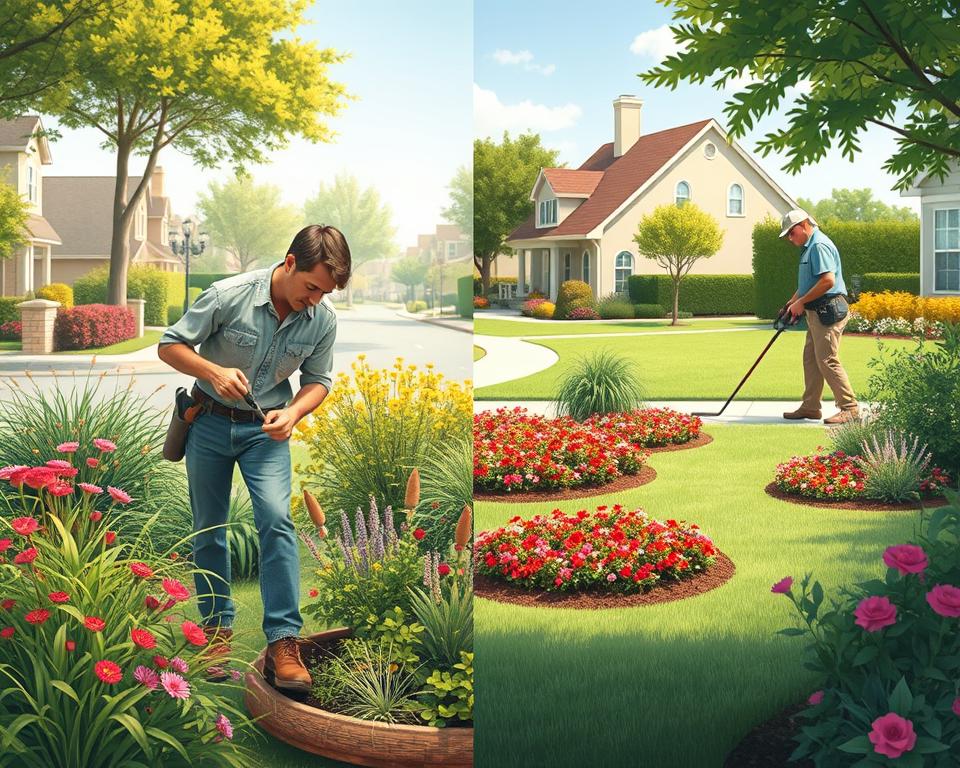
Seasonal Maintenance Tips
Keeping a pretty front yard takes work all year long. Seasonal maintenance keeps your yard looking good and healthy. Focus on crucial activities in spring, summer, and fall to make your yard look better and keep plants healthy.
Spring Clean-Up
Spring cleaning is the first step to take care of your yard. Start by raking leaves and getting rid of debris. This lets new plants get sun. Check plants for damage from winter and cut away any dead branches. Spring is a great time to plant new flowers and bushes, making your yard look fresh.
Summer Watering
Watering is key in the summer to keep plants alive during hot weather. It’s best to water deeply in the early morning or late evening. This stops water from evaporating too quickly and helps roots drink up the water. Change how much you water depending on the weather and rain, to make sure your plants stay healthy.
Fall Preparation
Getting ready for fall is important to protect your garden in winter. Start by putting mulch around plant roots to keep weeds away and keep the soil warm. Think about cutting back some plants and changing up your yard’s design for next year. Preparing your yard for winter is a big part of keeping it in good shape year-round.
Budgeting for Your Project
When you plan your front yard makeover, thinking about money is key. Budgeting for landscaping is crucial to finish without breaking the bank. Knowing how much you can spend helps you choose wisely, matching your dreams to your budget.
Setting a Realistic Budget
First, figure out how much money you can spend on your yard. Remember to count everything: plants, materials, work, and upkeep. A solid budget plan keeps you on track. And it’s smart to plan for surprise costs that can pop up.
Prioritizing Features
Decide what parts of your yard are most important. Put your money into big-impact areas, like a new patio or special plants. This way, you focus on what’s key and shape your space beautifully.
Cost-Effective Choices
Looking for budget-friendly landscaping ideas can save you lots. Go for local plants that don’t need much care or water. And think about DIY projects to add your own style without paying for pros.
| Landscaping Feature | Estimated Cost | Maintenance Level | Cost-Effective Options |
|---|---|---|---|
| Native Plants | $200 – $800 | Low | Local nurseries |
| Hardscaping (Patios) | $1,000 – $5,000 | Medium | Recycled materials |
| Lighting | $150 – $800 | Medium | Solar lights |
| Water Features | $500 – $3,000 | High | DIY pond |
Trends in Front Yard Landscaping
The world of front yard landscaping keeps changing. It’s shaped by new preferences and growing environmental concerns. Homeowners now prefer eco-friendly landscaping to help the planet. They choose local plants, organic fertilizers, and ways to save water. By doing so, they keep their yards beautiful and care for nature at the same time.
Eco-Friendly Practices
Eco-friendly landscaping is more than a trend now; it’s what people expect. This method uses sustainable materials and helps conserve resources. Features like rain gardens, permeable paving, and xeriscaping save water and support local wildlife. This leads to gardens filled with plants that grow naturally, reducing the need for harmful chemicals and lots of upkeep.
Smart Technology Integration
Smart technology is also becoming a big part of landscaping. Homeowners love automated watering systems. These systems use water wisely and keep plants healthy. They’re easy to control from a smartphone, making garden care simpler and greener. As this technology improves, it’s making gardening more efficient and eco-friendly.
Mixing Styles and Materials
Mixing styles and materials in front yard design is now a thing. People want their yards to show off their own style. They mix modern, rustic, and traditional looks, using stone, wood, and metal. This turns each yard into a unique work of art, adding creativity to the neighborhood.