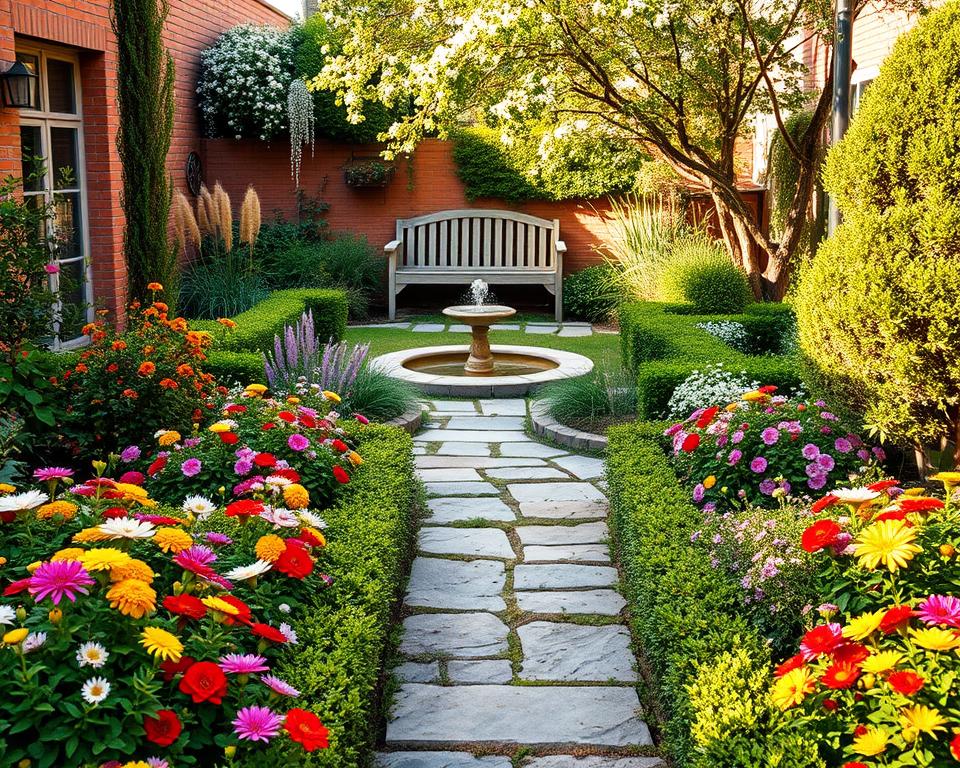
Did you know that over 80% of Americans live in places like cities? Often, they have less than 500 square feet for outdoor space. This fact shows how crucial smart courtyard design is. It can turn small spaces into lovely, useful spots for residents. Courtyard gardens bring peace and a touch of nature to those living in cities. They make outdoor areas better for hanging out or chilling. With good planning and the right plants, your tiny outdoor area can become a charming escape. It’s perfect for kicking back or having people over. Let’s look into how to make a great courtyard garden and use every bit of space you have.
Key Takeaways
- Courtyard gardens can transform small urban spaces into serene retreats.
- Thoughtful design can enhance the functionality of your outdoor living area.
- Choosing the right plants is essential for a thriving courtyard garden.
- Hardscaping elements can add beauty and structure to your space.
- Privacy and lighting are key considerations in courtyard garden design.
- Adopting sustainable practices can benefit both your garden and the environment.
Understanding the Basics of Courtyard Garden Design
A courtyard garden is a cozy outdoor area, usually surrounded by walls or buildings. It is perfect for those who want a private retreat. These spaces are designed to utilize every inch effectively for relaxation, fun, or nature enjoyment.
What is a Courtyard Garden?
A courtyard garden has clear borders, creating a private space. This setup is great for finding peace away from city noise. With the right design, these gardens can have various styles and include elements like seating, paths, and plants, all adding to a beautiful outdoor setting.
Benefits of Courtyard Gardens
Courtyard gardens offer a calm spot to unwind and think. They also make homes more attractive, potentially increasing their value. These spaces are perfect for hangouts or quiet time alone. They also help clean the air and give animals a place to live.
Key Elements to Consider
Designing a courtyard garden involves several important factors. Ensure the layout uses space wisely and allows for easy walking around. Plant choices should ideally be native to the area, and they should do well in the local weather.
Choosing materials like stone or brick can add to both the looks and function of the garden. Adding climbing plants and simple furniture can make the area more inviting and enjoyable.
Planning Your Courtyard Space
Creating a beautiful, functional courtyard takes careful planning. First, look at how big your space is and how the sun hits it. Even a small outdoor space can have lots of uses, like chilling or having friends over. Next, decide what you want from your garden, which helps in planning.
Assessing Your Available Space
Measure your courtyard first. Look at what’s already there, like trees or walls, that might affect your design. Think about where the light and shade are in your space. Knowing how the sun moves lets you pick the best plants. This way, you’ll know where everything should go.
Defining Your Garden’s Purpose
Knowing why you want a courtyard is key. It could be a quiet spot, a place to party, or a spot to grow veggies. Knowing your goal helps with planning. Think about what you’ll do there and how many will hang out. This helps you figure out the layout and what you’ll need.
Creating a Garden Layout
A smart layout makes your courtyard work better and look nice. Have different zones for things like sitting, planting, or having fun. Make sure paths are easy to walk and add something eye-catching, like a statue or water feature. With good planning, your small outdoor space can look amazing and do a lot.
Choosing the Right Plants
Choosing the right plants is key to a lively courtyard garden. Knowing your local climate helps pick plants that will thrive and beautify your space year-round. Opt for native plants and seasonal flowers to make your garden low-maintenance yet stunning.
Selecting Plants for Your Climate
Choosing plants that fit your climate boosts your garden’s health. Consider sunlight, soil, and water when picking plants. Native plants need less care and are great for local wildlife.
Incorporating Seasonal Blooms
Seasonal flowers keep your courtyard colorful all year. Mixing plants that bloom at different times keeps the garden interesting. Start with tulips in spring, add summer flowers like petunias, and finish with fall asters for constant beauty.
Native vs. Exotic Plants
The choice between native and exotic plants weighs sustainability against beauty. Native plants are easy to care for and help local ecosystems. But exotic plants provide unique looks. A mix of both can make your garden both beautiful and eco-friendly.
| Plant Type | Benefits | Challenges |
|---|---|---|
| Native Plants | – Less maintenance | – Limited color variety |
| Exotic Plants | – Unique aesthetics | – Higher water needs |
| Seasonal Blooms | – Year-round color | – Requires planning |
Hardscaping Elements
Hardscaping elements give your courtyard garden a cool look and make it more usable. A good patio design is key for outdoor living and shapes the style of your space. Picking strong materials for hardscaping is vital for lasting beauty and function.
Pathways and Patios
Pathways make it easy to walk around your garden and guide guests. You can choose from stones or bricks to get different styles and durability. Great pathway ideas can turn a simple layout into a welcoming space.
Patios expand your living area and offer spots to chill or have fun. Adding pathways and patios boosts your courtyard’s design and its use.
Focal Points: Sculptures and Water Features
Sculptures and water features add eye-catching details and start conversations. These pieces can make hardscaping stand out and give your garden its own vibe. Think about the design and size to catch the eye and encourage discovering more of the space.
Choosing Durable Materials
Pick materials for hardscaping that last long and are easy to keep looking good. Natural stone, concrete, or eco-friendly wood can endure weather while keeping their look. The right materials help your pathways and patios stay stunning all year.
| Material | Advantages | Considerations |
|---|---|---|
| Natural Stone | Durable, Unique Aesthetic | Higher cost, Requires sealing |
| Concrete | Versatile, Low Maintenance | Can be plain without design, May crack |
| Brick | Timeless Appeal, Durable | Requires regular maintenance, Can shift over time |
| Composite Decking | Durable, Eco-Friendly Options | Can fade, Synthetic look may not suit all designs |
Designing for Privacy
Making a private courtyard turns your outside area into a calm haven. To get just enough privacy, it’s important to use the right structures and plants. We’ll look into how walls, fences, and natural parts can boost privacy. And we’ll show how to add outdoor furniture that’s comfy and stylish.
Using Walls and Fences
Walls and fences are key to making courtyards private. You can pick from wood, vinyl, or stone to match your style. These barriers not only block views but also cut down on noise. This makes your space quieter and more peaceful.
Planting for Natural Screening
Adding plants provides an extra layer of privacy and softens the look of walls and fences. Choose tall hedges or bushy plants for a natural screen. These plants offer interest all year round. Bamboo, arborvitae, or ornamental grasses work well in courtyards, adding beauty and privacy.
Incorporating Outdoor Furniture
Choosing the right outdoor furniture makes a courtyard inviting. Go for items that make it easy to relax, like lounge chairs or hammocks. Putting furniture in the right spots lets you enjoy the view of your garden. It also keeps the area cozy and private.
Providing Adequate Lighting
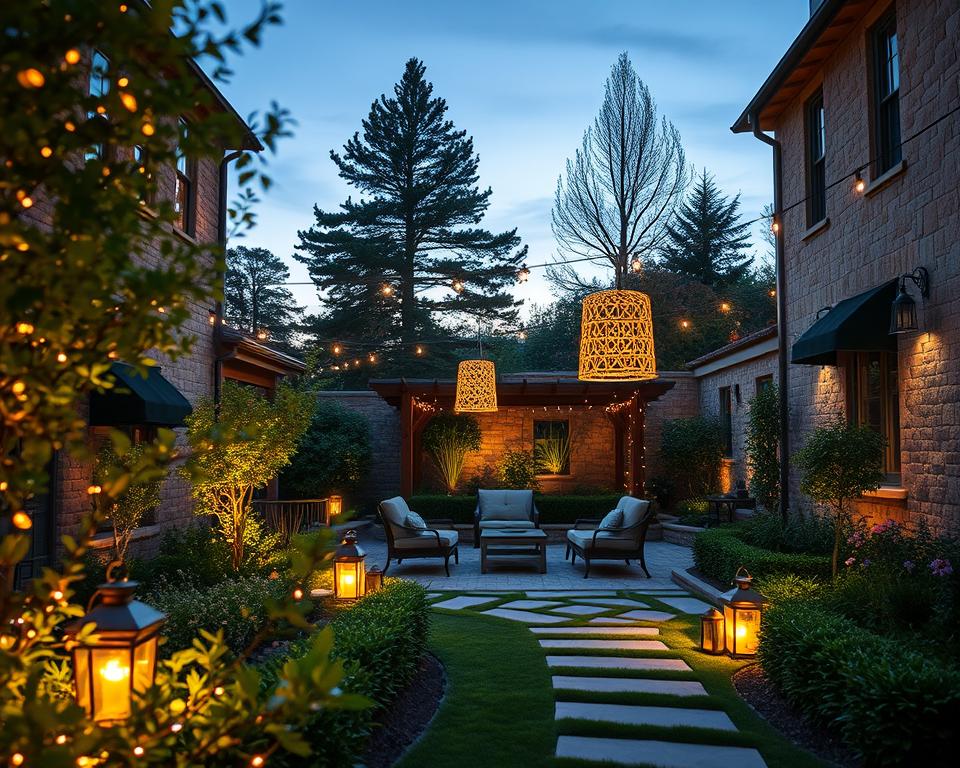
Lighting is crucial for making over the outdoor area of a courtyard garden. It boosts both its use and beauty. Various choices for outdoor lighting can change the garden’s mood. Good lighting not only lights up paths but also highlights special spots. This makes the garden inviting at night.
Types of Outdoor Lighting
Adding different kinds of outdoor lights can make your garden’s vibe better. Here are some popular options:
- String Lights: Great for a fairy-tale look. You can wrap them around trellises or string them between trees.
- Lanterns: They come in many styles and give off a gentle, inviting glow. They’re great for cozy get-togethers.
- Pathway Lighting: Lights along paths keep it safe and show off the garden’s design.
Highlighting Key Features
Smart lighting placement can show off important parts of your garden. Shining lights on art or bright flowers draws eyes to them. Mixing uplights with downlights adds depth and interest to outdoor areas.
Setting the Mood with Light
The perfect outdoor lights create the right vibe for any event. Warm light feels cozy, while cool light has a modern vibe. Using different lights together lets you change the setting. It can be peaceful for solo nights or fun for parties with friends.
Sustainable Practices
Using sustainable gardening makes your courtyard not only look good but also helps the planet. By saving water with smart gardening, you do your part in conserving water. Composting in little spaces lets you reuse plant nutrients and keeps your garden blooming. Choosing things that are good for the earth, like eco-friendly materials, lessens the harm to our environment.
Water Efficient Gardening Techniques
It’s vital to use water-saving ways in gardening. Drip irrigation and xeriscaping help put water exactly where it’s needed without waste. This helps keep your garden beautiful and green while also protecting our water sources.
Composting in Small Spaces
Even if you don’t have much space, you can still compost. Using worms or a bin for compost doesn’t take up much room. This not only gets rid of kitchen leftovers but also makes your soil better, which is great for your plants.
Choosing Eco-Friendly Materials
Picking materials that don’t hurt the earth is key for a green garden. Using things like natural stone, old wood, and recycled plastic looks good and serves well. It makes your garden a haven for wildlife and shows you care about our planet.
| Practice | Description | Benefits |
|---|---|---|
| Drip Irrigation | A system that delivers water directly to the roots. | Reduces water usage and minimizes evaporation. |
| Xeriscaping | A landscaping method that uses drought-resistant plants. | Low water requirement and maintenance. |
| Vermicomposting | Using worms to decompose organic waste. | Produces rich compost in a compact form. |
| Reclaimed Materials | Using previously used materials for new purposes. | Reduces waste and offers unique character. |
Maintenance Tips for Courtyard Gardens
Keeping a courtyard garden bright and lively needs regular care, especially for gardening newcomers. Focusing on ongoing upkeep not only keeps the garden beautiful but also helps plants flourish. The key to a thriving garden includes doing regular tasks, adjusting with the seasons, and managing pests well.
Routine Care and Upkeep
Regular upkeep involves watering, cutting back plants, and feeding them. Setting up a watering routine based on the climate and what plants need is crucial. This avoids waterlogging the soil. Trimming helps plants grow better and gets rid of dead parts, while feeding them during the right season gives them needed nutrients. Watching plant health closely during these tasks boosts their growth and flowering.
Seasonal Changes and Adjustments
When seasons change, garden care needs tweaking. In spring, it’s good to start planting and making conditions better for growth. Come fall, it’s time to ready plants for the cold, maybe by mulching and covering delicate ones. Knowing how to shift with these changes helps keep the garden strong.
Managing Weeds and Pests
Fighting off pests is key to keeping the garden safe. Checking plants often makes catching pests early easier. Using natural methods, like neem oil or insecticidal soap, can keep pests at bay. Plus, putting down mulch helps stop weeds, so plants don’t fight for food and water.
| Task | Frequency | Notes |
|---|---|---|
| Watering | Weekly | Adjust based on weather conditions. |
| Pruning | Monthly | Cut back dead or unhealthy branches. |
| Fertilizing | Seasonal | Use organic options suited for plant type. |
| Pest Inspection | Bi-weekly | Look for signs of pests and diseases. |
| Weed Control | As needed | Use mulch to minimize growth. |
Creative Themes for Courtyard Gardens
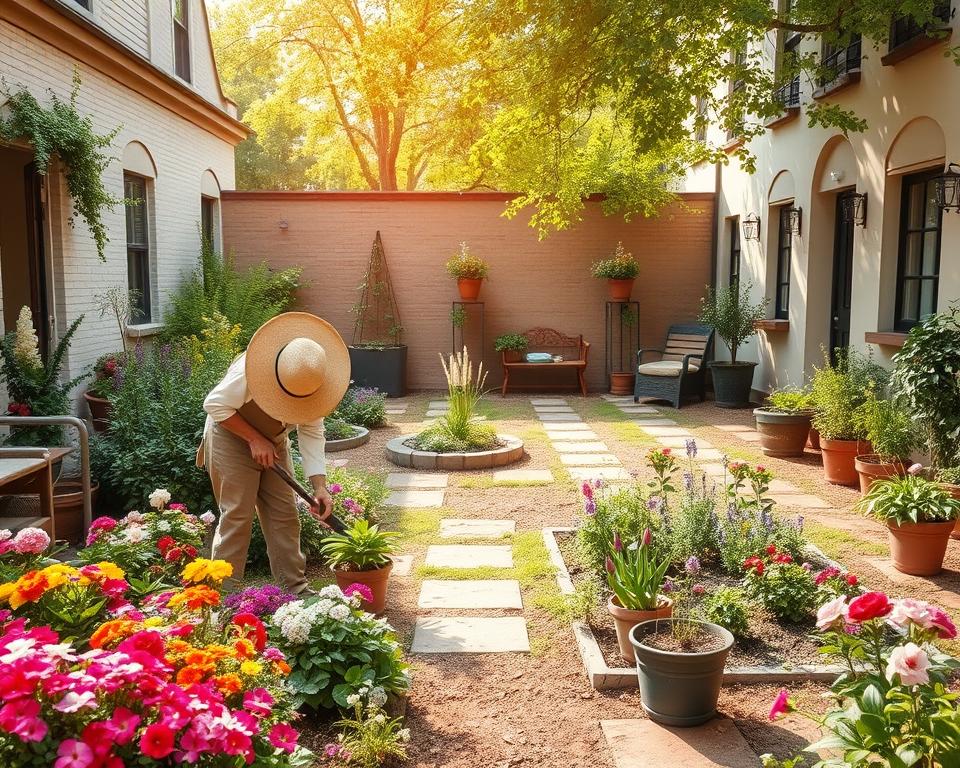
Exploring different garden themes adds character and appeal to your courtyard. Choosing a distinct style lets your personality shine and enhances your outdoor experience. Whether it’s Mediterranean design, zen aesthetics, or urban chic styles, each brings a unique vibe to your courtyard garden.
Mediterranean Inspiration
Mediterranean design adds warmth and color to your courtyard. It features terracotta pots, rustic tiles, and lush plants, creating a welcoming space. Use terracotta, soft yellow, and deep blue to mirror the Mediterranean’s sun-soaked lands. Adding fragrant herbs like lavender and rosemary brings extra joy to your senses.
Zen Garden Aesthetics
Zen gardens are all about calm and minimalism, making them perfect for a peaceful haven. They often use gravel, rocks, and water features to create tranquility. By arranging stones thoughtfully and adding a pond or fountain, you bring in soothing sounds and movement. Choosing simple plants, like bamboo or succulents, adds to the zen garden’s serene feel.
Urban Chic Styles
Urban chic styles mix modern touches with greenery, ideal for city life. Sleek furniture, modern planters, and new lighting can make your courtyard stand out. Mixing concrete and metal with plants turns a simple area into a vibrant urban garden. Try vertical gardening to use space wisely and bring nature closer.
Seasonal Adaptations
To keep a courtyard garden lively, you need to adjust with the seasons. From spring planting to getting ready for winter’s cold, acting ahead helps your garden stay healthy and beautiful. Here are some key moves to keep your garden thriving.
Spring Refresh: Planting and Design Tips
As winter ends, spring planting wakes up the garden. It’s time to see what plants did well and which didn’t. Keep these ideas in mind:
- Choose early bloomers such as daffodils and tulips to create spectacular seasonal displays.
- Add fresh soil and mulch to enrich the garden beds post-winter.
- Redesign layout for better sunlight exposure and accessibility during summer months.
Summer Care: Keeping Things Cool
Summer heat can be tough on plants, making seasonal garden tips very important. Keeping up with care helps your garden stay lively and beautiful:
- Water deeply in the early morning or late evening to prevent evaporation.
- Introduce shade plants or use garden structures to create cooler spaces.
- Regularly deadhead flowers to encourage continual blooming throughout the season.
Preparing for Fall and Winter
When days start to shorten, it’s time for winter preparation. Protecting your plants now helps them come back strong in spring:
- Cover delicate plants with burlap or protective cloches to shield from frost.
- Create cozy outdoor areas with warm textiles to enjoy the garden’s beauty.
- Plan for spring by sowing bulbs or covering beds with compost to improve soil health.
Real-World Examples of Beautiful Courtyard Designs
Courtyard gardens turn tiny spaces into lively green spots. Urban courtyards show how small areas can make a big impact. In New York City, compact green spaces mix with art, making peaceful spots in the busy city.
In the suburbs, gardens blend with homes, mixing nature with modern life. They often have fire pits, outdoor seating, and lush plants. These spaces are peaceful retreats for families, balancing buildings and nature.
In the United States, unique designs catch the eye for their creativity. California has coastal gardens with local plants, while New England has classic brick paths. These examples inspire people to create their own nature spots, no matter where they are.