Did you know that over 75% of the world’s flowering plants and nearly 35% of our food crops need animal pollinators to thrive? Our cities grow, and wild spaces get smaller, making pollinator gardens crucial. By setting up a garden that welcomes bees, you can help provide them and other pollinators with the food, shelter, and nesting spots they need. This guide will show you how to design spaces that help your local ecosystem and increase the variety of life in your area.
Key Takeaways
- Pollinator gardens support vital ecosystems by offering food and habitat for essential species.
- Thoughtful planning can create a bee-friendly garden that attracts various pollinators.
- Native plants are crucial to effective pollinator habitat design.
- Incorporating elements like water sources and nesting areas enhances garden functionality.
- Community engagement is key to promoting awareness and appreciation for pollinator gardens.
Why Pollinator Gardens Matter
Creating a pollinator garden boosts your local environment. When you make space for pollinators, you help protect bees and butterflies. These insects are key for plant reproduction, which is vital for food and ecological balance.
The Importance of Pollinators
Pollinators help with about one-third of the world’s food production. Many plants depend on them to reproduce. They aid in food of crops and the beauty of ornamental plants. By making landscapes friendly to them, we keep these vital species going.
Benefits to Your Local Ecosystem
Pollinator gardens do more than attract bees and butterflies. They offer resources like nectar and pollen, essential for different species. These habitats boost your local ecosystem’s health, inviting a variety of plants and animals.
Supporting Biodiversity
Pollinator gardens are key to biodiversity. They allow various plants to flourish together. These gardens help insects, birds, and other wildlife thrive, supporting a balanced nature. Such interconnectedness is vital for ecological balance.
Key Elements of a Pollinator Garden
Creating a garden that bees love involves some key steps. It should have different features to meet all their needs. Think about the important parts that make a garden bloom with life.
Diverse Plant Selection
Plants native to your area are best for pollinators. They offer the food needed throughout the year. Have flowers that bloom at various times to attract more bees and butterflies. Mix perennials and annuals for flowers that keep coming back, keeping pollinators buzzing around.
Water Sources for Wildlife
Water is a must-have for pollinators. You can set up birdbaths or small ponds for them. Make sure these water spots are not too deep. Bugs and bees can drink easily if you add pebbles or floating plants. This makes your garden a go-to spot for thirsty pollinators.
Shelter and Nesting Areas
Shelters are important for a pollinator-friendly garden. Use natural materials like logs or certain plants for nesting. These spots give pollinators a safe place to live and flourish. Also, tight flower groups provide a safe haven from dangers, offering rest and protection.
Choosing the Right Location
Picking the right spot for your pollinator garden is crucial. A good location helps plants grow and draws in helpful insects. Think about how much sun it gets, if it’s near wildlife areas, and how easy it is to get to for upkeep.
Sunlight Requirements
Flowering plants that help pollinators need lots of sunlight, at least six hours daily. Sunlight is vital for sustainable gardening for pollinators. It helps plants grow well and bloom. Look around your yard or property for places that get enough sun.
Proximity to Existing Wildlife Habitats
Putting your garden close to nature spots, like ponds or woods, is a good idea. It makes your garden more appealing to different pollinators. Linking your garden with natural areas makes a better home for these important insects.
Accessibility for Maintenance
Make sure you can easily get to your garden for care. Upkeep, like watering and trimming, is key for a garden that thrives. A garden that’s well taken care of keeps plants healthy. This helps make a great place for pollinators.
Selecting the Best Plants
The heart of good pollinator-friendly landscaping is picking the right plants. Choosing native plants helps local wildlife and makes your garden beautiful. Different areas have unique pollinator species. It’s crucial to pick native flowers that grow well in your region. These plants help local ecosystems and make your garden healthier.
Native Flowers for Your Region
Native flowers draw pollinators to your garden. They have evolved together with local insects. This makes them attractive to bees, butterflies, and others. Try planting Coneflower, Black-eyed Susan, and Butterfly Weed. They’re great choices. Adding these flowers helps your garden grow sustainably and increases biodiversity.
Herbs That Attract Pollinators
Herbs enhance your food and attract pollinators. For example, Lavender, Mint, and Thyme offer nectar and pollen. They also add beauty to your garden. These herbs are perfect for those who love cooking and want to attract pollinators. They’re useful for any garden project.
Annual vs. Perennial Plants
When designing your garden, consider both annuals and perennials. Annuals like Zinnias and Marigolds bloom brightly but briefly. On the other hand, perennials such as Baptisia and Bee Balm bloom for years. They provide a constant food source. Using both types ensures flowers all season. This keeps your garden attractive and feeds pollinators always.
Designing with Structure in Mind
A well-structured pollinator garden looks good and works well for plants and pollinators. It makes the garden welcoming and supports a healthy environment. Thoughtful layout attracts visitors and meets the needs of a lively ecosystem.
Creating Layers with Heights
Different heights in your garden draw interest and help pollinators. Tall plants give shelter, and short ones show what’s below. This setup lets bees and butterflies find their favorite spots, important for creating a bee-friendly garden.
Incorporating Pathways and Seating
Paths make your garden easy to get around and fun to explore. Winding paths offer a unique journey. Seating lets people stop, look, and enjoy the pollinators’ activity. Smart seating placement enhances your pollinator habitat design.
Using Edging and Borders
Edging and borders make your garden pretty and organize it. They define areas with stones, wood, or plants. Organized gardens help pollinators move around better. It improves your pollinator garden design‘s functionality.
Seasonal Considerations
To have a garden that really supports wildlife, it’s key to know what food pollinators need during the year. Different pollinators depend on certain plants at specific times to get their food. By having a variety of plants, you make sure pollinators have what they need all year.
Plants for Early Spring Pollinators
When early spring comes and it gets warmer, many pollinators start to wake up. It’s a good idea to plant:
- Snowdrops
- Crocus
- Bee balm
- Wild geranium
These plants are really important because they give nectar and pollen. This helps pollinators get strong again after the winter.
Summer Blooming Options
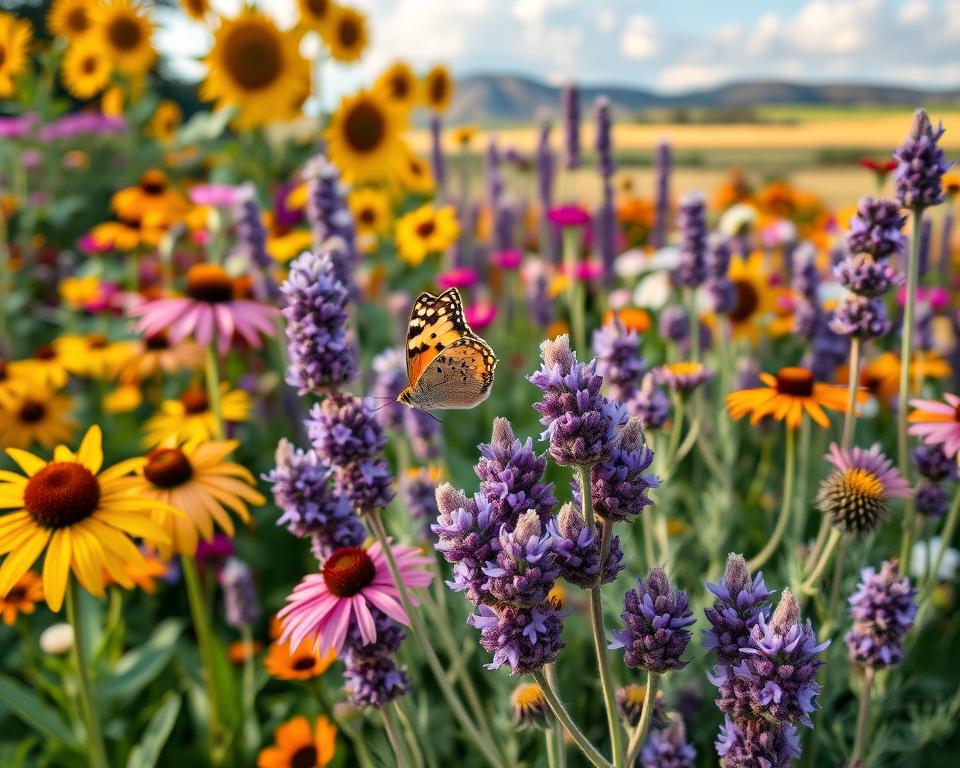
Summer makes the garden come alive. You should pick colorful flowers that bees and butterflies love, like:
- Lavender
- Echinacea
- Sunflowers
- Milkweed
Choosing these plants keeps your garden buzzing with life and gives pollinators food during summer.
Fall and Winter Habitats
When fall comes, think about places for pollinators to stay over winter. You should leave the grass and seeds as they are. Also add:
- Pinecones
- Brush piles
- Native shrubs
These things make safe spots for pollinators when it’s cold. This way, your garden continues to help wildlife, even in winter.
Maintenance Tips for Success
Keeping a pollinator garden healthy is crucial. This section covers important practices like watering, pruning, and managing pests. These steps are vital for taking care of native plants. They help make your garden a better place for pollinators.
Watering Techniques and Schedules
Knowing how much water your plants need is vital. Native plants need less water than those from other places. This makes them perfect for pollinator gardens. Using a drip irrigation system can save water. It’s best to water plants early in the morning or late in the evening. This helps avoid water loss from evaporation.
Pruning and Deadheading Practices
Pruning and deadheading make your garden look better. They also help plants grow more. Taking care of your native plants this way makes them healthier and more colorful. By removing dead flowers, plants can focus on making more blooms. This gives pollinators food all season long.
Pest Management Strategies
Use natural ways to keep pests away from your pollinator garden. Chemical pesticides can hurt the good bugs. Invite insects like ladybugs and lacewings to your garden instead. They help control pests. Adding certain plants can attract these helpful insects, making your garden healthier.
Incorporating Edible Plants
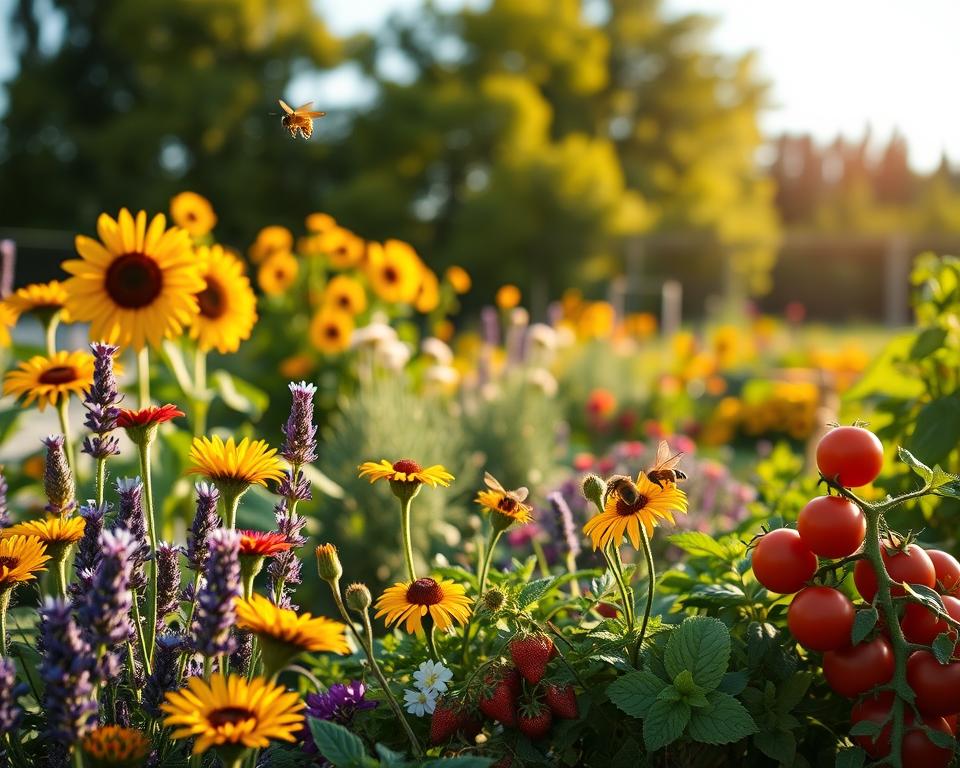
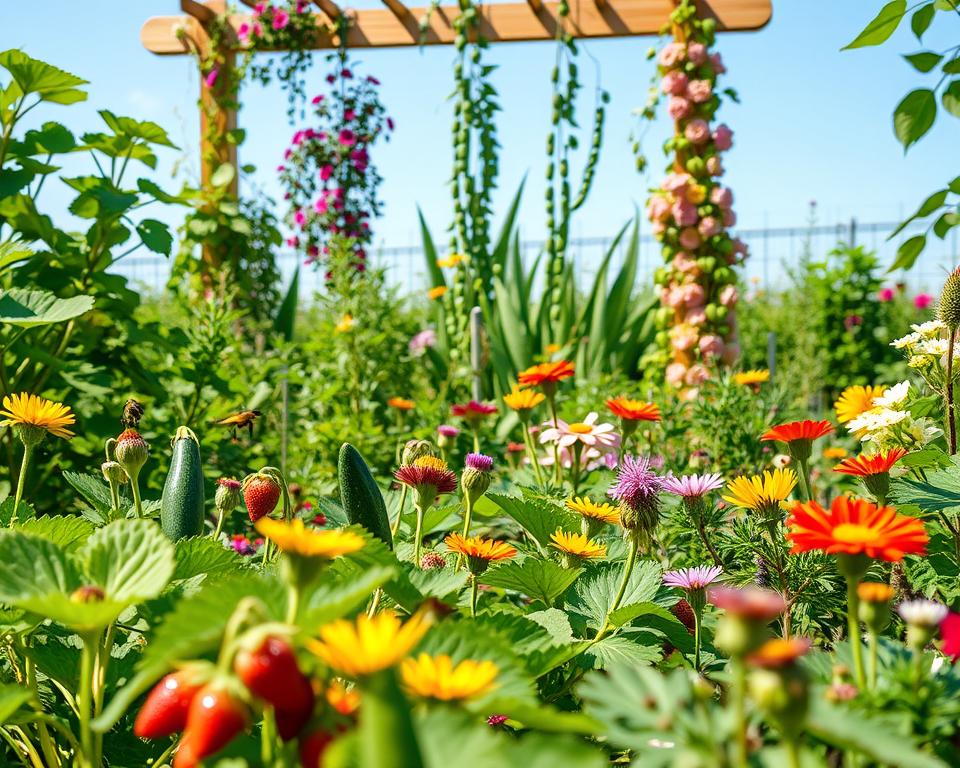
An edible pollinator garden offers fresh produce while supporting vital pollinators. It attracts beneficial insects and creates a sustainable ecosystem. This yields delicious fruits and vegetables. Integrating edible plants benefits users and enhances local biodiversity. This makes gardening for pollinators more impactful and rewarding.
Benefits of an Edible Pollinator Garden
An edible pollinator garden supports healthy ecosystems and gives you homegrown food. Key benefits include:
- Increased food security with fresh produce.
- Attraction of diverse pollinators, enhancing plant reproduction.
- Reduced reliance on store-bought fruits and vegetables.
- Improved soil health through organic practices and companion planting for pollinators.
Best Fruits and Vegetables to Grow
Select plants known to thrive with pollinators. Consider growing:
- Berries such as blueberries and blackberries, which attract bees.
- Squash varieties that bloom to provide nectar for a variety of insects.
- Herbs like basil and mint, excellent for attracting beneficial insects.
Companion Planting with Pollinators in Mind
Companion planting enhances garden health by pairing pest-repelling plants with pollinator-friendly species. This method protects crops and encourages a balanced ecosystem. For example:
- Planting marigolds alongside vegetables to deter harmful pests.
- Growing flowering herbs near fruit plants to attract bees and other pollinators.
- Grouping plants with similar water and light needs to optimize garden health.
Engaging Your Community
Community engagement is vital for pollinator gardens’ success and lasting impact. It allows people to share knowledge and adopt eco-friendly ways to boost pollinator habitats. Let’s look at how to involve the community effectively.
Hosting Pollinator Garden Workshops
Workshops teach the value of pollinator gardens and how to make them. Experts and hobbyists can explain selecting plants, designing gardens, and keeping them healthy. These events are great for swapping stories and advice. They motivate people to start their own gardens.
Partnering with Local Schools
Teaming up with schools teaches kids how to care for the environment. Schools can add gardening projects to their lessons, showing students how ecosystems work and why pollinators matter. This leads to activities like planting and upkeep days, teaching kids to be eco-conscious.
Creating Awareness through Social Media
Social media is great for talking about pollinator gardens and getting the community involved. You can post success stories, update on workshops, and show off gardens. It encourages everyone to share their gardening progress, creating a supportive and inspired community around local gardens.
| Engagement Method | Benefits | Examples |
|---|---|---|
| Workshops | Education, skill sharing, community bonding | Hands-on demonstrations, expert talks |
| School Partnerships | Environmental awareness, practical experience | Curriculum integration, student-led planting |
| Social Media | Audience reach, community building, information sharing | Success stories, garden challenges, updates |
Eco-Friendly Practices
Adopting eco-friendly gardening rewards both our gardens and the planet. It includes using organic gardening methods to help pollinators thrive. By reducing chemical usage, we protect helpful insects and the environment. Composting also helps by making the soil healthier, which is good for plants and insects.
Organic Gardening Techniques
Organic gardening uses natural ways to keep the ecosystem balanced. These include:
- Using organic fertilizers, like compost and manure.
- Rotating crops to keep soil healthy.
- Bringing in beneficial insects to handle pests.
Reducing Chemical Usage
Using fewer chemicals helps protect wildlife around us. Even pollinators can be harmed by pesticides. To use fewer chemicals, we can:
- Grow native plants that need less care.
- Control weeds with organic techniques.
- Set up barriers to keep pests away.
Composting and Soil Health
Composting turns waste into a rich soil additive. This is great for eco-friendly gardens. Compost improves:
- Soil texture.
- Water holding capacity.
- Microbial life, which plants need to grow.
Resources for Further Learning
If you’re keen to learn more about gardening, there are lots of resources out there. You can find books and guides focused on your area. They give you great tips on choosing plants and how to take care of them. Make sure to pick ones that talk about local plants and how to garden in a way that helps the planet.
Joining online groups is also a smart move. Places like Reddit, gardening blogs, and Facebook groups are great for swapping advice. You’ll meet others who love gardening and want to help bees and butterflies too. It’s a nice way to make friends who care about nature as much as you do.
Don’t forget about local groups and services either. Many offer workshops and info to help your garden thrive. They’re all about helping you grow a garden that’s good for pollinators. Using these services can really make a big difference in your gardening success.