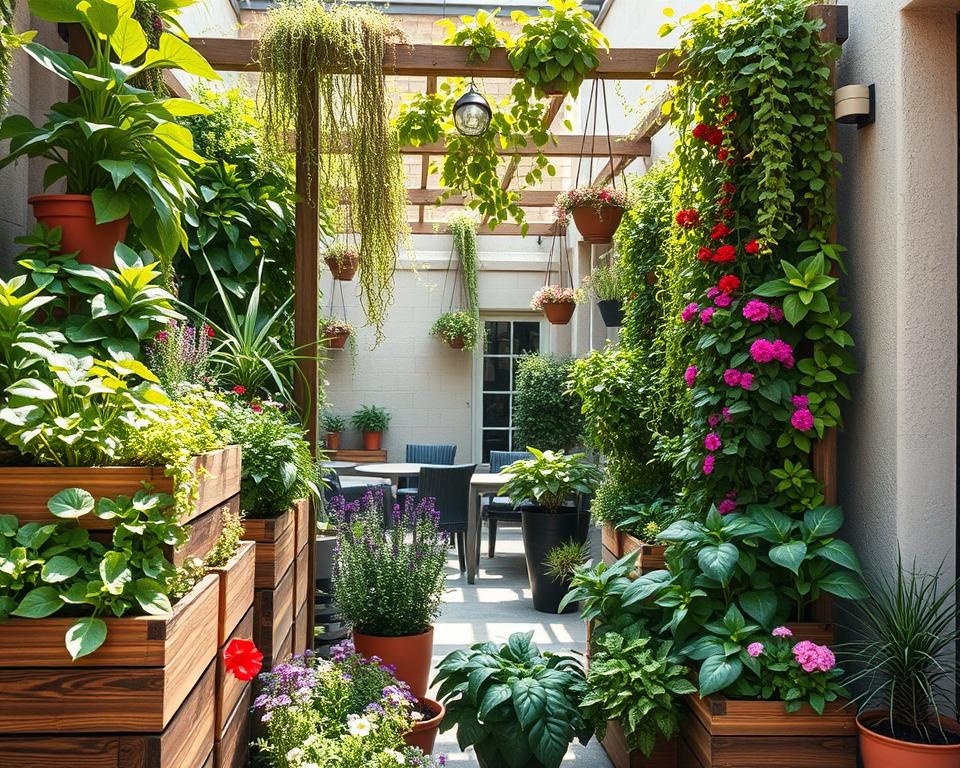
Did you know that over 80% of people might live in cities by 2050? With more people moving to urban areas, vertical gardening has become a smart way to use small spaces. It lets you grow everything from beautiful plants to kitchen herbs, making any area look green and lively.
We’ll cover many vertical garden ideas perfect for those who like to do it themselves. You’ll learn about indoor gardening and get design tips for vertical gardens. You’ll discover different systems, pick the right plants, and find creative DIY projects. Soon, you’ll be ready to turn tight spots into beautiful green spaces.
Key Takeaways
- Vertical gardening is ideal for maximizing space in urban environments.
- DIY vertical garden projects can enhance your home’s aesthetics and productivity.
- Indoor vertical gardening offers unique opportunities for growing herbs and plants.
- Choosing the right system is key to successful vertical garden design.
- A wide variety of plants thrive in vertical arrangements, from flowers to herbs.
- Creative solutions can turn even the smallest spaces into green retreats.
Introduction to Vertical Gardening
Vertical gardening is gaining popularity among city folks and plant lovers. By growing plants upward, it uses less ground space and looks good, too. Getting to know more about it can make growing plants vertically at home both fun and fulfilling.
What is Vertical Gardening?
Vertical gardening means growing plants on upright surfaces, like walls or trellises. This method lets you save space and promotes better plant health, making your living area more inviting. It turns any wall or fence into a lush garden oasis.
Benefits of Vertical Gardens
Vertical gardens offer more than just beauty. They help lower the carbon footprint compared to traditional gardens. By elevating plants, there’s less chance for pests and diseases. They also clean the air and insulate buildings, making them great for indoor gardening.
Choosing the Right Space
Finding the perfect spot for your vertical garden is key. Look for places like balconies or walls with plenty of sunlight and easy access for upkeep. Think about how you want it to look and use design tips to make your vertical garden stand out.
Types of Vertical Garden Systems
Vertical gardening comes with different systems to suit various needs and likes. If you have a small space or want to make your garden look better, there’s a perfect system for you. Let’s dive into three popular types of vertical garden systems that can improve your gardening game.
Wall Planters
Wall planters are great for using vertical space in tight spots. You can hang them on walls, fences, or even inside your house. They are available in materials like wood, plastic, or metal. Creating a DIY vertical garden with wall planters is a fun project. It lets you show off herbs and flowers in an attractive way.
Freestanding Units
Freestanding units are super flexible because you can put them anywhere outside. They often have wheels, so you can easily move them around. Whether it’s veggies or pretty flowers, they’re perfect for gardening in a limited area.
Vertical Hydroponic Systems
Vertical hydroponic systems are for those who like to try new things. They grow plants without soil, using water full of nutrients instead. This method is great for city gardeners who want lots of plants but don’t have much space. It works well for both decorative plants and food.
Best Plants for Vertical Gardens
Picking the right plants is key for a beautiful vertical garden. You can choose from herbs, colorful flowers, or easy-care succulents. These plants fit well in vertical gardens, making your space stand out.
Herbs for Small Spaces
Herbs like basil, mint, and oregano are great for vertical gardens. They don’t need much room and are easy to pick when cooking. Growing different herbs makes your garden smell nice and taste great, even in tight spaces.
Flowers That Thrive Vertically
Climbing flowers make your vertical garden look amazing. With climbers like roses and clematis, you get a green wall full of blooms. Adding plants like petunias or nasturtiums gives your garden more color and depth.
Succulents and Cacti
If you’re busy but love gardening, succulents and cacti are perfect. They need little soil and water, making them easy to care for. Their unique looks create stunning displays in small areas.
DIY Vertical Garden Projects
Creating a DIY vertical garden is a fun and rewarding activity. It allows you to beautify your outdoor or indoor areas. With easy-to-find materials and a bit of creativity, you can make a garden that looks great and is useful. Get ready to be inspired for your next DIY project.
Simple Pallet Gardens
Old wooden pallets can be turned into lovely vertical gardens. Just stand a pallet against a wall and fill the slats with soil and plants. It’s an affordable and green way to increase your garden space with little work. Many DIY vertical garden lovers show off their pallet creations online, featuring various plants.
Creative Use of Upcycled Materials
You can use things you already have to make a unique vertical garden. Transform old jeans, bottles, or crates into plant holders. This shows off your unique style while being kind to the planet. Many vertical garden design tips focus on turning waste into something wonderful and green.
Installing a Vertical Garden Frame
Putting in a vertical garden frame gives a neat and organized look. Build a strong base using wood or metal to support climbing plants. This method offers stability and fits any space size. Frames make watering and upkeep simple, keeping your DIY vertical garden looking good without too much hassle.
Vertical Gardens in Small Spaces
Vertical gardens turn tiny spots into green havens. They’re ideal for city homes, offering a way to grow plants without needing much ground space. You can have greenery on balconies, indoors, or in small yards. Let’s dive into how to make the most of limited spaces with vertical gardening, focusing on flexibility and creativity.
Utilizing Balcony Spaces
Balconies are great for crafting a green escape. You can use planters on railings or vertical shelves to beautify them. This setup allows for easy changes and seasonal updates. Add trellises for climbing plants to make use of every inch up high.
Indoor Vertical Gardens
Bringing gardens inside boosts your home’s feel. Wall planters or free-standing systems fill empty walls with life. This setup is perfect for herbs and succulents, improving both looks and air. It works with any decor, from clean lines to eclectic vibes.
Creative Solutions for Small Yards
In tiny yards, thinking creatively opens up possibilities. Use vertical pallets, hanging pots, or wall systems for greenery. These methods make small areas both beautiful and functional. Mix different plants for depth and interest in your vertical garden.
Vertical Gardening Tools and Supplies
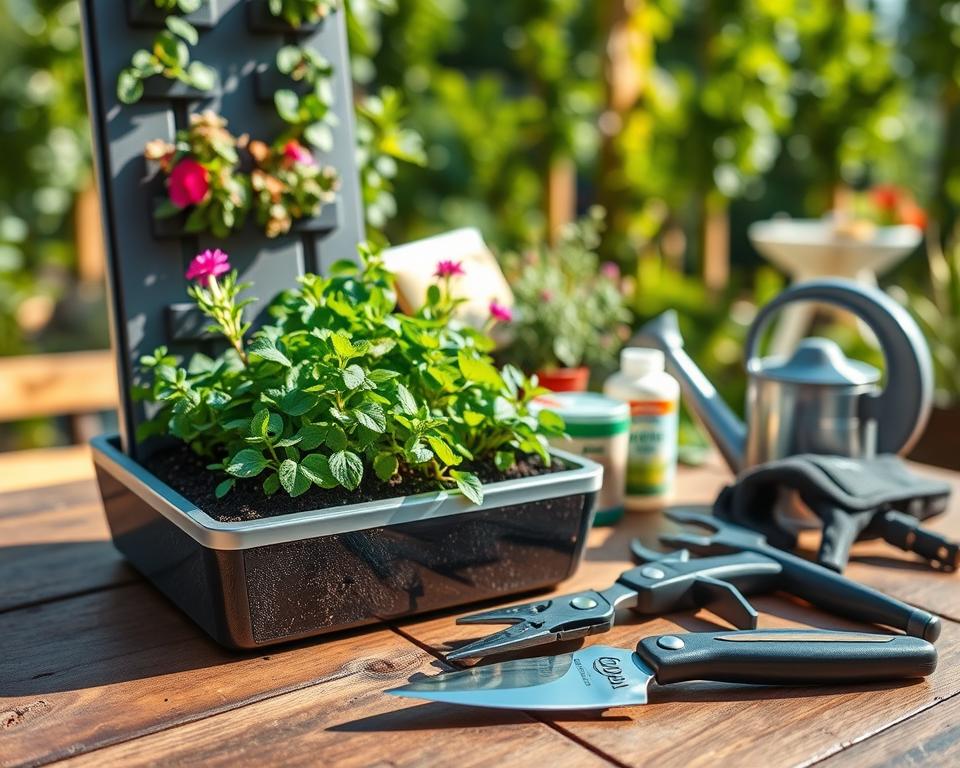
Having the right tools and supplies is key to a great vertical garden. Whether you’re just starting or have been gardening for years, the right tools help your plants grow well with less work. Let’s look at some must-have items for your vertical garden.
Basic Tools Needed
- Trowels for planting and shifting soil.
- Pruning shears to maintain optimal plant health.
- Supports such as trellises or cages for climbing plants.
- Gloves to protect your hands while gardening.
Soil and Fertilizer Recommendations
Good soil is the base for healthy plants. Here’s how to choose the best soil and fertilizers:
| Soil Type | Recommended Fertilizers | Benefits |
|---|---|---|
| Potting Soil | Organic Compost | Improves water retention and nutrient levels. |
| Seed-Starting Mix | Slow-Release Fertilizer | Encourages strong root development. |
| Hydroponic Mix | Liquid Nutrients | Specifically designed for soilless growth. |
Essential Watering Systems
Watering the right way is important for vertical gardens. These systems make watering easier and more effective:
- Drip irrigation systems for focused water delivery.
- Self-watering planters that reduce the frequency of watering.
- Watering cans with long spouts to reach plants easily.
Vertical Garden Maintenance Tips
To keep your vertical garden vibrant, you need regular care and the right methods. Focus on proper watering, controlling pests, and pruning. This will help your garden stay healthy. Using the right tools for vertical gardening also makes these tasks easier. These tips are key for making your indoor or outdoor space thrive.
Watering Frequency and Techniques
Getting the watering right is crucial for your vertical garden. You’ll need to adjust how often you water based on the plants you have and the weather. A drip irrigation system is ideal. It gives plants just the right amount of water without waste. For manual watering, try these tips:
- Water early in the morning or late in the evening to reduce evaporation.
- Check the soil’s moisture level before watering to avoid giving too much water.
Pest Control for Vertical Gardens
Keeping an eye out for pests will help keep your vertical garden healthy. Use natural methods to control pests and keep the environment balanced. Products like neem oil or insecticidal soap are great for fighting off pests but still safe for helpful bugs. Set up a regular schedule to check for pests early on.
Pruning and Harvesting
Regular pruning helps keep your garden neat and supports new growth. Trim away dead or dying leaves to improve air circulation. Harvesting on time is also crucial. It keeps plants from getting too crowded and promotes more growth. Use your vertical garden tools to make pruning and harvesting easier.
| Maintenance Task | Frequency | Recommended Tools |
|---|---|---|
| Watering | Daily or every other day | Drip irrigation, watering can |
| Pest Inspection | Weekly | Hand-held magnifying glass, spray bottle for treatments |
| Pruning/Harvesting | As needed | Pruning shears, garden gloves |
Creative Vertical Garden Designs
Turning a vertical garden into something beautiful takes creativity and care. Adding different colorful plants makes it look vibrant. By using many types of plants, every part of your garden wall becomes interesting.
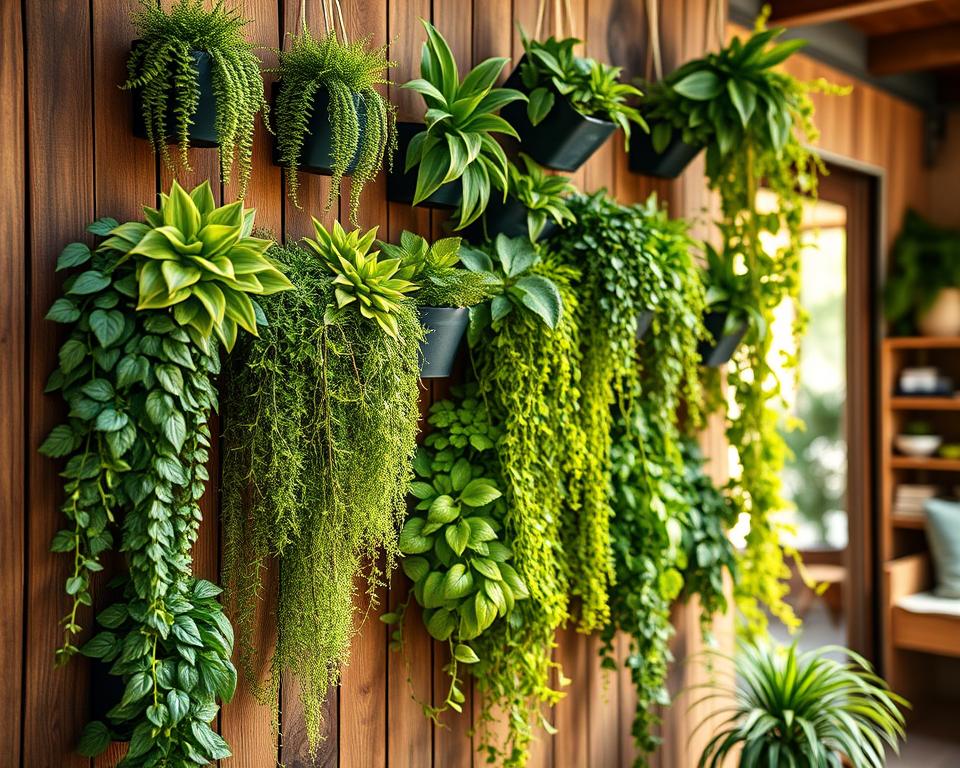
Arranging plants in artistic ways makes it even better. You can try using special frames or layer plants for a cool effect. These ideas help you play around and be creative with your garden designs.
Putting in art pieces or sculptures makes your garden even more personal. It turns into a stunning spot that shows off your style. A well-done vertical garden is a joy to see, both for its looks and how it works.
Challenges of Vertical Gardening
Vertical gardening is thrilling but comes with challenges. Knowing these issues helps gardeners succeed. By being aware, gardeners can find good solutions and enjoy gardening more.
Common Issues and Solutions
Starting a vertical garden can bring up some problems. Here’s a list of common issues and how to solve them:
- Limited sunlight: Pick plants that do well in shade or use grow lights for better growth.
- Inadequate support: Make sure your vertical structures are strong. They need to hold up plants and soil well.
- Pest infestations: Check plants often for pests. Use natural treatments to keep pests away without hurting your plants.
- Water drainage issues: Your gardening system must drain well to stop root rot.
Environmental Factors to Consider
Environment affects how well vertical gardens do. Important factors are:
- Temperature fluctuations: Watch the temperature, especially with sensitive plants. Use materials that help control temperature.
- Humidity levels: Keeping the right humidity can be hard. Misting or a humidifier can keep plants happy in dry places.
- Wind exposure: Place vertical gardens where winds are blocked to protect them.
Conclusion: Bringing Vertical Gardening to Life
Exploring vertical gardening opens up a world beyond just beauty. It lets you fill tight spaces with lush greens. This way, you not only use space well but also make your place look lovely. It’s the perfect mix of utility and elegance.
Starting on this journey requires good planning. First, pick plants that fit your area and get enough light. You can choose from herbs, flowers, or succulents to liven up your space. Also, joining online groups or local clubs for gardening can offer the support and inspiration you need.
Now’s the time to start. Imagine your space with beautiful vertical gardens. They add beauty and help the planet too. Begin with small steps, use the tips you’ve learned, and share your process with others. Vertical gardening is more than a trend. It’s a rewarding activity that lets you create your own green spot, no matter your space’s size. Start this wonderful journey today!