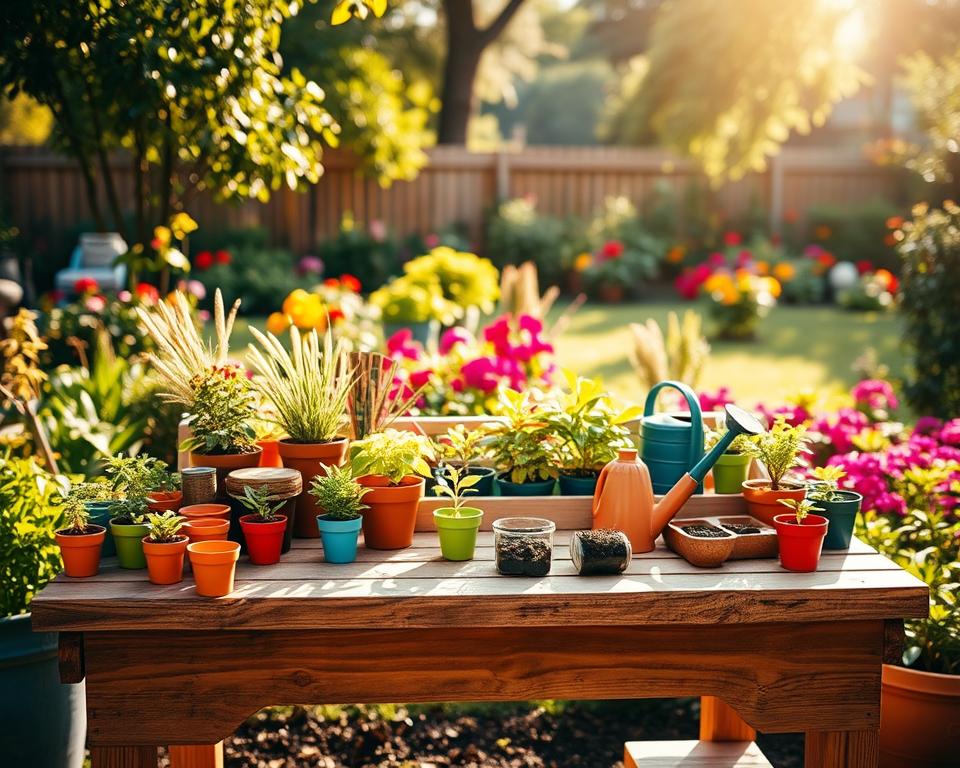
Did you know almost 70% of U.S. homes garden? This shows many people love gardening, making a garden potting bench essential for them. Making your own potting bench not only makes gardening better but also helps organize your tools. We’ll show you how to make a potting bench that’s both useful and looks good in your garden.
Key Takeaways
- A dedicated garden potting bench enhances gardening efficiency.
- Building your own DIY garden potting bench can be a rewarding project.
- Proper planning is key to achieving the desired design.
- Choosing durable materials is crucial for longevity.
- Consider your garden’s layout when deciding on bench placement.
- Regular maintenance will keep your potting bench in great condition.
Why You Need a Potting Bench in Your Garden
A potting bench is great for organizing your gardening work. It provides a special spot for planting and repotting. Plus, it helps keep your supplies neat. Having a potting bench avoids mess in your garden and garage. This focus makes gardening more fun.
Benefits of Having a Dedicated Workspace
A potting bench makes gardening better and easier. It stops you from bending too much, which can hurt. Everything you need is in one spot. This saves time looking for tools. So, you can enjoy gardening more. A special workspace changes the way you garden.
Organizing Your Gardening Tools
With a potting bench, organizing tools is simple. It has storage like shelves, hooks, and bins. This means quick access to scissors, gloves, soil, and pots. When tools are easy to find, you save time. This lets you spend more time planting. A potting bench makes your garden tidy.
Planning Your Potting Bench Design
Think carefully about your potting bench’s design and size. It should reflect your gardening style and hold all your gear. Consider how you’ll use it, the tools you need, and your garden’s layout.
Choosing the Right Size and Style
Choosing the right size and style is key. A standard bench is about 52 inches wide and 24 inches deep. This gives you lots of space. Pick a look—rustic, modern, or classic—that fits your garden’s vibe.
Measuring Your Available Space
Measure your space before deciding on a bench design. Find a spot in your garden with plenty of sun and easy access. Make sure there’s enough room to move around it without cramping other garden parts. This makes your workspace both useful and nice to look at.
| Feature | Standard Measurements |
|---|---|
| Width | 52 inches |
| Depth | 24 inches |
| Height | 36-40 inches |
Materials Needed for Your Potting Bench
To build a potting bench, pick materials that fit your budget and last long. The right choices will make your bench both useful and durable for years. Consider these key types of wood and additional items for your build.
Essential Wood Types for Durability
Durability is key, so choose wood that can handle weather well. Here are top picks:
- Cedar: Cedar is resistant to decay, looks good, and is a favorite choice.
- Redwood: Redwood is strong, looks great, and improves the bench’s look.
- Pressure-treated pine: It’s more budget-friendly, resists rot and bugs, and is good for outdoor settings.
Other Items to Consider
You’ll also need more than just wood to finish your bench:
- Screws and brackets for assembly
- Sandpaper for making surfaces smooth
- Stain or paint to keep the wood safe and looking nice
You may need (4) 8′ 2×4″ boards, (1) 10′ 2×4″, and some fence boards for shelves. Figuring out what you need helps you collect everything, making the building easier.
Tools Required for the DIY Project
Creating a potting bench is easy with the right tools. Whether it’s basic hand tools or power tools, being prepared makes things smoother. This section talks about important hand tools and power tools that make the work faster.
Must-Have Hand Tools
Start by gathering key hand tools for your DIY project. You’ll need these tools for building a potting bench:
- Saw: A handsaw or miter saw for precise cuts.
- Hammer: Drives nails into wood.
- Screwdrivers: Both types for screws.
- Measuring Tape: For accurate measurements.
- Clamps: Holds materials in place.
Power Tools to Speed Up the Process
Adding power tools can make your project go faster. Here are some power tools for a quicker building time:
- Circular Saw: For quick, straight cuts in wood.
- Drill: For precise screws and drilling holes.
- Sander: Smooths wooden surfaces nicely.
- Table Saw: Good for repeated accurate cuts.
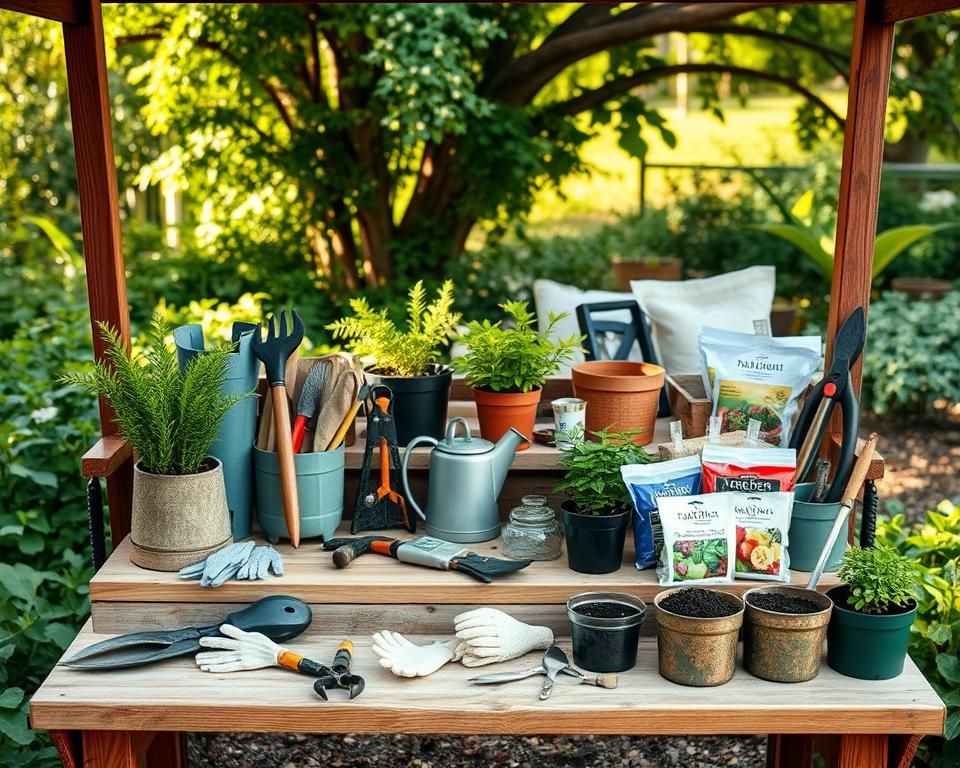
With these tools, you’re set for your potting bench project. Each tool has a special role, ensuring a good build for your garden.
Step-by-Step Guide to Building Your Potting Bench
Making your potting bench can make gardening more fun. Follow this easy guide to build a nice work area in your garden.
Preparing the Materials
First, collect all the materials you need for your bench. Check that you have enough wood, screws, and other stuff. Measure and cut everything according to your plan. Good preparation helps build a durable potting bench.
Constructing the Frame
Now, start putting the frame together with the wood you’ve cut. Use screws to join the pieces, making sure it’s all straight. The frame is crucial for your bench’s strength. Also, making the top and bottom shelves box-shaped will help with organizing your tools.
Adding the Work Surface
After the frame, add the work surface. Choose boards that last outside. Attach them to the frame for a solid workspace. This makes your potting bench both useful and nice to look at, improving your garden area.
Customizing Your Potting Bench
Make your potting bench reflect your personality. It adds beauty and makes gardening easier. Customize to improve functionality, add smart storage, and show off your gardening style.
Adding Storage Solutions
Smart storage turns gardening into a breeze. You can add:
- Hooks: Great for accessible tool hanging.
- Shelves: For storing pots, soil, and supplies.
- Drawers: Hide smaller items neatly.
Personal Touches and Decor
Make your potting bench stand out. Include touches like:
- Decorative Paint: Pick a garden-matching color.
- Colorful Stains: Shows wood grain, adds interest.
- Unique Hardware: Knobs and handles show your style.
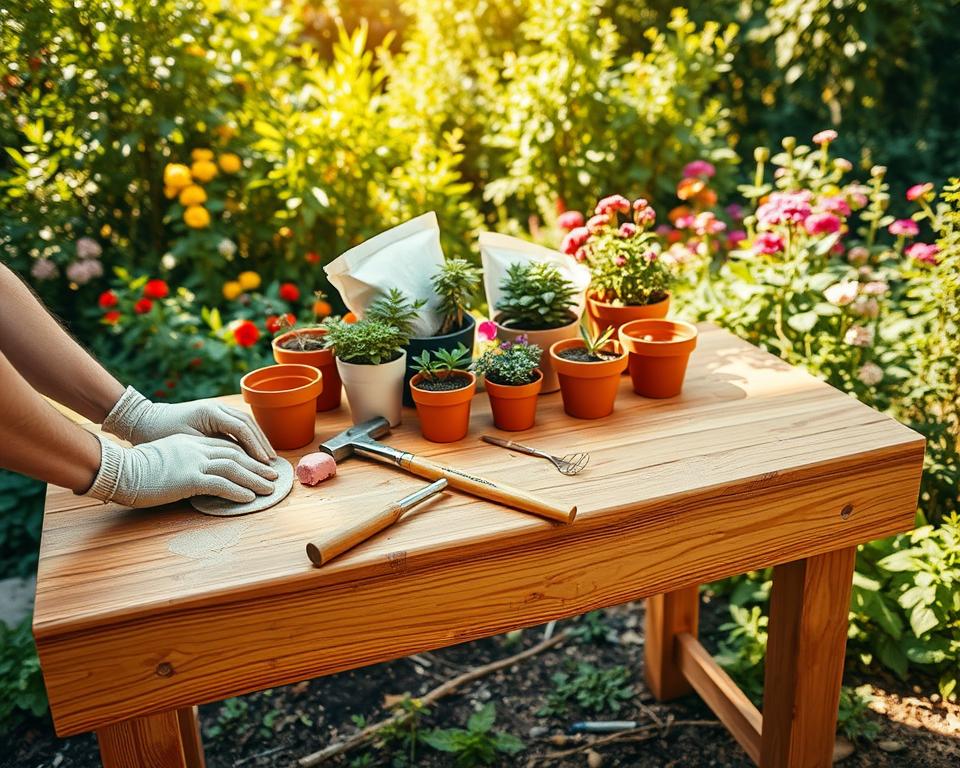
Painting and Finishing Your Potting Bench
Transforming your potting bench into a garden centerpiece begins with the right finish. Paint or stain can affect its durability and look. Make your choice based on how well it stands up to weather and fits your garden’s style.
Choosing the Right Paint or Stain
For painting your potting bench, water-based paints are easy to use. They clean up with less hassle. You might need a few coats, but you’ll get a smooth finish that keeps moisture out. Stains soak into the wood to bring out its beauty and usually last longer. Finish every edge and corner to protect against moisture.
Tips for a Professional Finish
To get a polished look on your finishing potting bench, start with a clean, smooth surface. Apply paint or stain with a high-quality brush, using long strokes. After drying, add a weather-resistant sealant for more protection and beauty.
Location, Location, Location: Best Spots for Your Bench
Finding the perfect spot for your potting bench is key to enjoying gardening. A good spot for your garden bench improves your work. It needs to be just right with sunlight, easy to get to, and handy.
Sunlight Considerations
The right spot for your bench can make gardening more fun. It should get lots of sunlight but not too much during hot hours. This keeps you and your supplies safe while working outside.
Accessibility for Gardening Tasks
When picking a spot for your bench, think about how easy it is to get to. Putting it near your garden beds saves time moving soil, pots, and tools. This smart move makes your garden work easier.
Maintenance Tips for Your Potting Bench
To keep your potting bench looking great, give it regular care. Proper maintenance for potting bench keeps it looking good and lasting longer. Just a few easy steps will help keep your garden spot perfect.
Keeping the Wood in Good Condition
Weather, bugs, and use can damage wood. Protect your bench by using a wood preservative often. Choose products that keep moisture out and stop rot.
If you see scratches or damage, sand them smooth. Then, apply a new layer of stain or sealant. This step keeps your bench looking good and safe from weather.
Seasonal Cleaning Tips
When seasons change, give your bench a good clean to add years to its life. Take everything off it and brush off dirt and bits.
Wash it well with gentle soap and water. Scrub any tough spots clean. A protective finish will prep it for the coming weather. This makes sure you’ve got a nice spot for caring for garden bench work.
DIY Potting Bench Inspiration
Making your own potting bench lets you show your style and creativity. Look at different designs from other gardeners for ideas. You could go for a rustic look that fits right in with nature. Or choose a modern, simple style that’s all about being neat and functional. Either way, these ideas are great potting bench inspiration to begin your project.
Unique Design Ideas from Other Gardeners
Gardeners all over have tons of unique potting bench designs. They mix usefulness with good looks. You might see benches in bright colors or with natural wood for a classic feel. Check online galleries and woodworking clubs for cool styles that match your garden dreams.
Utilizing Reclaimed Materials
Many gardeners like using old materials for their potting benches to be eco-friendly. Using things like old doors, cabinets, and pallets isn’t just cheaper—it also adds a special touch. It’s a way to be kind to the planet and make your garden stand out. Search your house or local salvage yards for materials that inspire your design.
Conclusion: Enjoying Your Gardening Space
Thinking about your DIY potting bench can make gardening even more fun. It’s not just a place to work, but a way to show who you are. Each visit to your garden lets you enjoy your creativity and the bench’s usefulness.
Final Thoughts on Your DIY Project
Your new potting bench makes gardening simpler and more fun. Having a special spot for potting and keeping tools neat is great. You’ll love seeing your plants grow, knowing your hard work made it possible.
Sharing Your Experience with Others
Don’t keep your potting bench a secret. Share it with others. Tell friends, family, or garden clubs about your project. It might inspire them to start their own. Enjoy your bench and see how it brings you closer to gardening.