Did you know about 30% of a home’s energy is used for heating and cooling? With such a big part of energy use coming from this, making home layouts energy efficient is key. These layouts cut down on utility bills and support sustainable living.
By choosing smart architectural designs, homeowners can use natural light and air well. This reduces harm to the environment. Going for green building designs creates comfy, healthy, and cost-effective spaces.
Key Takeaways
- Energy efficient layouts significantly reduce energy consumption.
- Maximizing natural light can enhance comfort and savings.
- Strategic architectural choices contribute to sustainability.
- Green building design fosters healthier living environments.
- Efficient home layouts lower utility costs and reduce carbon footprints.
Understanding Energy Efficient Layouts
Energy efficient layouts are key in today’s home design. They aim to cut down on energy use and promote green building. Homeowners can design their homes to be efficient and comfy. This part talks about the importance of energy-saving layouts in houses.
What Makes a Layout Energy Efficient?
Several factors make a layout energy efficient. How a building faces can affect its energy use. It allows for the best sunlight and cuts down on electric lights. Windows are also vital. They should be placed well to let in air and keep the house comfortable. Using materials that save energy and are good for the earth is important. All these points help keep the home efficient all year.
Benefits of Energy Efficiency in Home Design
Energy efficient homes offer many perks. Benefits include:
- Lower utility bills because of less energy use.
- A smaller carbon footprint thanks to green practices.
- Better home comfort with stable indoor temps.
- Access to rebates and incentives from utilities and government.
Choosing energy efficient designs is more than just following a trend. It shows a dedication to living green and caring for our planet. With the right design, homeowners can find a perfect mix of function and saving energy. This leads to a more eco-friendly future.
Key Principles of Energy Efficiency
To build an energy-efficient home, you need to know some basic ideas. These make your home more comfortable and help the planet. Let’s look at important tips for creating energy-smart house designs.
Orientation and Site Considerations
How a home is placed is key for saving energy. If a home uses the wind and sun well, it needs less heating and cooling. Choosing a location that works with the land can help save on energy bills. It improves air flow and keeps the house from losing too much heat.
Maximizing Natural Light
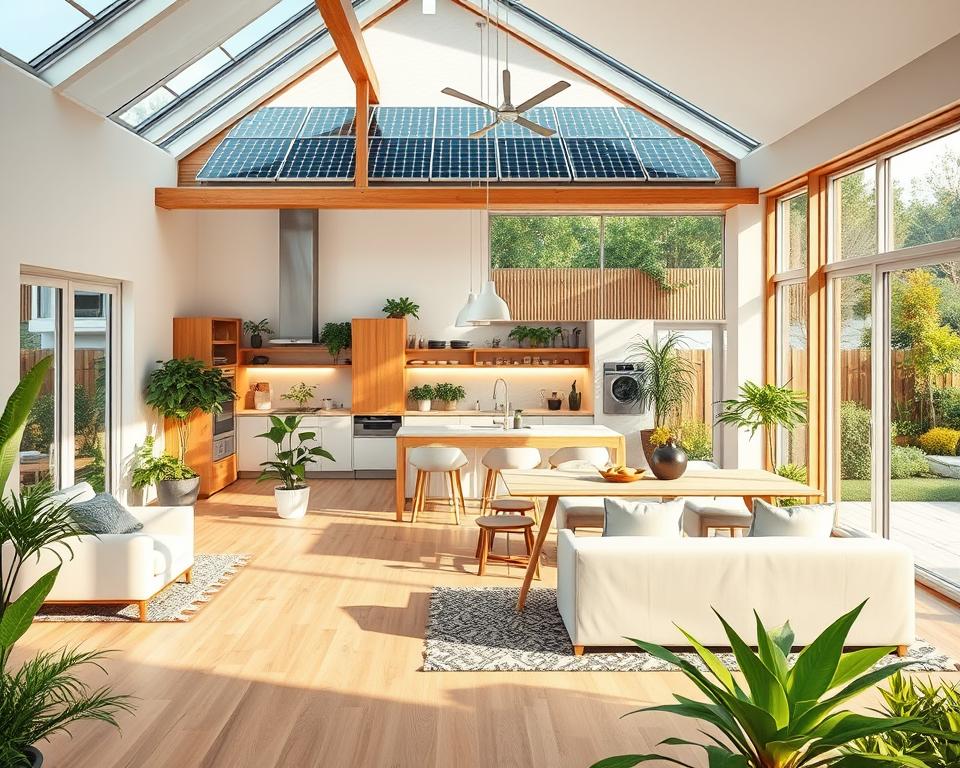
Having big windows and open areas brings in a lot of natural light. This makes the home look better and cuts down on the need for electric lights. By planning carefully, homes can use light where it’s needed most, saving more energy.
Insulation and Thermal Mass
Good insulation is crucial for an energy-efficient home. It keeps the inside temperature steady, so you don’t use as much heat or air conditioning. Using materials like concrete or brick helps too. They can store heat during the day and release it at night, which saves energy all year round.
Popular Energy Efficient Layout Styles
When considering layouts for modern homes, some styles stand out. They mix sustainability with functionality. These designs embrace eco-friendly construction, using green techniques. They make sure homes use energy well, keeping them comfortable and stylish.
Open Floor Plans
Open floor plans are big in modern design. They get rid of extra walls to improve airflow and bring in more light. This openness makes heating and cooling more efficient. It creates a welcoming space that saves energy and looks great.
Compact Designs
Compact designs aim to reduce the outside area of a home. This helps keep energy inside, easing the work of heating and cooling systems. Owners spend less on utilities while living greener. These homes prove you don’t have to give up comfort for efficiency.
Multi-Story Homes
Multi-story homes are smart with vertical space. They allow for efficient living without needing a lot of land. This style saves space and energy. It balances private areas and common spaces, following sustainable architecture ideas.
Strategic Room Placement
Creating energy-saving floor plans starts with smart room placement. This approach increases comfort and efficiency at home. By organizing spaces wisely, homeowners can use energy better. This meets their needs while being sustainable. Grouping shared spaces and keeping bedrooms private helps both relaxation and energy-saving goals.
Grouping Common Spaces
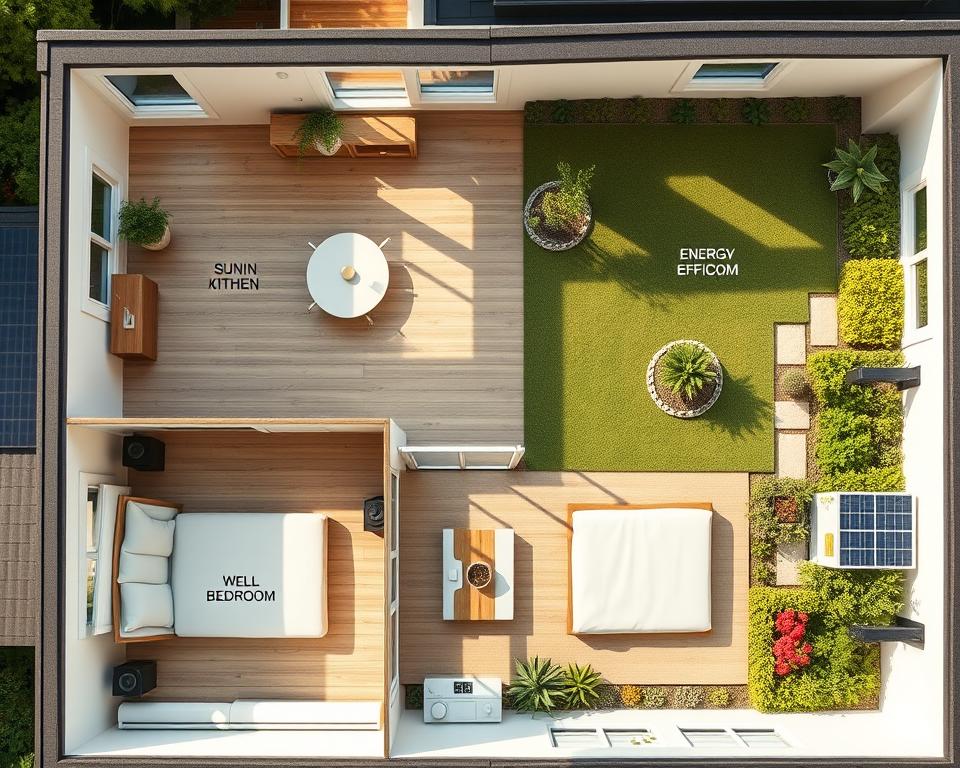
Placing kitchens and living rooms close to each other saves energy. This shared setup reduces the need for more heat or air conditioning. When these areas are near each other, the heat from cooking or the warmth from gatherings keeps things cozy. This decrease in energy need is helpful. Open layouts also boost social time and energy savings.
Designing for Privacy and Energy Use
Smart designs place bedrooms away from loud areas. This choice keeps homes peaceful and saves energy. It allows for better control of heating and cooling. The goal is to make each room work best. This does not sacrifice comfort. This blend of private, peaceful space and energy efficiency is key in modern, sustainable architecture.
| Room Type | Placement Considerations | Energy Efficiency Benefits |
|---|---|---|
| Kitchens | Adjacent to living areas | Shared heating, optimized light |
| Bedrooms | Away from noise | Improved comfort, reduced energy use |
| Bathrooms | Near bedrooms | Minimized plumbing runs |
| Laundry Rooms | Close to bedrooms | Efficient water and energy use |
Incorporating Sustainable Materials
Sustainable materials are key to efficient home designs. They support eco-friendly building and highlight the value of green construction practices. These options reduce environmental harm while making homes look better.
Eco-Friendly Building Materials
Choosing eco-friendly materials is critical in sustainable architecture. Some top choices are:
- Bamboo flooring – a quick-to-grow option that looks great
- Reclaimed wood – saves old wood from waste, offering a second life
- Recycled steel – strong and long-lasting
- Low-VOC paints – keep air quality high without bad emissions
This approach helps homeowners build greener projects effectively.
Recycled and Upcycled Options
Recycled and upcycled materials boost creativity and lower waste. They turn old items into valuable home pieces. Here are some examples:
- Upcycled furniture from pallets or crates
- Recycled glass for countertops or decorations
- Old bricks for landscaping or construction
These methods prove eco-friendly construction is both possible and beautiful.
Efficient HVAC Systems and Layouts
Efficient HVAC systems are key for an energy-saving home. They work best when mixed with smart home designs. By using zones and well-placed ducts, they cut down on energy use and keep comfort high.
Integrating HVAC with Home Design
Putting HVAC systems into home design needs careful thinking. Each room’s need for air and temperature control must be considered. This method saves energy and ensures a steady, comfortable climate at home.
Smart Home Technologies for Efficiency
Smart home tech helps HVAC systems become more efficient. With programmable thermostats, setting heating and cooling times becomes easy. Energy monitors track power use, helping owners make smart choices. These technologies are great for a home that uses less energy.
The Role of Landscaping
Landscaping is key to making homes more energy-efficient. Through smart design and placing plants carefully, people can save a lot on energy. A good landscape serves dual purposes, improving a building’s look and its use of energy with the right plants.
Energy-Saving Plant Placement
Putting trees and bushes in the right spots can cut down on energy needs. For example, large trees on the south and southwest block summer heat, cutting air conditioning costs. In winter, they shield the house from cold winds, helping to lower heating needs.
Shade and Windbreak Considerations
Plants can be natural barriers that make homes comfortable and save energy. Trees and shrubs block wind and shade areas, making it cooler outside. This reduces the need for indoor cooling, fitting well with green building goals.
| Plant Type | Function | Energy Impact |
|---|---|---|
| Deciduous Trees | Provide summer shade | Lower cooling costs |
| Evergreen Trees | Act as windbreaks | Reduce heating costs |
| Shrubs | Insulate ground area | Enhance energy efficiency |
Future Trends in Energy Efficient Layouts
The way we think about energy-friendly homes is changing fast. New smart home tech and creative design ideas are leading the way. These changes help homeowners take control of their space while being kind to the planet.
Smart Homes and Automation
Smart home tech is reshaping energy-saving home designs. Systems that connect various home operations like lights, heat, and security are key. They use sensors and mobile tech to let homeowners see and adjust their power use on the go. This makes homes smarter, catering to the unique needs of the people living there.
Innovative Design Concepts
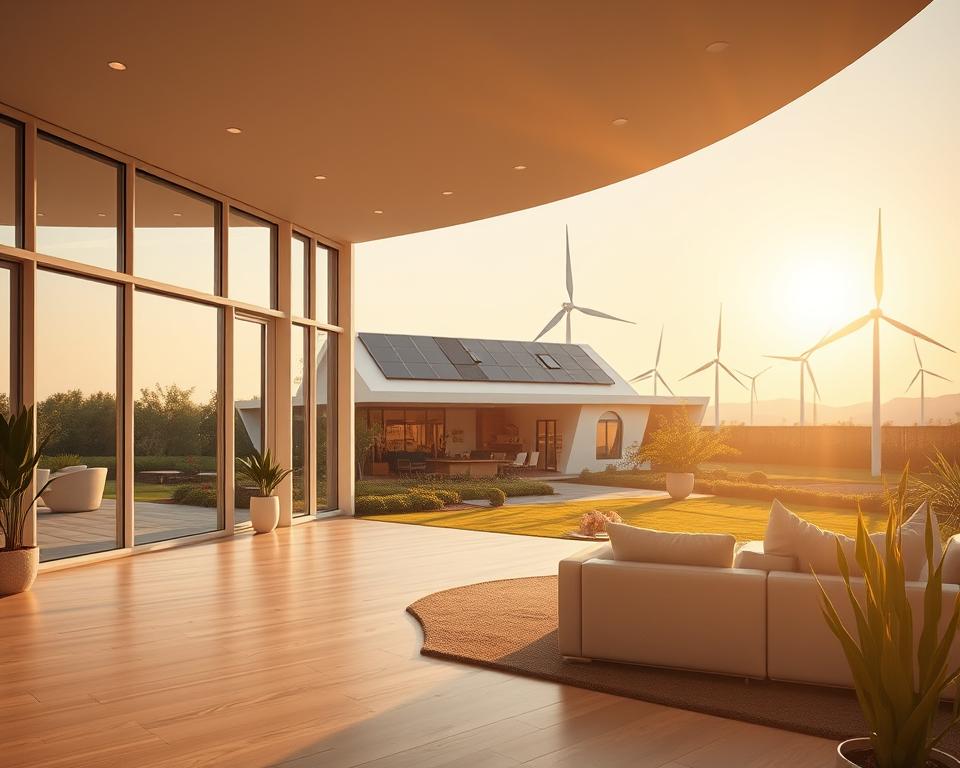
New design ideas focus on looks, usefulness, and protecting the environment. Architects and designers are picking materials and methods that are good for the earth. Things like living green roofs, collecting rainwater, and using the sun’s warmth smartly are getting more popular. These steps make homes better to live in and are gentle on the environment.
| Trend | Description | Benefits |
|---|---|---|
| Smart Home Technologies | Integration of automated systems for lighting, heating, and security. | Reduced energy consumption and enhanced control. |
| Green Construction Techniques | Utilizing eco-friendly materials and design practices. | Lower carbon footprint and improved sustainability. |
| Innovative Design Concepts | Focus on sustainable aesthetics and functionality. | Creation of attractive, efficient living spaces. |
Resources for Energy Efficient Home Design
When you want to make your home energy-efficient, there are many resources to help you. You can find online tools and calculators. They show you how much energy you’ll need and how to make your home eco-friendly. These tools guide you through sustainable design choices.
Online Tools and Calculators
Many sites have calculators for energy use and cost. These online tools let homeowners see how different designs affect energy efficiency. This helps in making smarter, greener choices. It considers important elements like insulation and HVAC systems.
Professional Guidance and Services
There’s also value in working with green construction experts. Architects and builders with eco-friendly focus offer personalized advice. They ensure your home’s design is both beautiful and sustainable. This approach turns complex projects into energy-efficient and friendly spaces.